Youcannotdesigntrust.But,youcandesigntheconditionsforit.
Great teams are designed, not assembled, through trust, conflict, and collaboration.
Trust is never the starting point.
Every organization says it values trust. It appears in mission statements, leadership presentations, onboarding materials, and company handbooks. Teams are encouraged to collaborate openly, communicate honestly, and support one another through challenges. New employees are welcomed with introductions, icebreakers, and carefully planned activities designed to build relationships from day one. The expectation is simple. Bring talented people together, give them a shared objective, and trust will naturally emerge.
It rarely works that way.
Teams do not fail because they lack talent. They fail because talent alone cannot overcome uncertainty, hesitation, or fear. A room full of highly capable professionals can still struggle to communicate honestly if people feel judged for asking questions, admitting mistakes, or challenging ideas. Likewise, a team with average technical skills often outperforms more experienced groups because its members trust one another enough to disagree, experiment, and learn together.
The mistake many organizations make is assuming trust is something that can be assigned, accelerated, or expected. It cannot. Trust does not appear because people share an office, attend the same meetings, or report to the same manager. It is not established through job titles or company values displayed on a wall. Nor is it the result of simply spending more time together. Familiarity and trust are not the same thing. Trust is built through repeated experiences. It grows when commitments are honored, when difficult conversations are handled with respect, and when vulnerability is met with understanding rather than punishment. Every interaction leaves behind evidence. People quietly ask themselves questions they rarely say aloud. Can I speak honestly here? Will my ideas be heard? Is it safe to admit I do not know something? Will asking for help make me appear incompetent? The answers to these questions shape a team's culture long before any formal process does.
For designers, this raises an interesting challenge. Much of design is centered on creating better interactions between people and products. We remove friction, simplify decisions, and guide users through experiences that feel intuitive and meaningful. Yet some of the most important experiences inside organizations never happen on a screen. They happen in conversations. They happen during disagreements. They happen in moments when people decide whether to remain silent or speak openly. Perhaps that is why so many projects fail for reasons that have little to do with technology. Deadlines slip because expectations were never discussed. Features are misunderstood because assumptions remained unchallenged. Teams become frustrated because feedback feels personal rather than constructive. These are often labeled communication problems, but communication is only the symptom. The deeper issue lies in the environment that shapes those conversations.
The invisible system every team builds.
Every team develops its own invisible operating system. Some parts are obvious, including meeting schedules, project boards, reporting structures, and communication tools. Others emerge quietly over time. Team members learn whose opinions matter most, which disagreements are acceptable, how feedback is delivered, and whether mistakes become opportunities for learning or reasons for blame. These unwritten rules rarely appear in documentation, yet they influence behavior more than official policies ever will.
This invisible system is often called culture, but culture is simply the accumulation of repeated interactions. It is built through everyday decisions that seem insignificant on their own. Someone interrupts a colleague without consequence. Another person apologizes for asking a question. A manager dismisses an alternative perspective. A teammate publicly acknowledges a mistake. Each moment teaches everyone else what is expected, rewarded, or discouraged. Over time, these interactions become norms, and those norms become the social contract that governs how the team works. The irony is that organizations spend enormous effort designing workflows while leaving these social contracts to chance. Processes are documented in meticulous detail. Project timelines are carefully planned. Success metrics are clearly defined. Yet very few teams intentionally discuss how they want to communicate, resolve disagreements, provide feedback, or establish boundaries before beginning their work. They assume those behaviors will develop naturally.
That assumption became the starting point for the Boundary project. Rather than asking how a team could be made to trust one another, the project explored a different question. If trust itself cannot be designed, what can? The answer was not another productivity feature or collaboration platform. It was the idea that designers can create the conditions where trust has an opportunity to grow through structured conversations, shared values, and intentionally developed social contracts. Boundary became an exploration of that possibility, treating communication itself as a design challenge rather than an afterthought. That realization changes how we think about teamwork. Instead of asking how to make people trust one another, we begin asking how teams can intentionally shape the environments where trust becomes the natural outcome of everyday interactions. That question became the foundation for everything that followed.
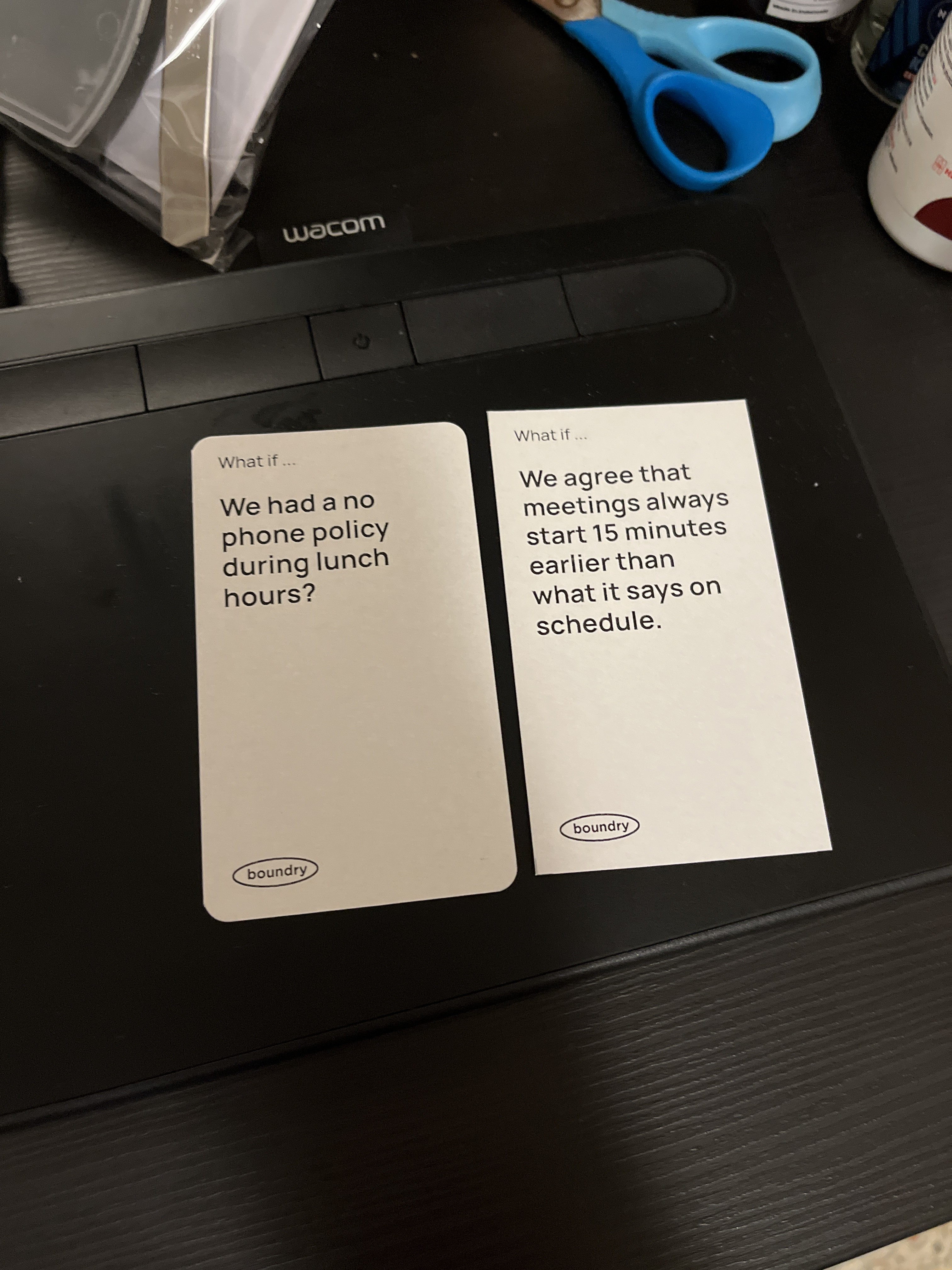
Conversations shape teams more than processes ever will.
Organizations love structure. They invest countless hours refining workflows, documenting procedures, and introducing frameworks that promise greater efficiency. Every task has an owner, every milestone has a deadline, and every project follows a carefully designed roadmap. On paper, these systems should produce high-performing teams. Yet even the most organized projects can unravel when the people behind them struggle to communicate.
The reason is surprisingly simple. Processes tell people what to do. They rarely explain how people should work together while doing it.
Most workplace conflicts are not caused by unclear objectives. They emerge from unspoken expectations. One teammate believes feedback should be immediate and direct. Another prefers time to reflect before discussing criticism. One person sees healthy debate as a sign of engagement, while someone else interprets the same conversation as confrontation. Neither person is necessarily wrong. They are simply operating under different assumptions that have never been discussed. This is where many teams begin to drift apart. They assume everyone shares the same understanding of professionalism, collaboration, and respect. Those assumptions remain invisible until pressure exposes them. Tight deadlines, conflicting priorities, or stressful decisions reveal differences that were always present but never acknowledged. By then, what appears to be a disagreement about work is often a disagreement about expectations.
The most effective teams recognize that collaboration is not automatic. Like any well-designed product, it requires intentionality. Expectations must be made visible before they can be shared. Boundaries need to be discussed before they are crossed. Values have to become more than words on a presentation slide. They need to influence everyday decisions. This realization became the foundation of Boundary. Instead of approaching teamwork as a collection of tasks, the project viewed it as a series of human interactions. The goal was not to dictate how teams should behave, but to create a structured environment where they could define those behaviors together. Rather than assuming alignment, Boundary encouraged teams to build it through conversation.
Designing conversations instead of rules.
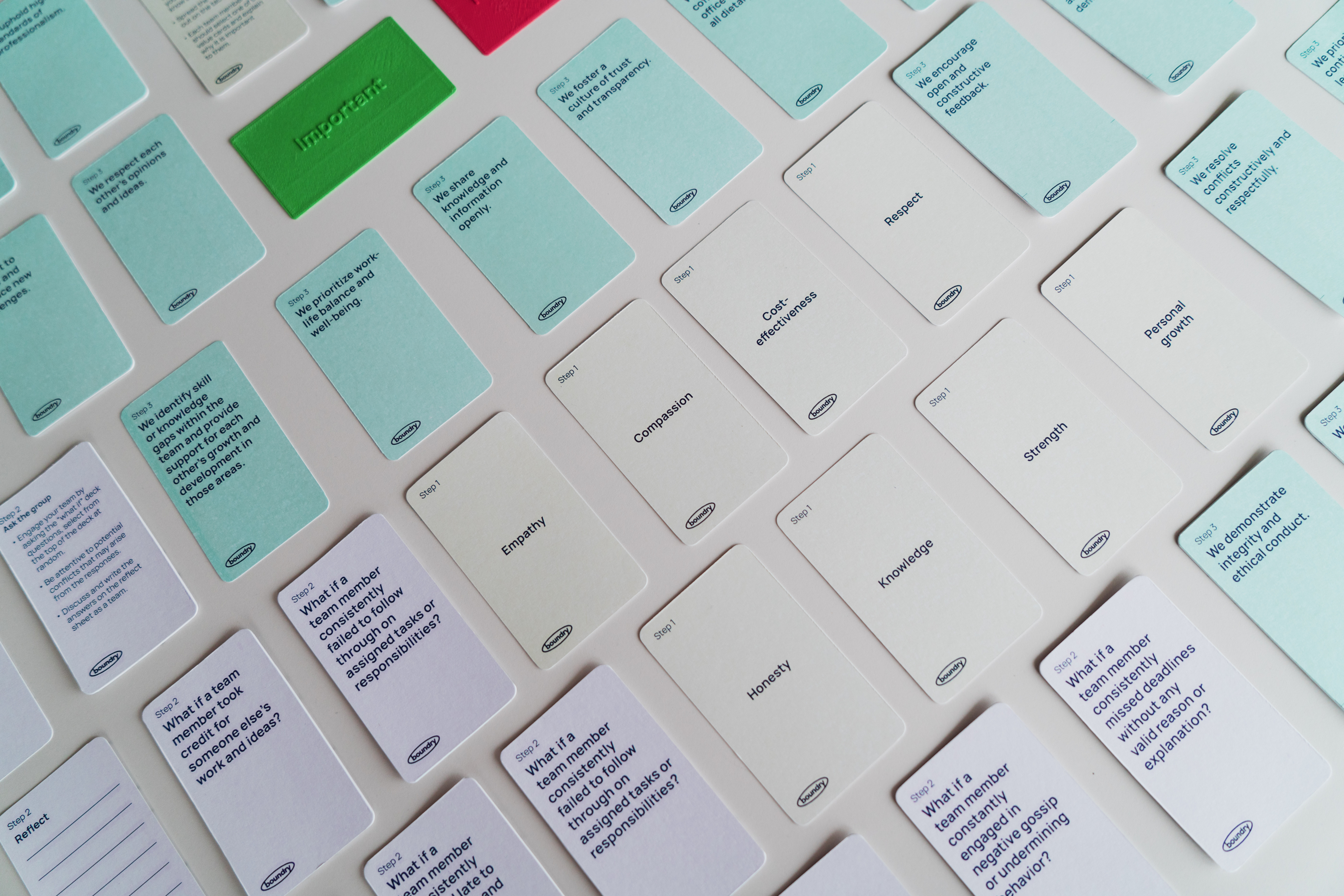
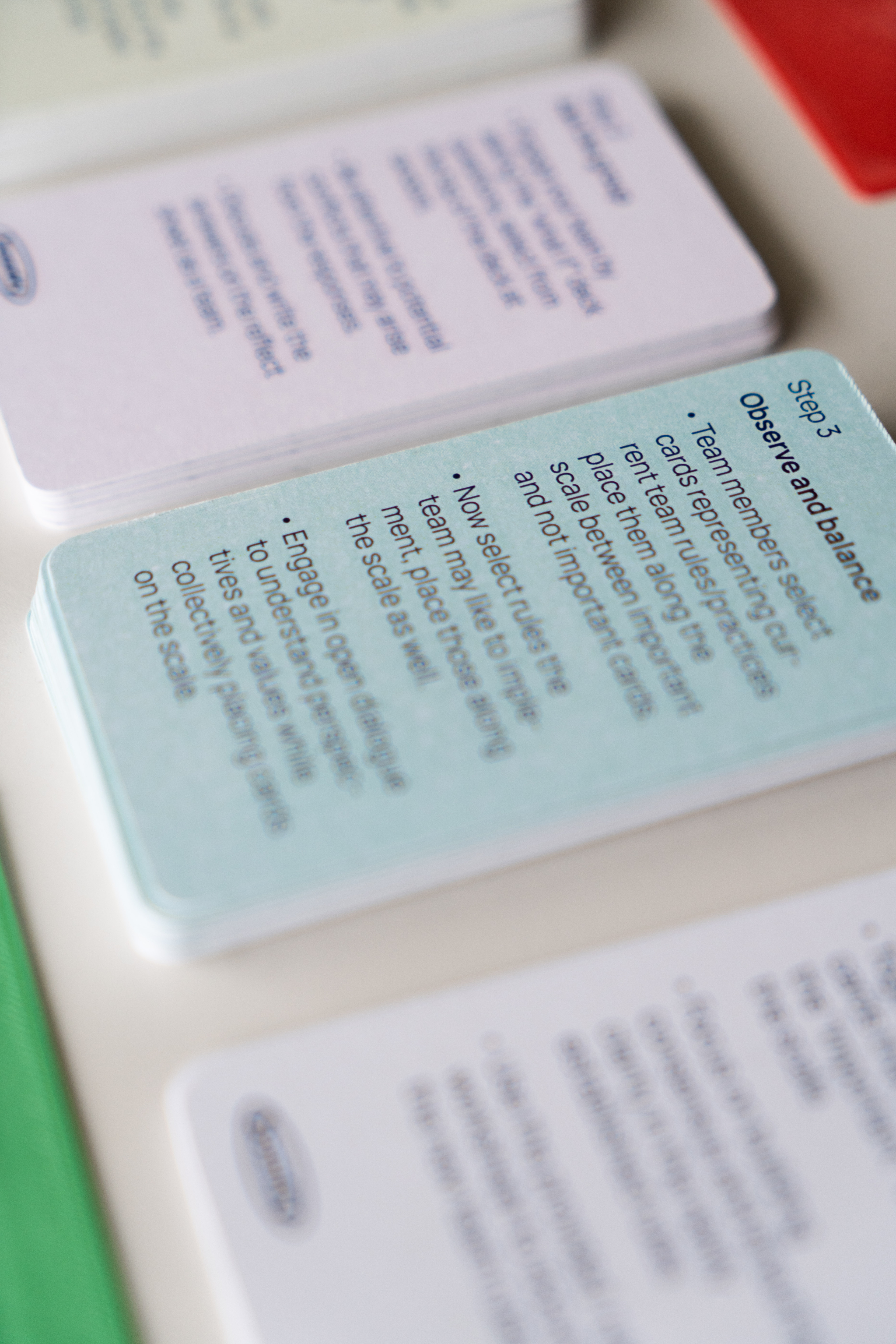
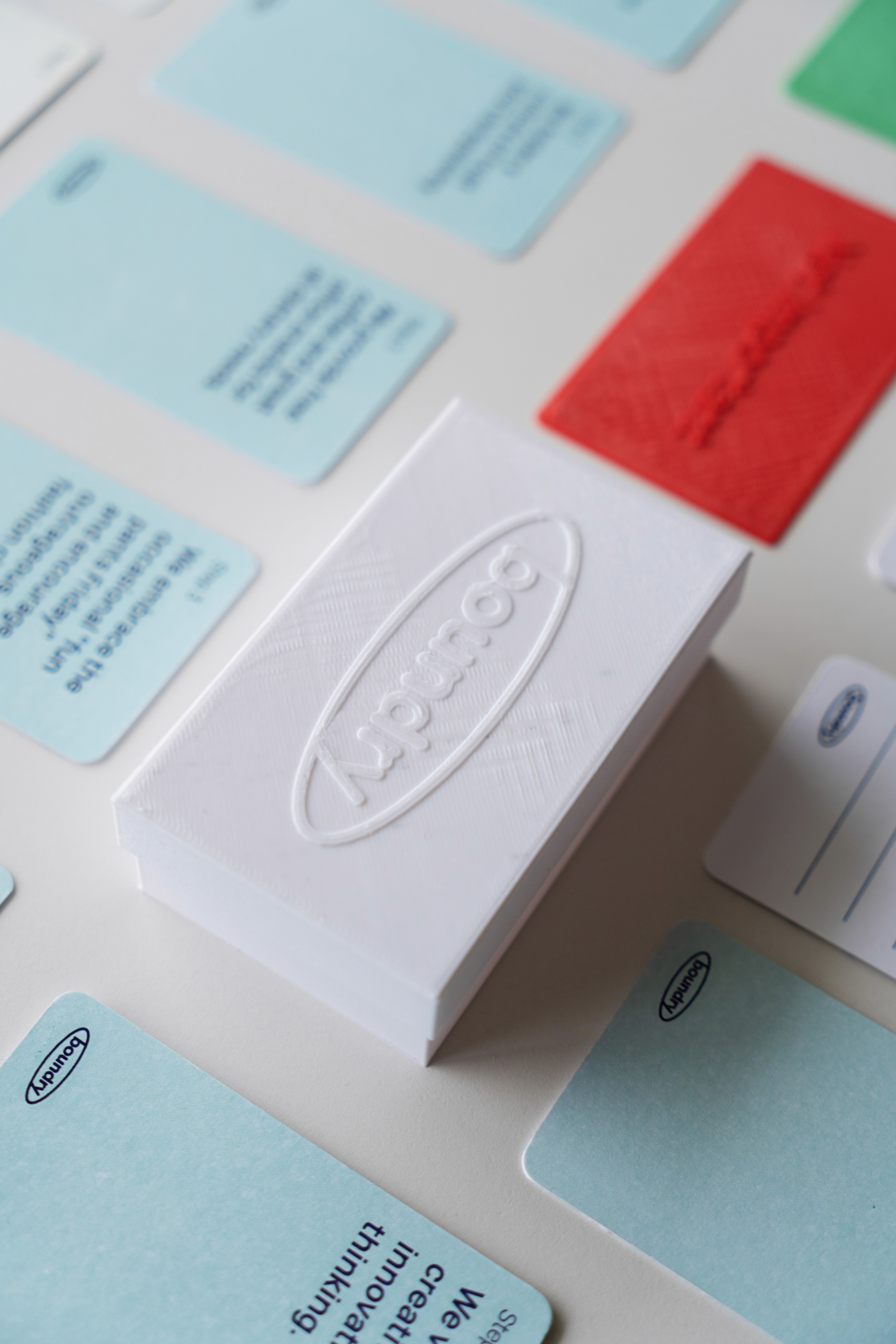
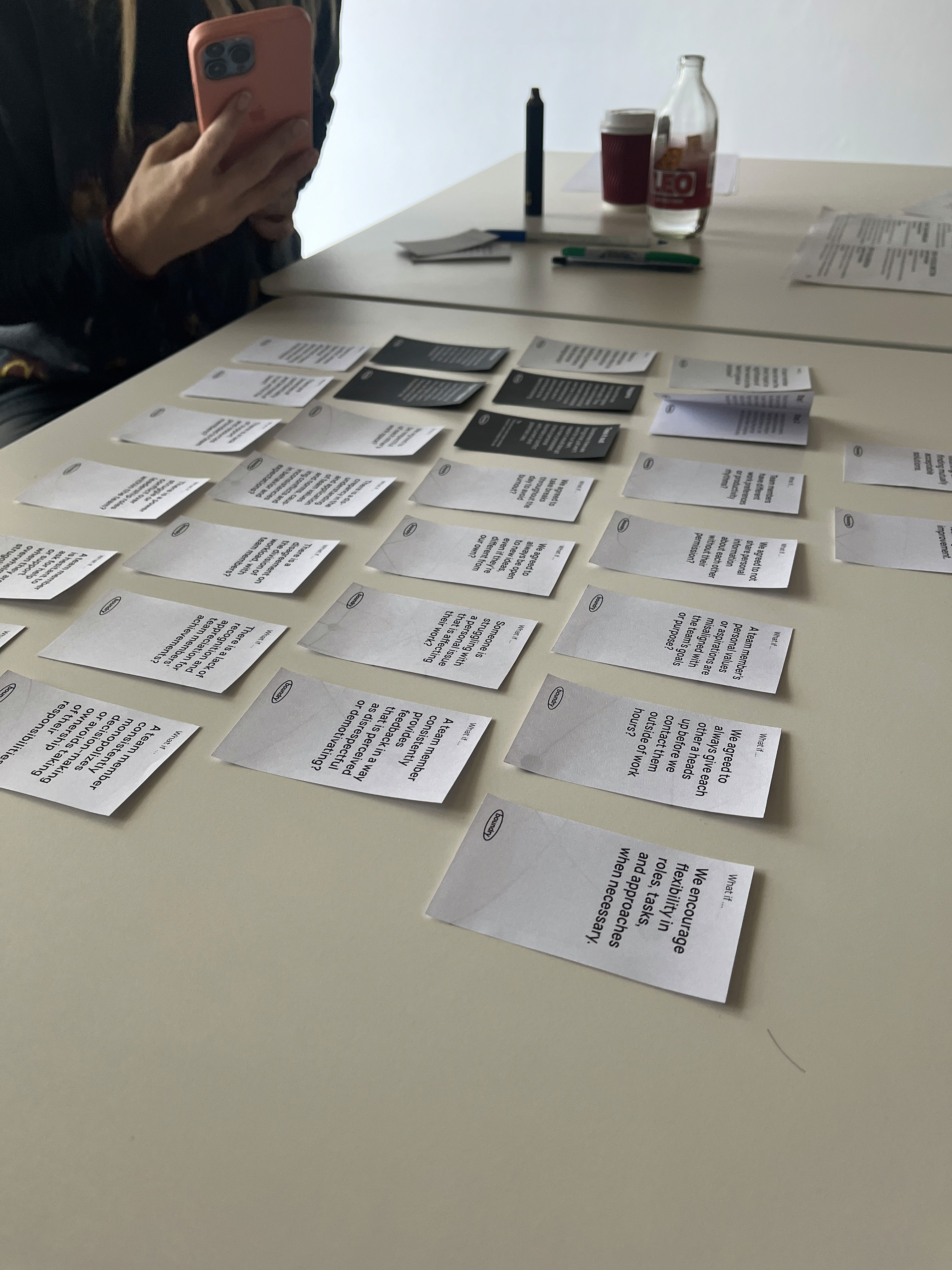
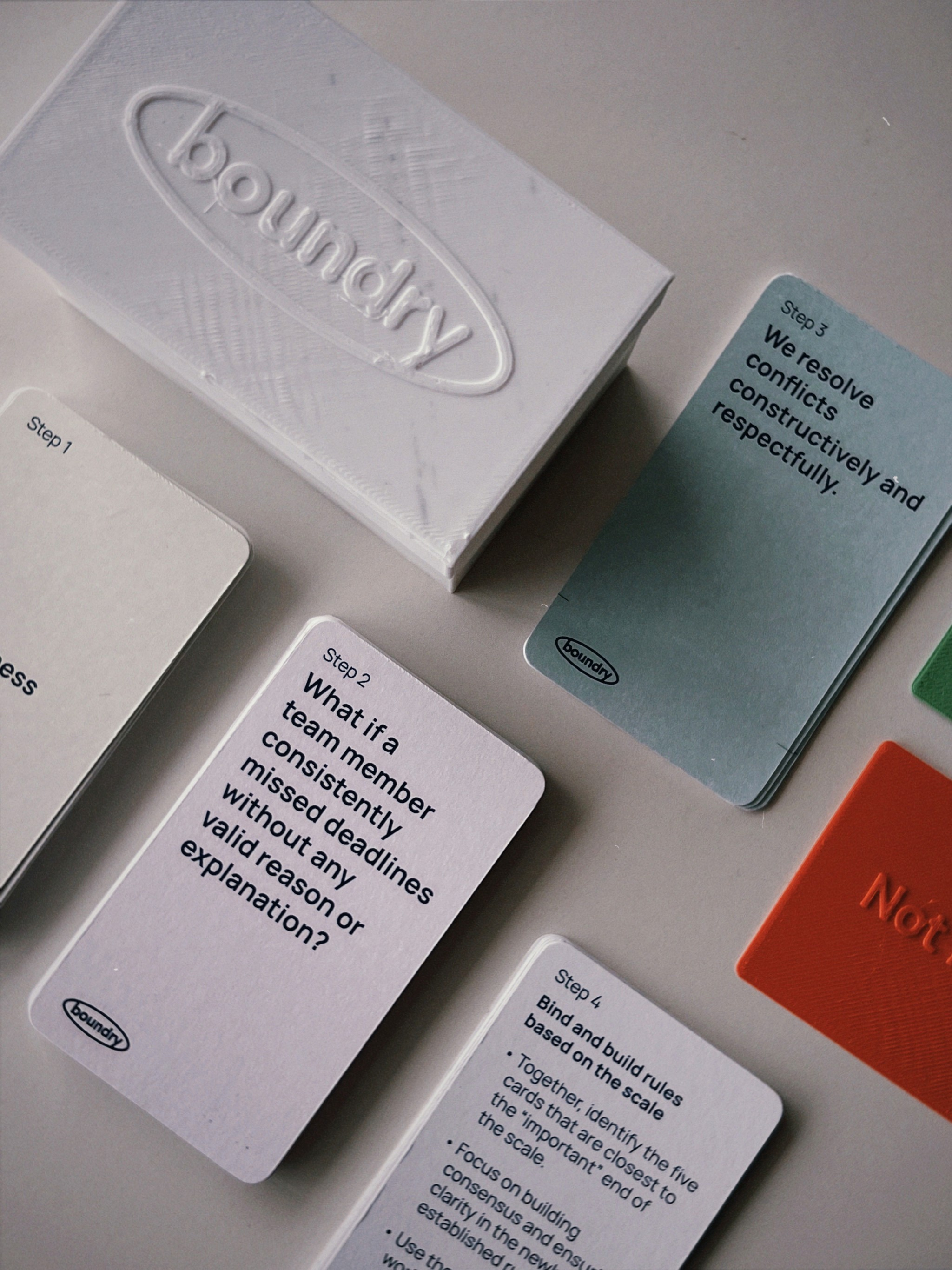
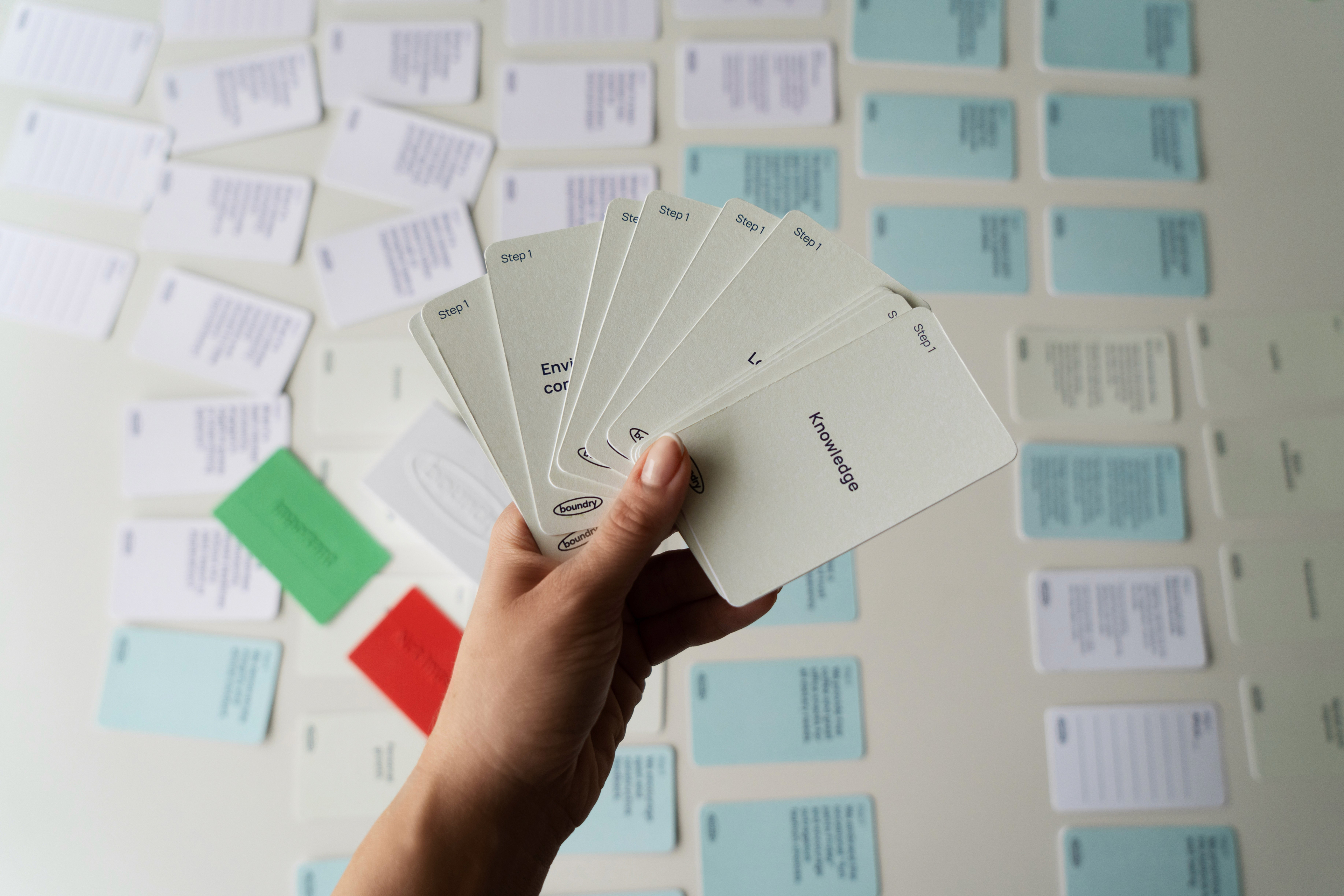
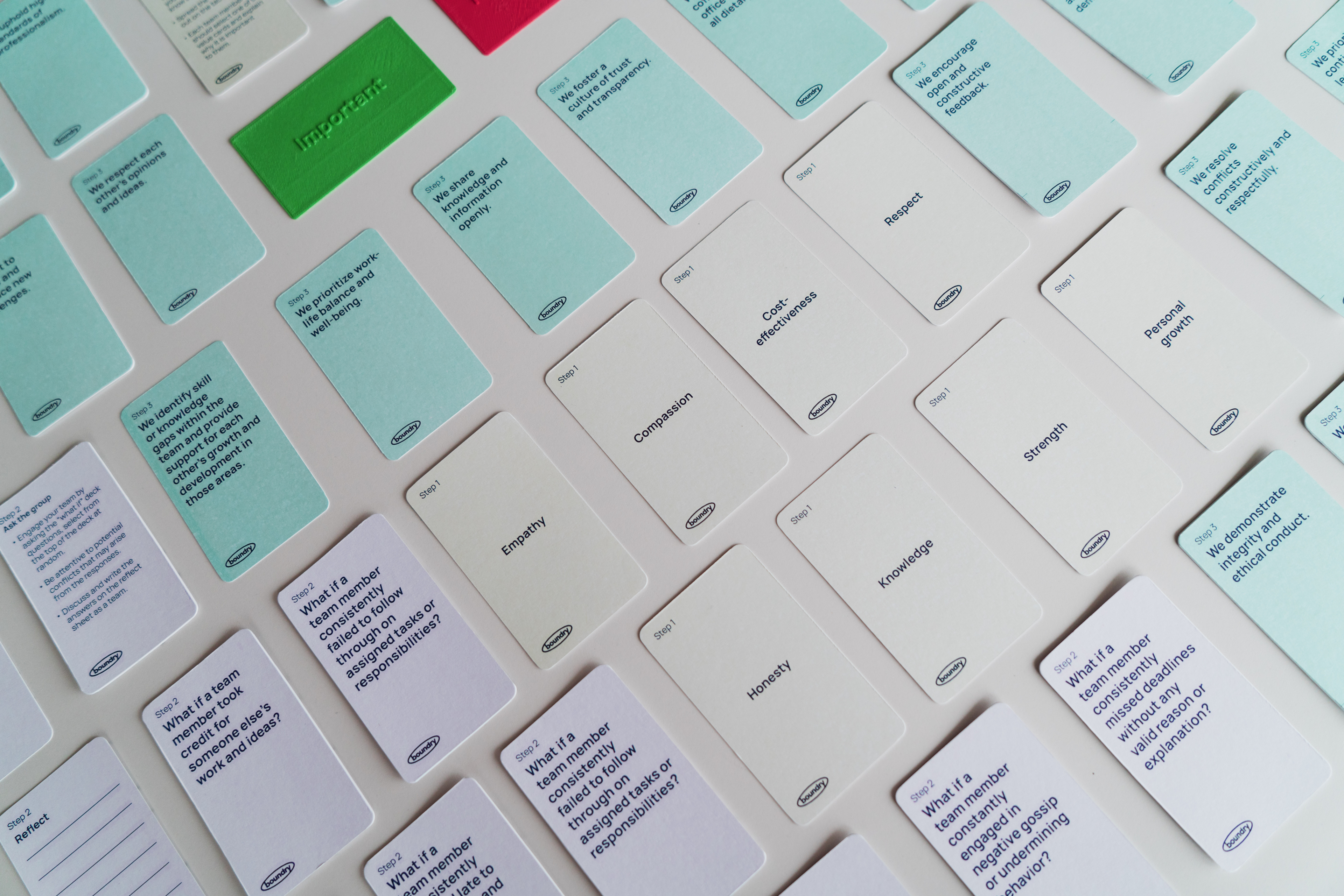
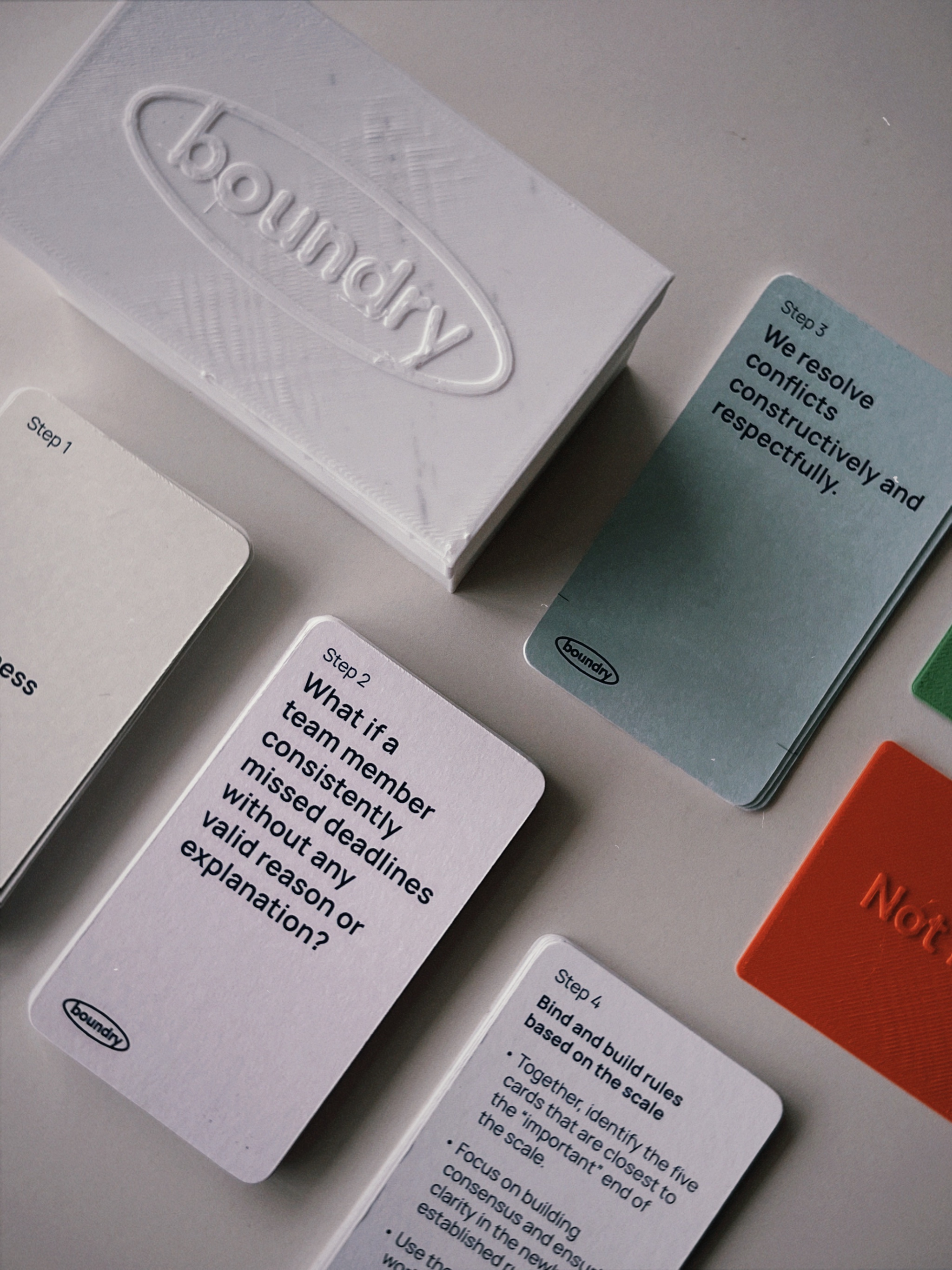
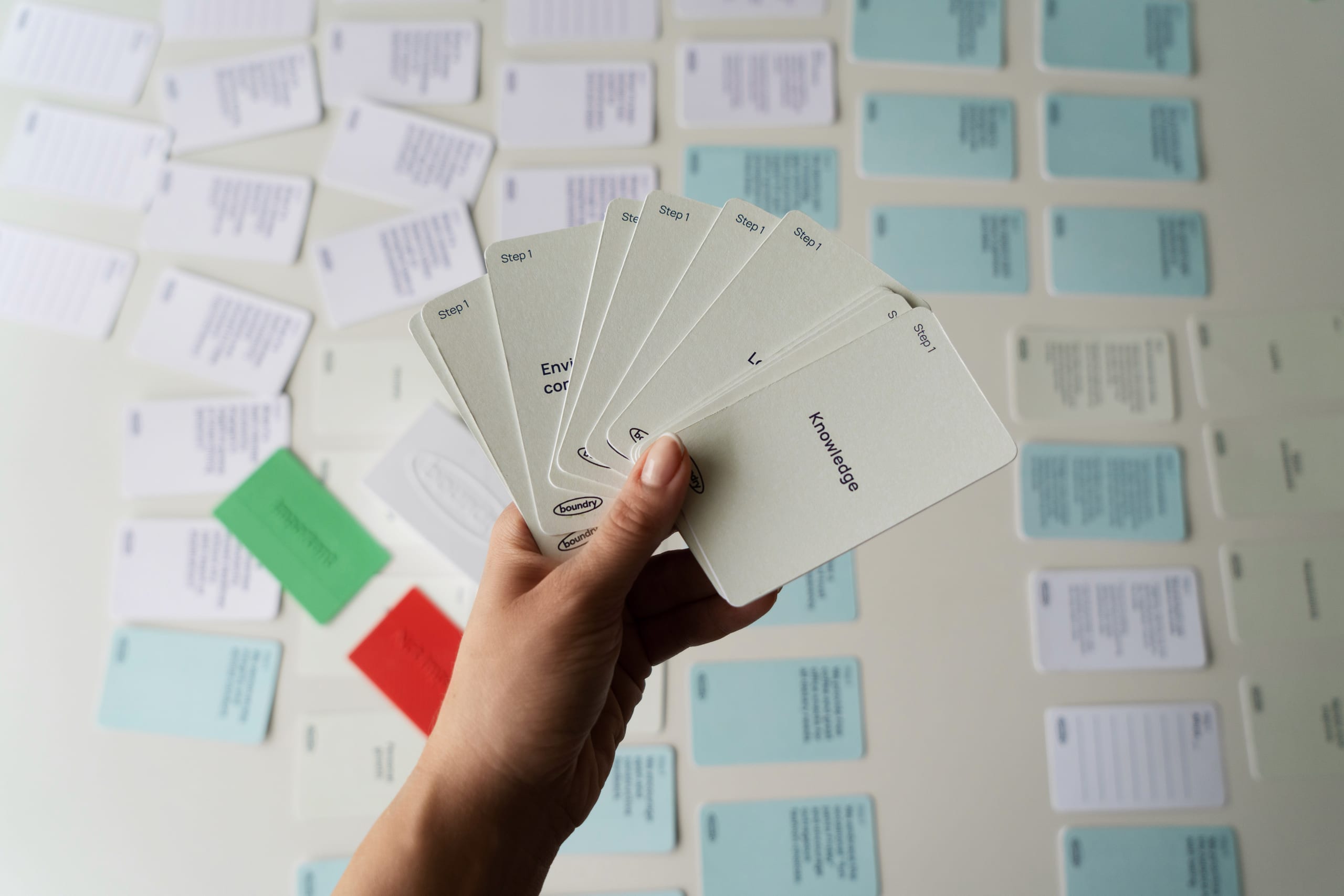
One of the most compelling ideas behind Boundary was that conversations themselves deserve thoughtful design. Organizations spend significant resources designing products, services, and customer experiences, yet the conversations that determine how teams function are often left entirely to chance. Boundary introduced structure without removing flexibility. The experience began by encouraging team members to introduce themselves beyond their professional roles, creating space for people to understand one another as individuals rather than job titles. From there, participants explored value cards, answered thought-provoking questions, discussed potential sources of conflict, and examined the rules that already shaped their team dynamics. Instead of imposing a predefined culture, the process encouraged participants to uncover the one they were already living in.
The exercise revealed something important. Every team already has a social contract. Some of its rules are explicit, while others exist only through repeated behavior. People know who usually makes the final decision, when disagreement feels acceptable, or whether admitting uncertainty carries professional risk. These norms become so familiar that they are rarely questioned. They simply become "the way we do things here." Boundary challenged that assumption by asking teams to evaluate both their current practices and the behaviors they wanted to cultivate. Instead of accepting existing norms as permanent, participants discussed whether those norms reflected the kind of team they hoped to become. This subtle shift transformed culture from something inherited into something intentionally designed.
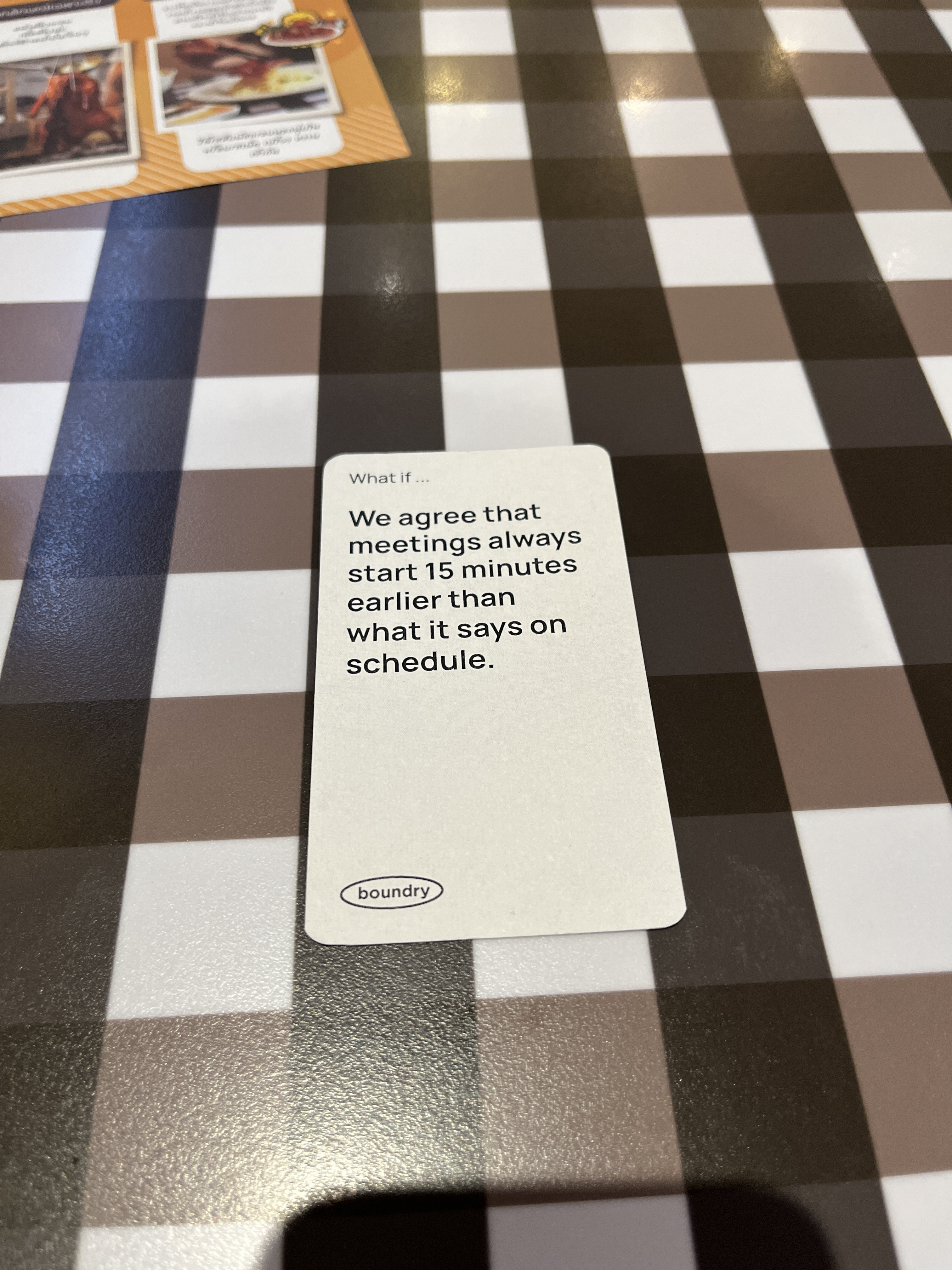
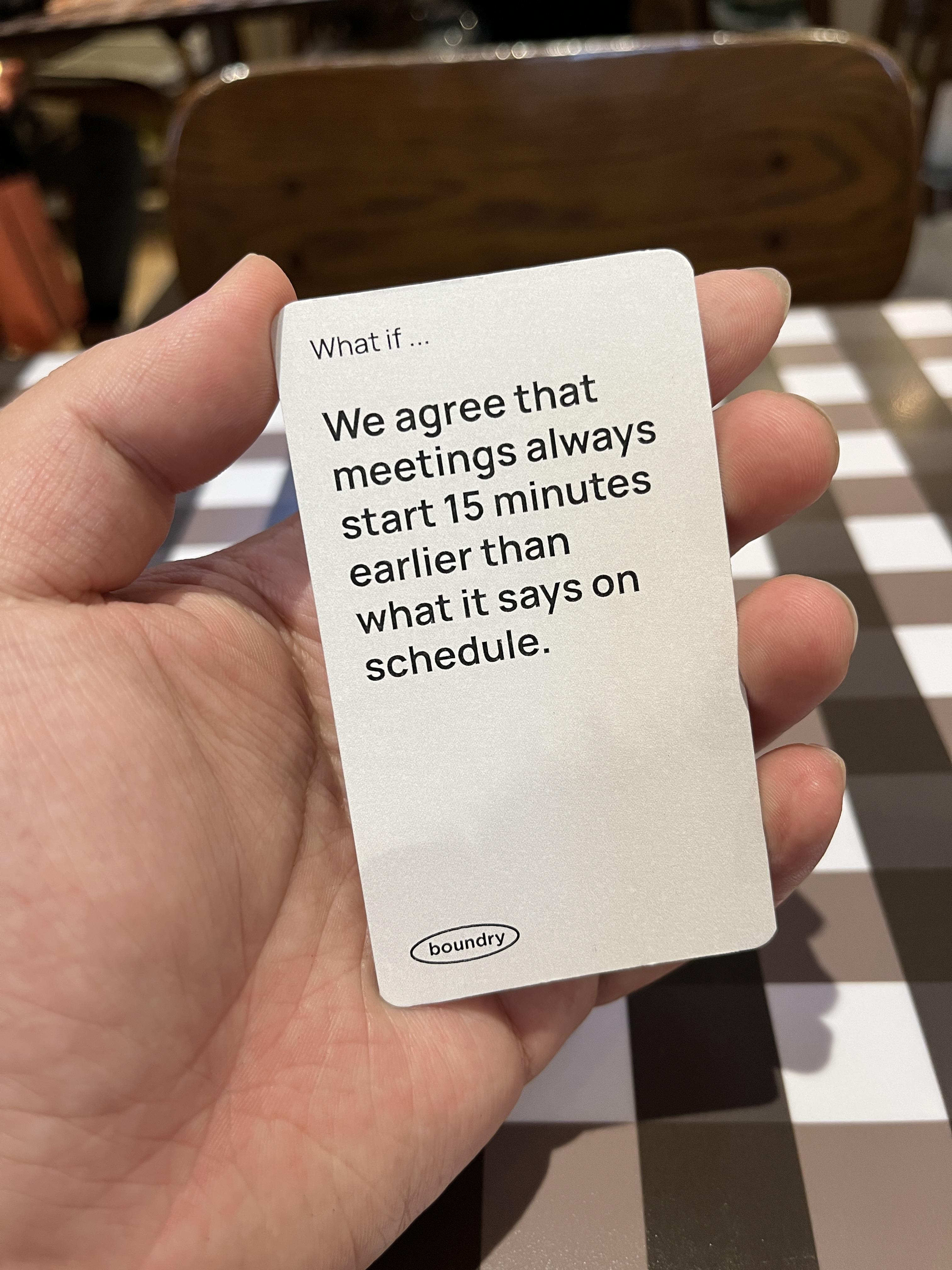
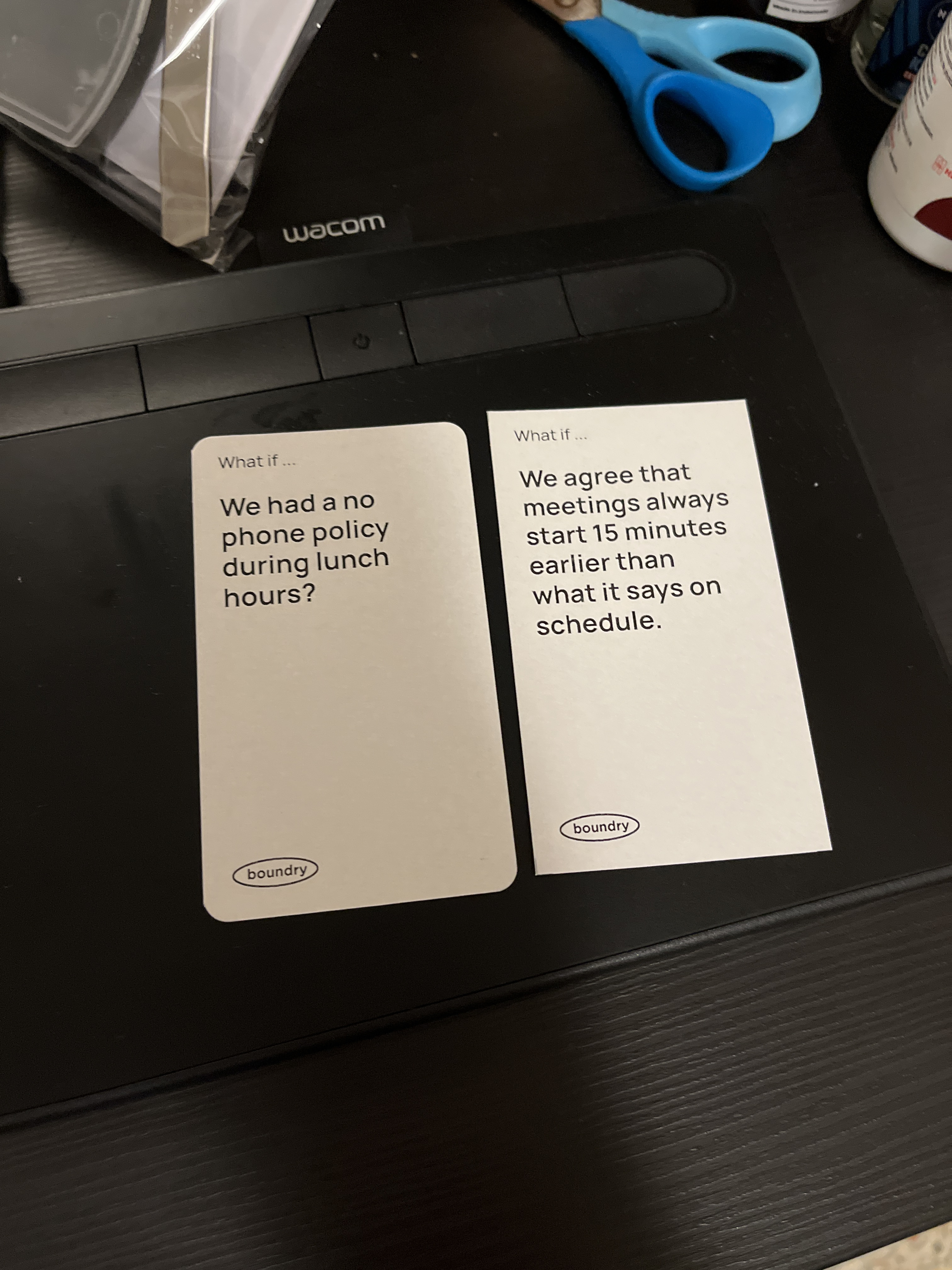
The team's own outcomes reflected this philosophy. Rather than producing abstract statements about collaboration, they agreed on practical commitments. Feedback should be direct and accompanied by potential solutions. Remote participation should be treated equally by ensuring everyone joins meetings digitally when one member is remote. Team members should remain open to critique while feeling comfortable saying no when necessary. Difficult issues should be addressed directly without becoming impersonal, and emotional literacy should be practiced in an environment where people feel safe expressing concerns. These were not rules imposed by leadership. They emerged through discussion and consensus, giving every participant ownership over the culture they were creating.
This is perhaps the most important lesson from Boundary. Healthy teams are not defined by the absence of conflict. They are defined by shared expectations for navigating it. Conflict becomes destructive only when people enter the conversation with different assumptions about respect, accountability, and communication. By making those assumptions visible, teams reduce uncertainty and replace guesswork with clarity. In many ways, Boundary demonstrated that the most meaningful design challenges are not always digital. Sometimes the designer's role is not to create a new interface but to facilitate better interactions between people. The product becomes a catalyst rather than the solution itself. Its success is measured not by how often someone clicks a button, but by whether conversations become more honest, expectations become clearer, and collaboration becomes more intentional.
That shift in perspective raises another question. If conversations can be designed to strengthen trust, how do we know whether they actually work? Like every design solution, good intentions are only the beginning. The real test comes when real people use the product, challenge its assumptions, and reveal where the experience succeeds and where it falls short. That is where Boundary's user-centered design process truly began.
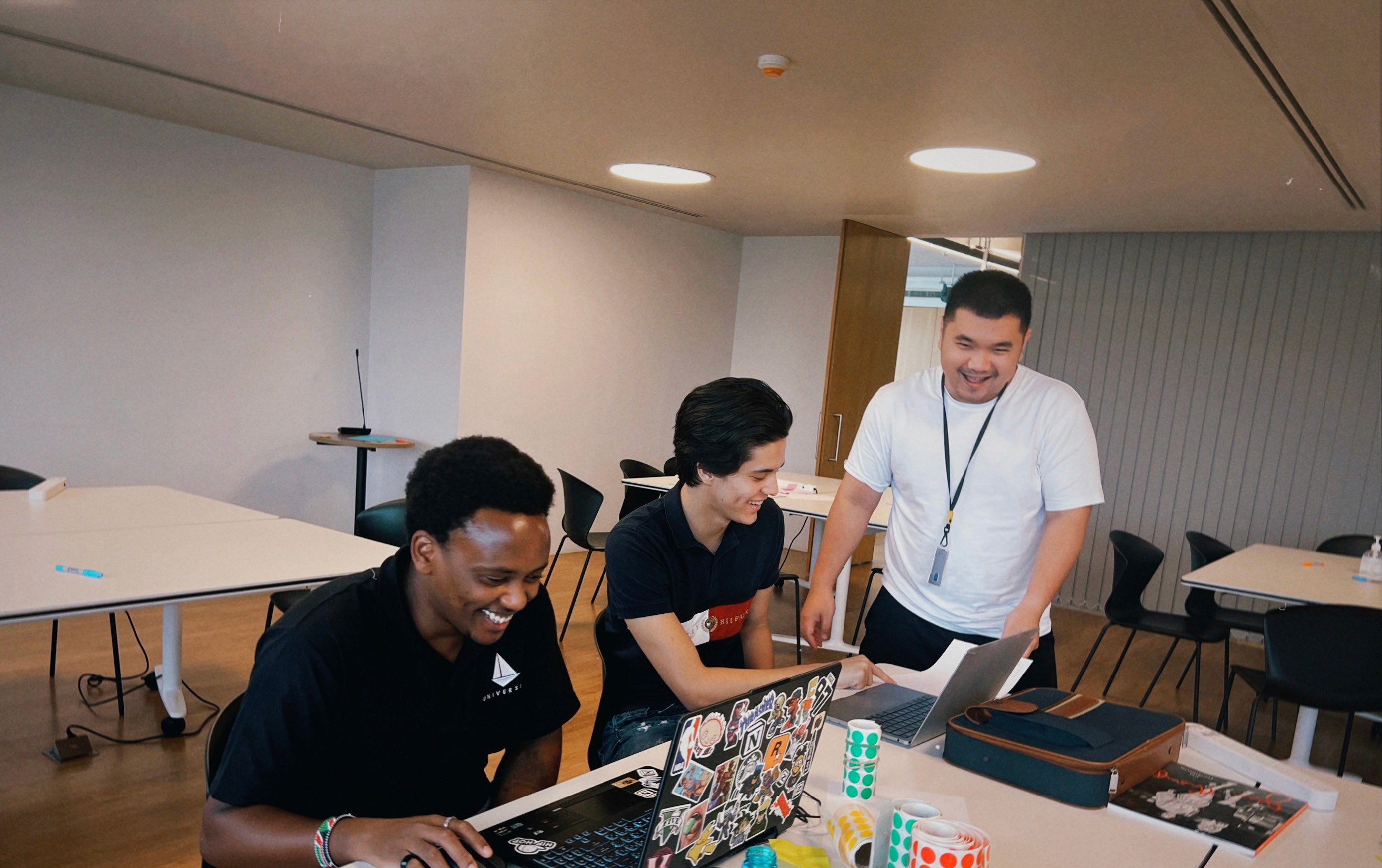
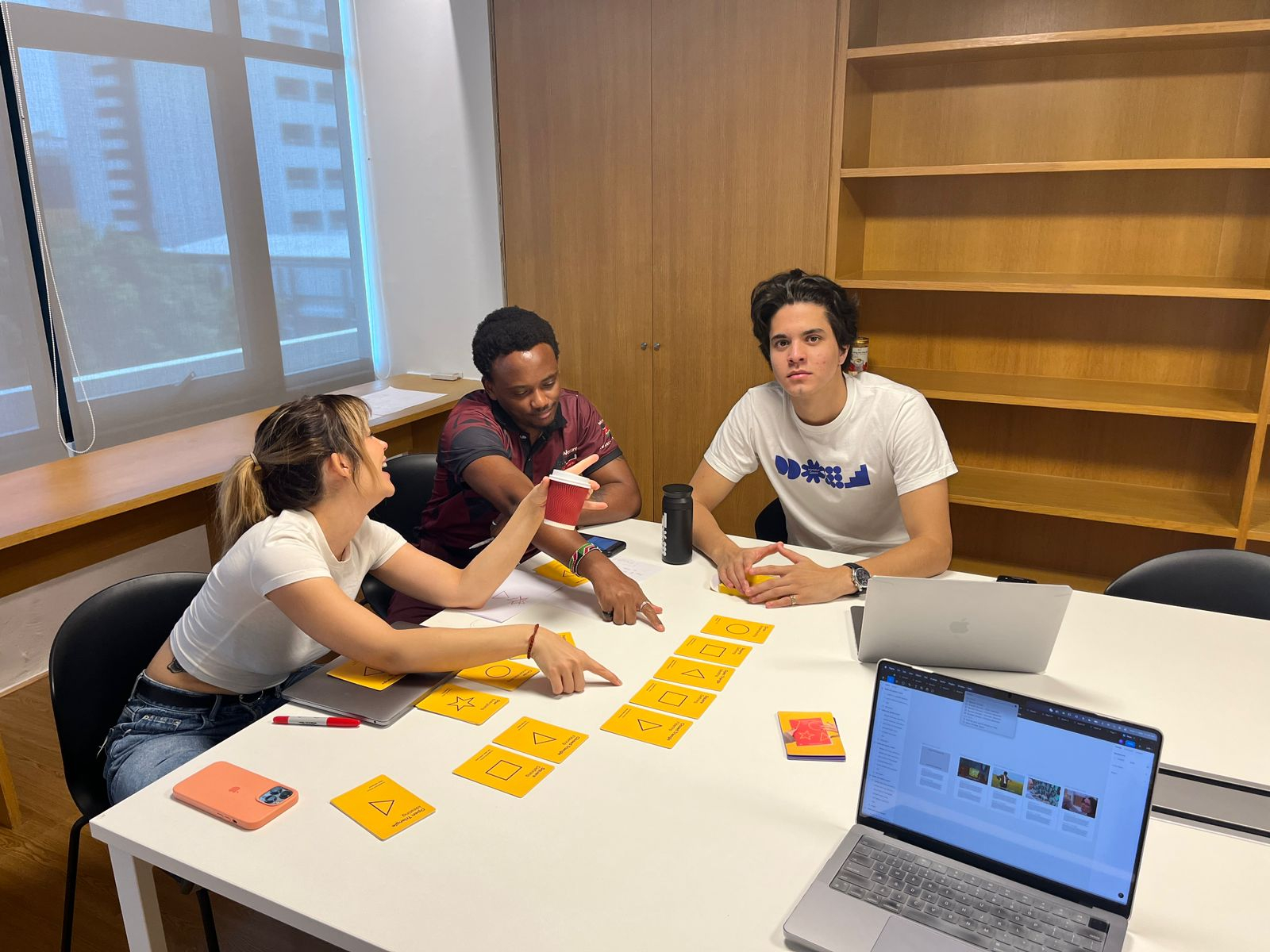
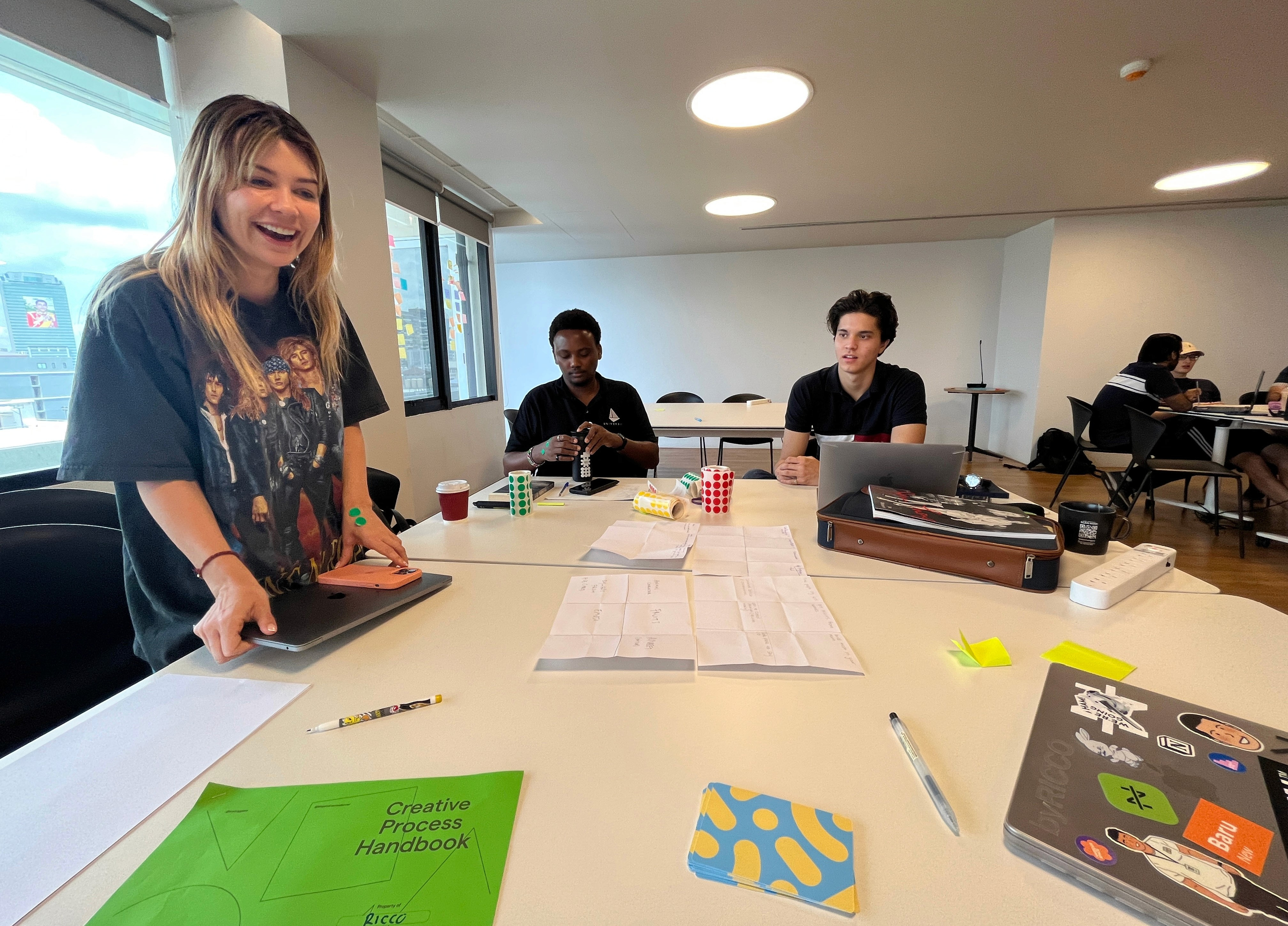
Good design begins by listening, not solving.
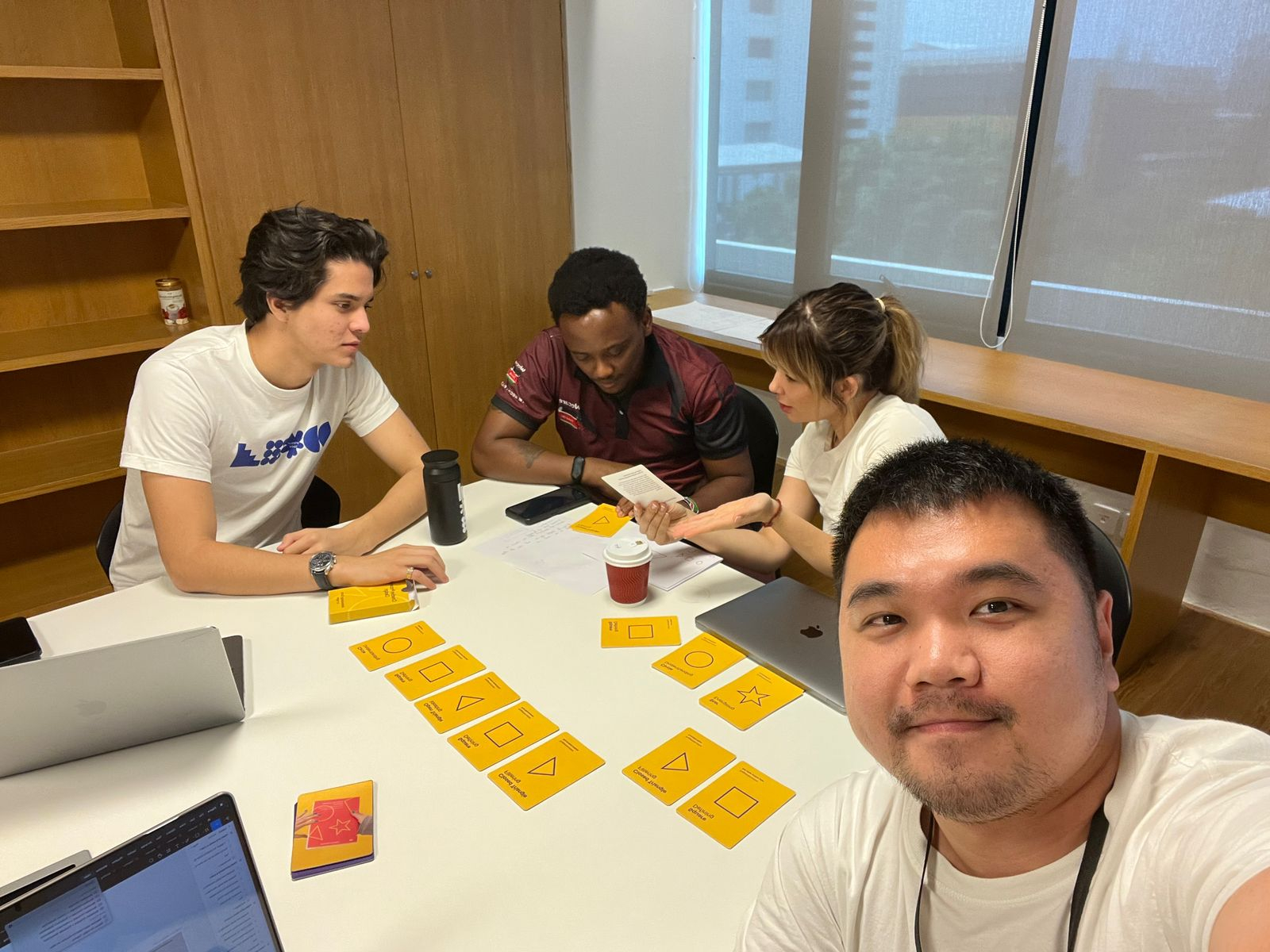
There is a temptation in every design project to move quickly toward solutions. Once the problem appears obvious, the instinct is to begin sketching interfaces, mapping user journeys, or brainstorming features. It feels productive because something tangible is being created. Yet some of the most expensive design mistakes begin with this assumption that the problem has already been understood.
Boundary challenged that instinct from the very beginning.
The project was never intended to become another collaboration platform filled with dashboards, notifications, or productivity metrics. Instead, it began with a much simpler question. Why do teams that are technically capable still struggle to work together? Rather than assuming the answer, the team adopted a user-centered design approach that prioritized understanding people before designing for them. The objective was not simply to build a useful product, but to understand the experiences that shaped collaboration in the first place.
This distinction matters because user-centered design is often misunderstood. It is frequently associated with usability, accessibility, or intuitive interfaces. Those elements are certainly important, but they represent only the visible outcome of a much deeper philosophy. At its core, user-centered design begins with humility. It assumes that designers do not have all the answers and that the people experiencing the problem are the most valuable source of insight. For Boundary, that meant looking beyond workflows and examining the everyday realities of teamwork. Teams often experience communication gaps, unresolved conflicts, unclear expectations, and inconsistent interpretations of shared values. None of these challenges are immediately visible in a project timeline or a task management board, yet they shape every decision people make together. Understanding those experiences became the foundation of the design process.
Instead of treating collaboration as a technical problem, Boundary approached it as a human one. Every interaction within the experience was designed to encourage dialogue rather than simply collect information. Activities were not included because they filled space in a workshop. They were designed to reveal perspectives that usually remained hidden. Discussions about values uncovered different priorities. Conversations about boundaries exposed assumptions that had never been questioned. Exercises that encouraged reflection helped participants understand not only how they viewed their teammates, but also how their teammates experienced them.
This process reinforced an important lesson about design. The first prototype is rarely a product. More often, it is a question.
Every prototype asks whether the designer's understanding of the problem is accurate. Every usability session tests assumptions that previously existed only on paper. Every conversation with users reveals details that no brainstorming session could have predicted. Good designers do not become attached to their first ideas because they understand those ideas exist to be challenged. Boundary followed this iterative approach throughout its development. Early concepts were continuously refined through testing and observation. Feedback from participants informed changes to the experience, allowing the design to evolve alongside a growing understanding of users' needs. Instead of viewing criticism as failure, the project treated every insight as evidence that the design process was working exactly as intended.
One of the most significant findings was that simplicity matters just as much in human interactions as it does in digital interfaces. Participants responded more positively when activities were straightforward, instructions were clear, and conversations felt natural rather than scripted. Complexity did not make the experience more meaningful. It often made it more intimidating. The lesson was familiar to any designer. When people spend their energy trying to understand the process, they have less energy available to engage with the purpose behind it.
Accessibility became equally important. Boundary was designed to accommodate teams with different levels of experience, ensuring that the process remained approachable regardless of participants' familiarity with collaborative exercises or design methodologies. Features such as the icebreaker activity were not included as entertainment. They reduced social friction, helping participants become comfortable before discussing topics that required honesty and vulnerability. Perhaps the most valuable outcome of the project was recognizing that user-centered design extends far beyond products and interfaces. The same principles that improve digital experiences also improve human experiences. Listening before solving. Testing before assuming. Iterating instead of defending. These practices are not exclusive to software. They are equally valuable when designing workshops, conversations, or team interactions.
Boundary demonstrated that the role of a designer is not always to create something new. Sometimes the greatest contribution is creating an environment where people better understand one another. The product simply provides the structure. The transformation comes from the conversations it enables. Of course, every design philosophy ultimately faces the same question. Does it work outside the design studio? The only meaningful way to answer that question was to place Boundary in front of real users, observe how they interacted with it, and allow their experiences to shape what came next. That stage of the project would prove that the most valuable feedback rarely confirms a designer's assumptions. Instead, it challenges them.
The best feedback challenges your assumptions.
Every design project reaches a point where ideas must confront reality. Research provides direction. Brainstorming generates possibilities. Prototypes offer a glimpse of what the final experience might become. Yet none of these stages answer the question that matters most. How will real people respond when the design is no longer theoretical? For many designers, this is the most uncomfortable phase of the process. User testing exposes weaknesses that remain invisible inside the studio. Features that seemed intuitive become confusing. Instructions that appeared straightforward require clarification. Carefully considered interactions produce unexpected behaviors. It is tempting to see these moments as failures, but they are often the point where design becomes meaningful.
Boundary was no exception.
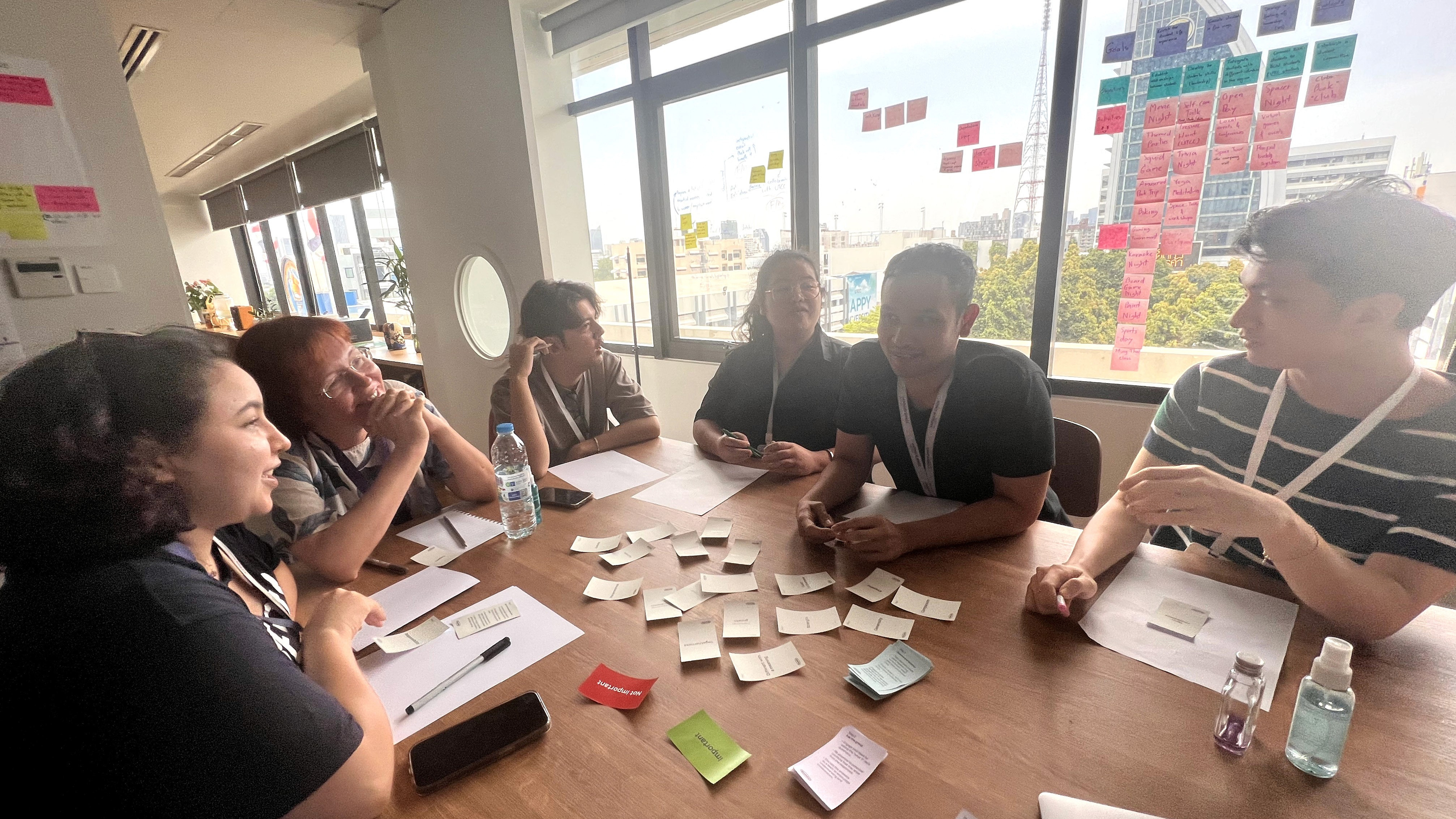
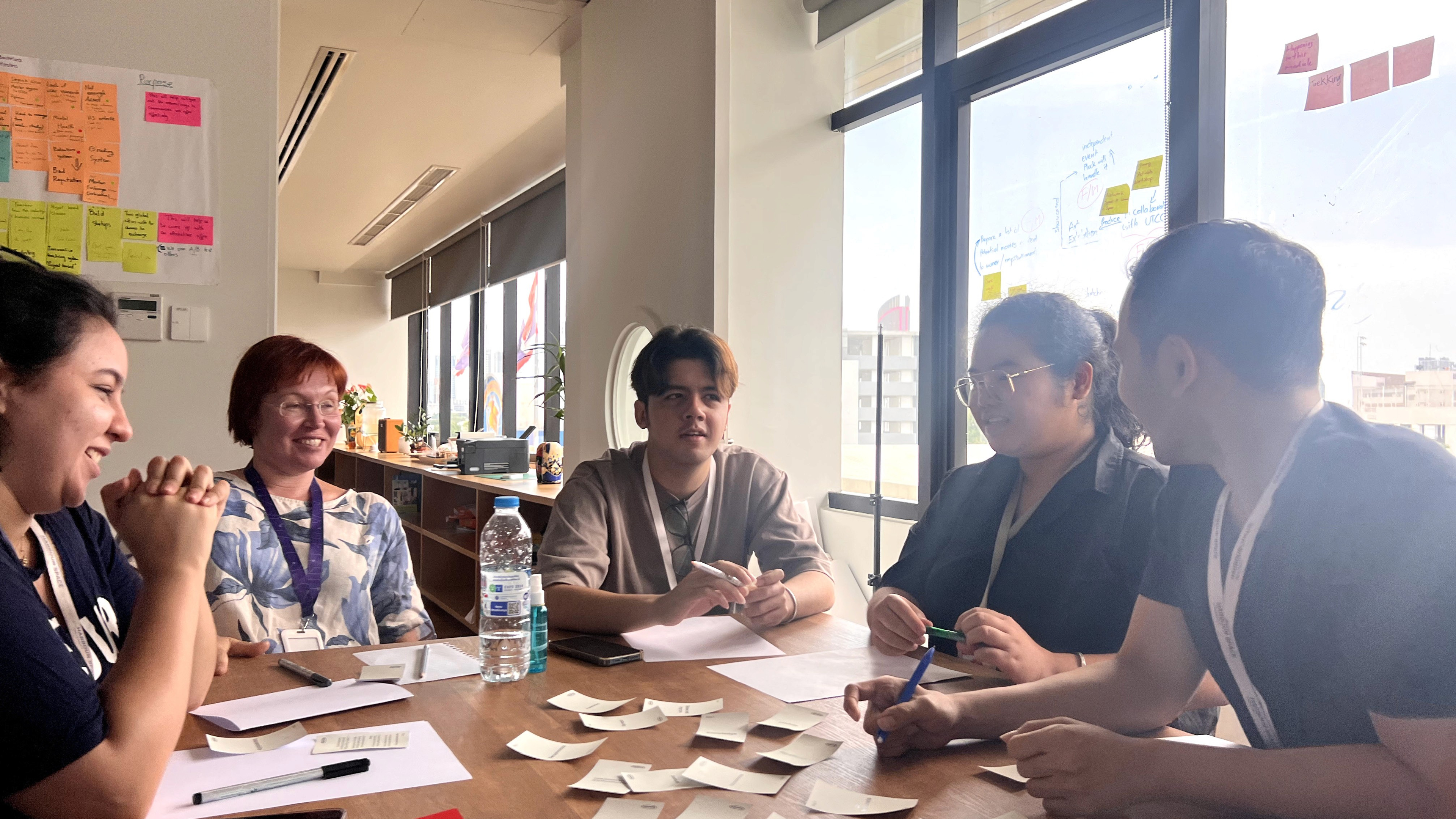
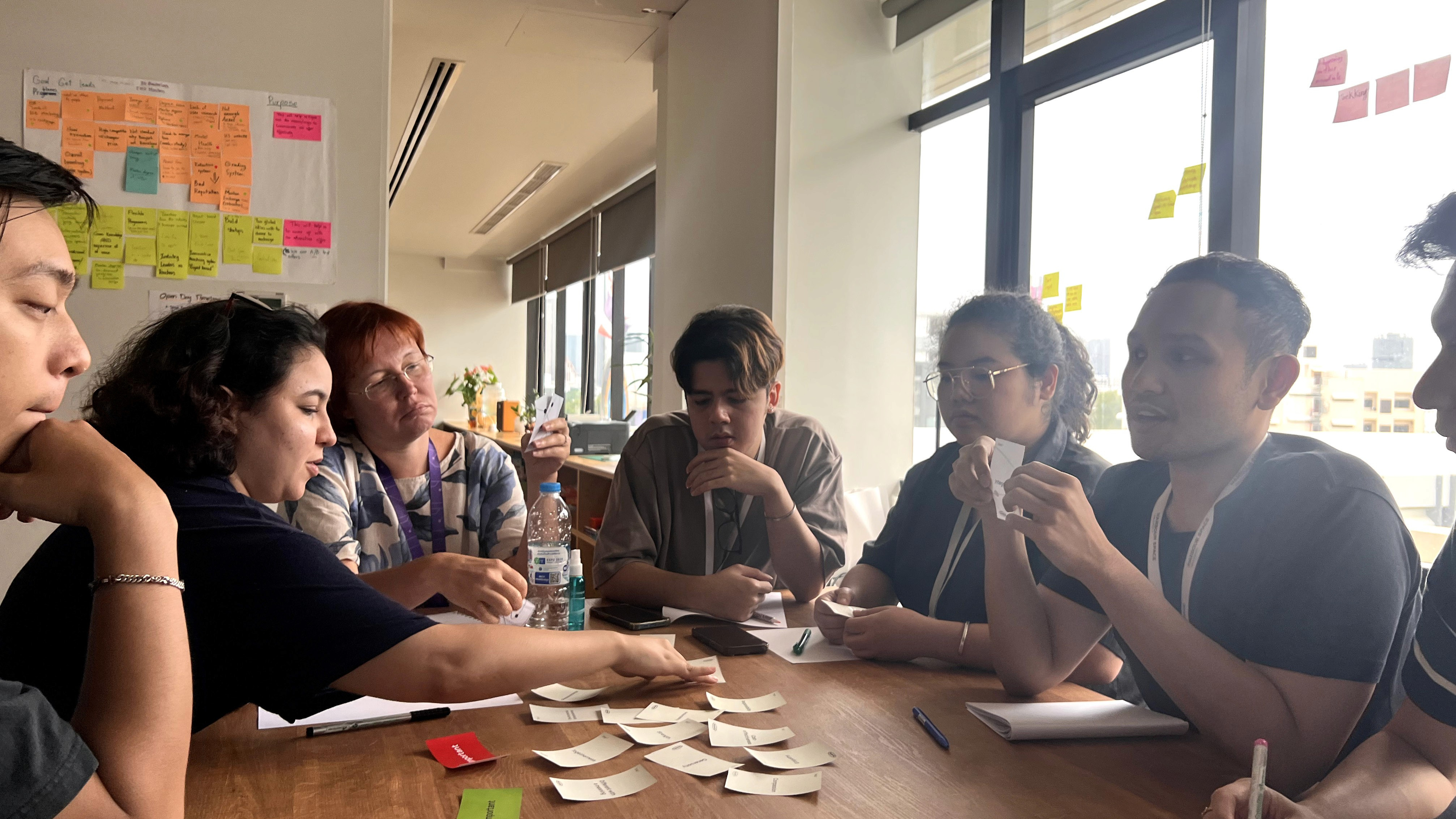
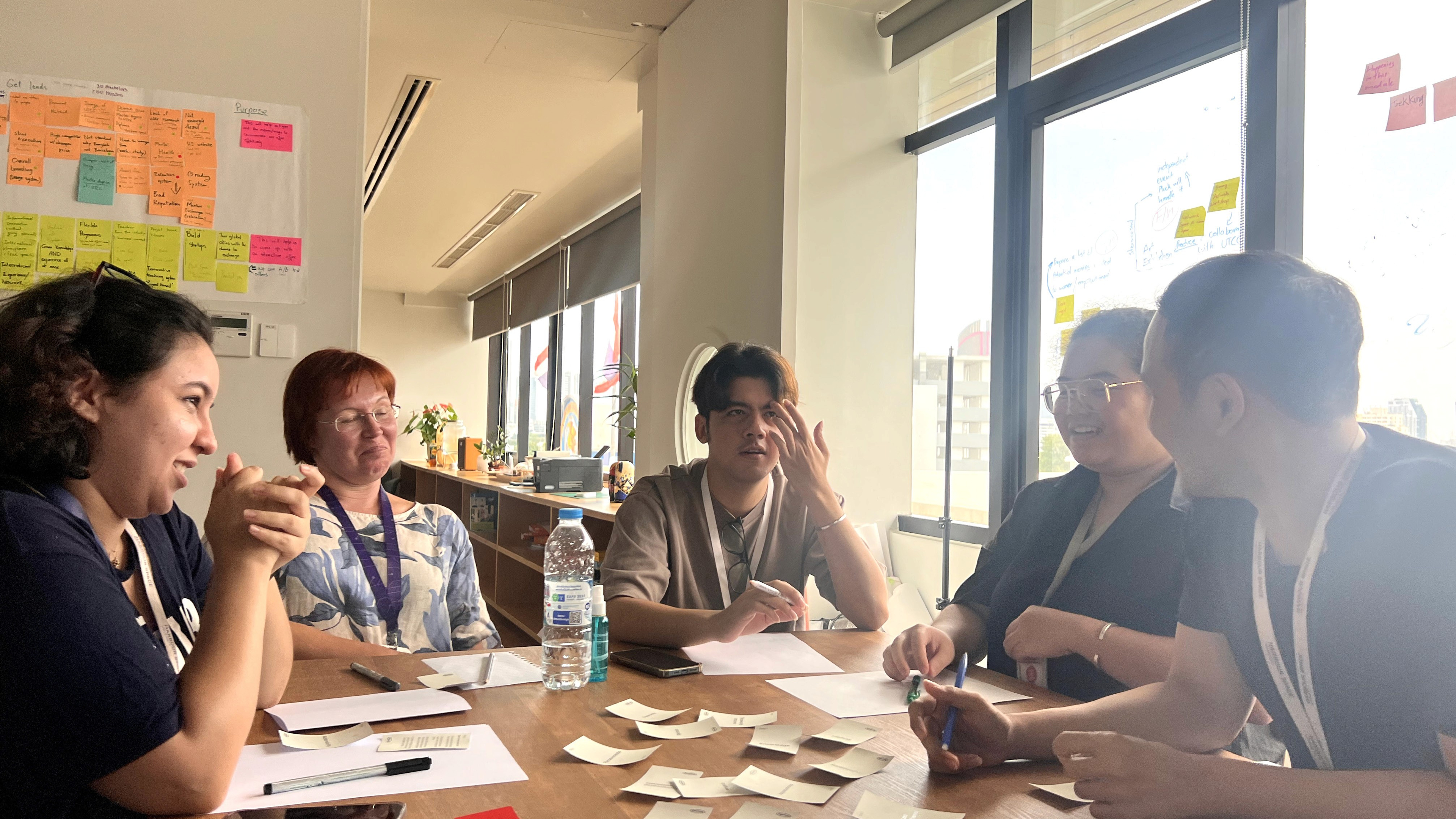
Rather than evaluating the experience internally, the project was tested with seven faculty members at Harbour Space University, a group whose team dynamics reflected many of the same collaboration challenges identified during the research phase. Some members had worked together for more than six months, while others had joined more recently. This mix created an ideal environment for observing how people navigated communication, trust, and shared expectations within an established team.
The purpose of the testing was never to prove that the solution worked. It was to discover where it did not. That distinction is what separates user-centered design from feature-centered design. A feature-centered approach seeks validation. A user-centered approach seeks understanding. The goal is not to hear that the design is good. The goal is to uncover why users hesitate, where they become confused, and which parts of the experience fail to support their needs. One of the earliest observations challenged an assumption many designers make. Detailed instructions do not always create better experiences. In some cases, participants found that overly specific guidance limited their creativity and made conversations feel more constrained than collaborative. Instead of encouraging discussion, excessive structure sometimes discouraged it. Participants became more focused on following instructions correctly than engaging meaningfully with one another.
The opposite proved equally problematic.
When instructions became too vague, uncertainty replaced engagement. Participants hesitated because they were unsure what was expected of them. Instead of creating flexibility, ambiguity introduced friction. This revealed an important design principle that extends well beyond workshops and digital products. Good design rarely exists at either extreme. It finds balance between providing enough guidance to inspire confidence and enough freedom to encourage ownership.
Another insight emerged from the complexity of certain activities. Some participants experienced cognitive overload when individual tasks required too many steps or too much explanation. The problem was not the ideas themselves. It was the mental effort required before meaningful conversations could even begin. Every additional instruction became another obstacle standing between participants and the purpose of the exercise.
The solution was not to remove depth from the experience. It was to remove unnecessary complexity. This distinction matters because simplicity is often misunderstood. Simplifying a design does not mean making it less thoughtful. It means ensuring that every element serves a clear purpose. When people no longer struggle to understand the process, they are free to focus on the conversation the process was designed to facilitate. Boundary evolved in this direction by streamlining activities and presenting instructions in a clearer, more accessible manner. Perhaps the most revealing feedback was not about usability at all. Participants suggested introducing an icebreaker before the more reflective exercises began. On the surface, this appears to be a small addition. In reality, it addressed one of the project's central challenges.
People rarely begin difficult conversations without preparation.
Trust cannot be expected the moment participants enter a room. Even in environments where people know one another professionally, discussing personal values, communication styles, or workplace boundaries requires a degree of comfort that does not appear automatically. The icebreaker created that transition. It reduced social tension, encouraged participation, and established a more welcoming atmosphere before deeper discussions unfolded. What seemed like a minor feature became an essential part of the overall experience. Testing also reinforced the importance of values exploration. Participants responded positively when the experience encouraged them to identify and prioritize the principles that mattered most to their team. Rather than beginning with rules, they began with shared beliefs. This changed the nature of the discussion. Team expectations no longer felt imposed. They emerged from collective reflection, giving participants a stronger sense of ownership over the agreements they created together.
Looking back, none of these improvements resulted from better brainstorming sessions or more ambitious feature lists. They emerged because real users challenged the assumptions embedded within the original design. Every moment of hesitation, every question, and every suggestion revealed an opportunity to improve the experience. Instead of defending the initial concept, the project evolved alongside the people it was designed to serve. This is one of the enduring lessons of user-centered design. Designers often believe they are creating solutions. In reality, they are creating hypotheses. User testing determines whether those hypotheses reflect how people actually think, behave, and interact. The prototype is not the destination. It is the beginning of a conversation between the designer and the user.
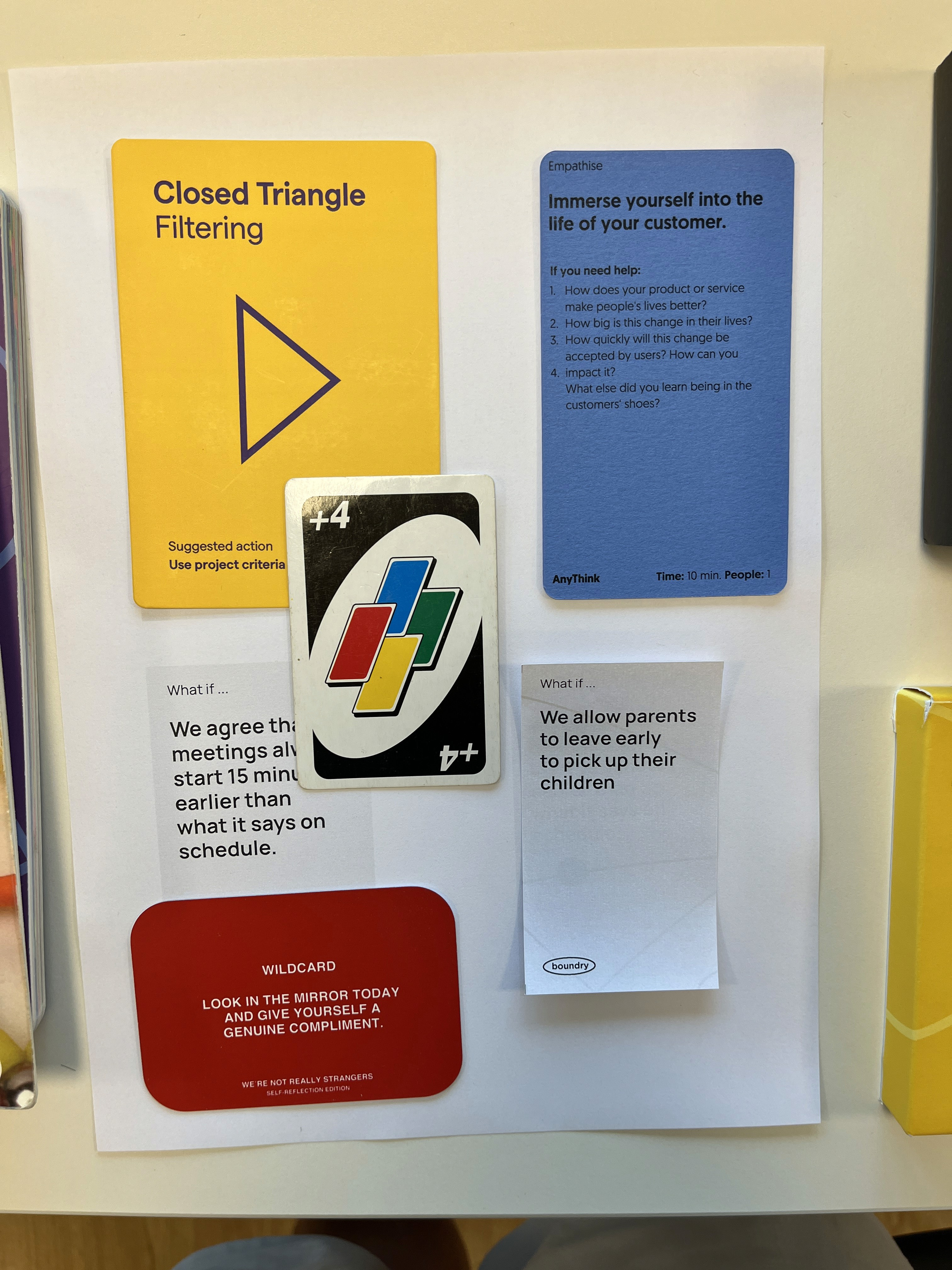
Boundary's final iteration reflected this philosophy. Clearer instructions reduced confusion without limiting discussion. Simpler activities lowered cognitive effort while preserving meaningful engagement. The addition of an icebreaker encouraged openness, and a stronger emphasis on values helped teams build agreements rooted in shared purpose rather than obligation. The final product was not successful because it contained more features than the original concept. It was successful because it listened more carefully to the people using it. The greatest outcome of the project was not the prototype itself. It was the realization that trust grows through iteration in much the same way that good design does. Neither emerges fully formed. Both require openness, feedback, reflection, and a willingness to improve. Designers iterate on products. Teams iterate on relationships. In both cases, meaningful progress begins with the humility to accept that the first version is rarely the best one.

Conclusion, designing the conditions for trust.
Looking back, Boundary was never simply a design exercise about improving teamwork. It became an exploration of a much larger question. What is the role of design when the problem is not an interface, a workflow, or a piece of technology, but the relationships between people?
The answer was both simpler and more profound than we expected.
Design cannot make people trust one another. It cannot eliminate conflict, guarantee honesty, or ensure that every difficult conversation ends in agreement. Human relationships are far too complex for any framework, workshop, or digital product to control. Trust remains deeply personal. It develops at different speeds, through different experiences, and for different reasons. No designer, manager, or organization has the ability to manufacture it.
What design can do is remove the barriers that prevent trust from growing. Throughout the Boundary project, every iteration pointed toward the same conclusion. Teams do not struggle because they lack intelligence or ambition. More often, they struggle because expectations remain unspoken, values remain undefined, and assumptions remain invisible. People work together every day without ever discussing how they want to communicate, resolve disagreements, or support one another through uncertainty. They focus on completing projects while leaving the relationships that sustain those projects to develop on their own.
Sometimes those relationships flourish. Often, they do not. Boundary challenged this pattern by making the invisible visible. Instead of assuming that collaboration would naturally emerge over time, it encouraged teams to pause and examine the foundations of their working relationships. Through structured conversations, value exploration, and consensus-building activities, participants were invited to design something most organizations overlook, their social contract. Rather than treating culture as something that happens accidentally, the project demonstrated that culture becomes stronger when people intentionally shape it together.
Perhaps the most important lesson was that the product itself was never the destination. The cards, prompts, activities, and discussions were simply mechanisms for creating better conversations. Their purpose was not to provide answers, but to help teams ask questions they might never have considered on their own. What do we value? How do we want to receive feedback? What behaviors help us perform at our best? Where should our boundaries exist? These are deceptively simple questions, yet many teams work together for years without discussing them. That absence of conversation is rarely intentional. Modern organizations operate at extraordinary speed. Meetings lead to more meetings. Deadlines arrive before the previous ones have passed. Productivity becomes the measure of progress, leaving little room to examine the quality of the relationships that make productivity possible. Teams become experts at delivering work while remaining strangers to one another's expectations, communication styles, and concerns.
Boundary offered an alternative perspective.
It suggested that some of the most valuable work a team can do happens before the project begins. Before assigning tasks, defining milestones, or selecting tools, teams should first understand how they intend to work together. This does not slow progress. It creates the foundation that allows progress to happen more consistently when pressure inevitably arrives. The project also reinforced a broader lesson about design itself. User-centered design is often associated with interfaces, usability, and digital products, yet its underlying principles extend far beyond the screen. Listening before solving. Testing before assuming. Iterating instead of defending. Designing with people rather than for them. These principles improve products because they begin with empathy. They improve teams for exactly the same reason.
Perhaps this is where the future of design is heading. As technology becomes increasingly capable of automating routine tasks, the challenges that remain are becoming more deeply human. Collaboration. Trust. Communication. Belonging. Psychological safety. These are not problems that artificial intelligence, productivity software, or better project management platforms will solve on their own. They require intentional environments where people feel respected enough to contribute honestly and confident enough to disagree constructively. Design has always been about shaping experiences. Sometimes those experiences involve products. Sometimes they involve services. Sometimes they involve systems. And sometimes, as Boundary demonstrated, they involve the conversations that determine whether people ever become a team in the first place.
The title of this article began with a contradiction. You cannot design trust. After completing this project, that statement feels more convincing than ever. Trust is not something that appears because a designer creates a workshop, a manager schedules a retreat, or an organization introduces a new framework. It cannot be measured through a dashboard or implemented through a feature update. But the second half of the statement is equally important. You can design the conditions for it. You can create environments where people feel safe enough to speak honestly. You can encourage conversations that would otherwise never happen. You can establish structures that make expectations visible instead of assumed. You can build experiences where vulnerability is met with understanding rather than judgment, where disagreement becomes a path toward better ideas rather than a source of division, and where culture becomes something people actively create instead of something they passively inherit.
In the end, that may be the most valuable contribution design has to offer. Not creating products that people simply use. But creating experiences that help people understand one another a little better. Because every successful product begins with a successful team. And every successful team begins with the conditions that allow trust to grow.
This editorial piece is sourced from Boundry.
Everything above is the theory behind the product. Boundary is where these ideas about trust and shared social contracts became an actual tool for teams to use together. This editorial is a reflection of a much larger body of work. See where it all began.
Read Case Study