InsidetheSamnakbytrackingThailand'sundergroundAjarnswhereritualbloodlinesbecomelivingink.
Client
Myself.
Tools
Figma.
Adobe Illustrator.
Adobe Photoshop.
Miro Board.
Timeline
Discovery & Ethnography (4 Weeks).
Architecture & Wireframing (4 Weeks).
Visual Identity & UI Systems (4 Weeks).
Prototyping & Sound Integration (4 Weeks).
Roles
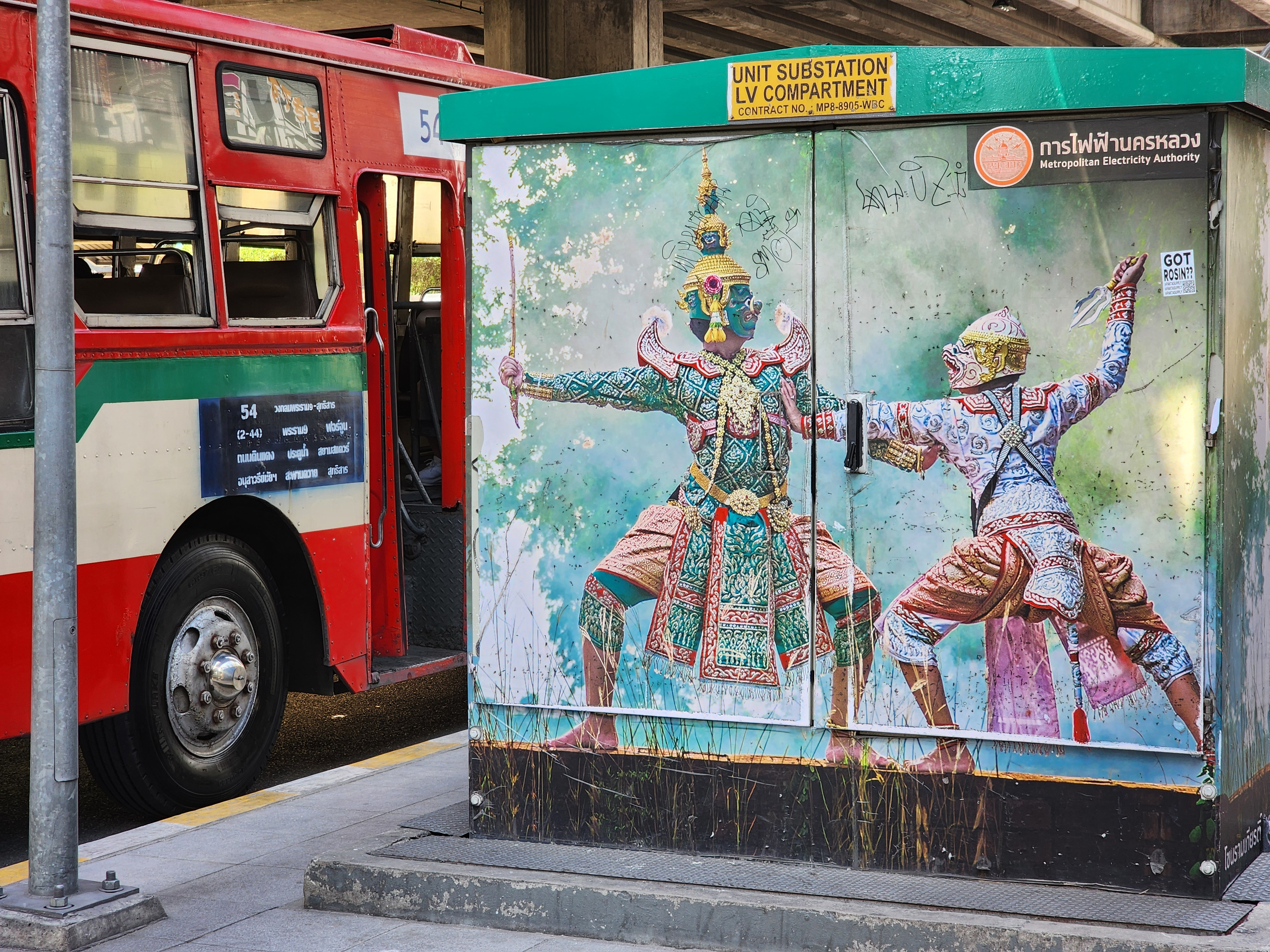
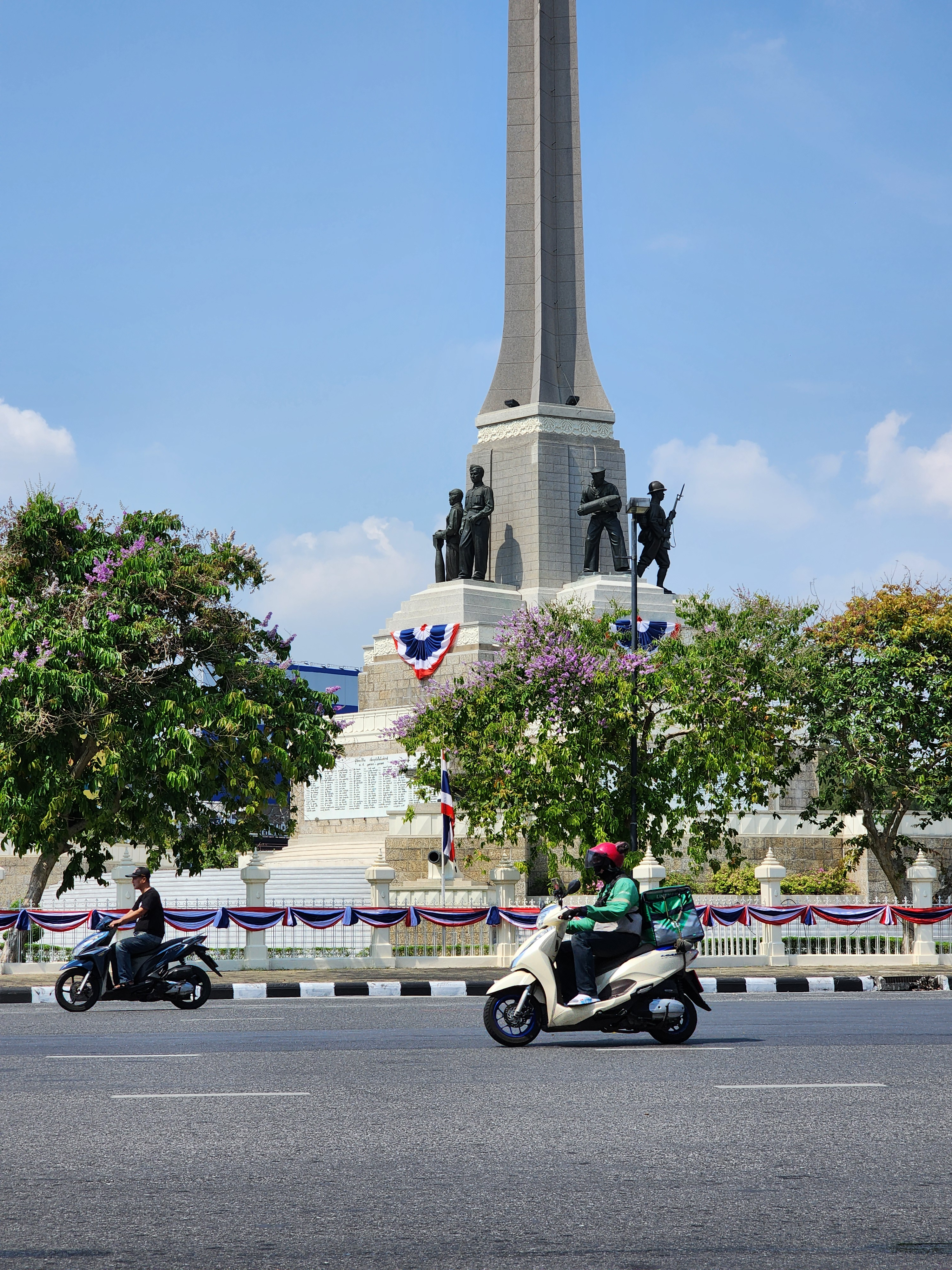
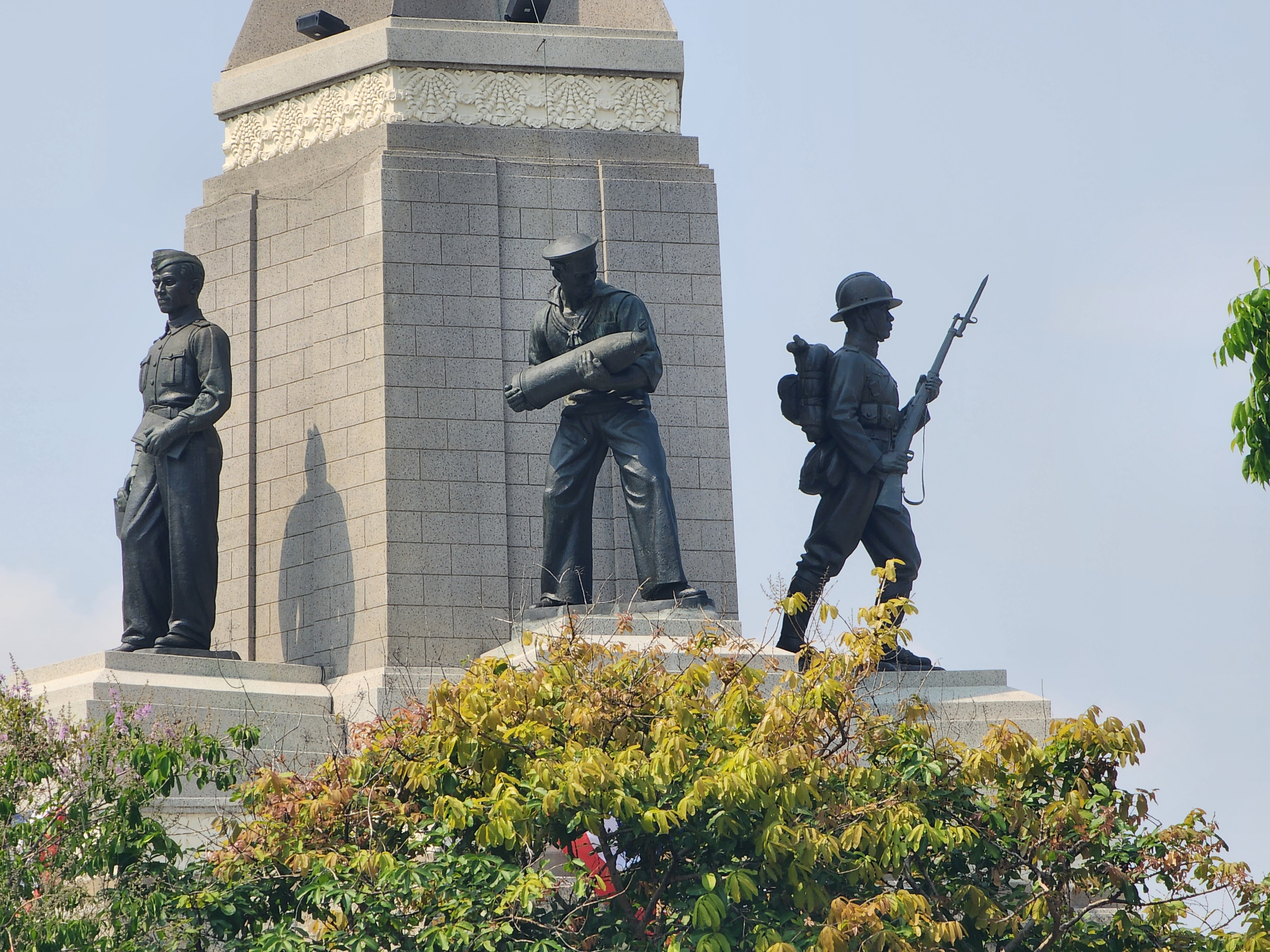
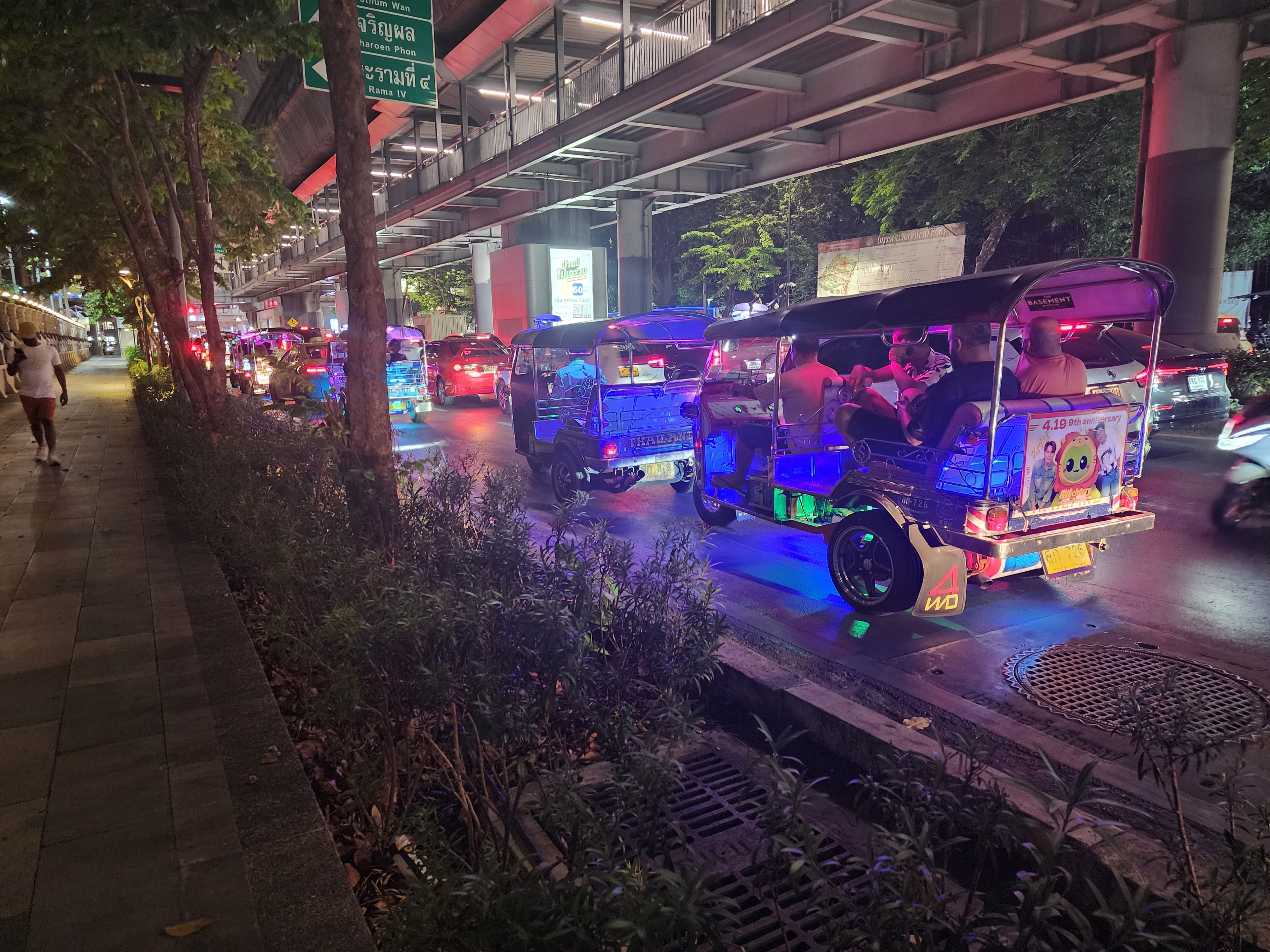
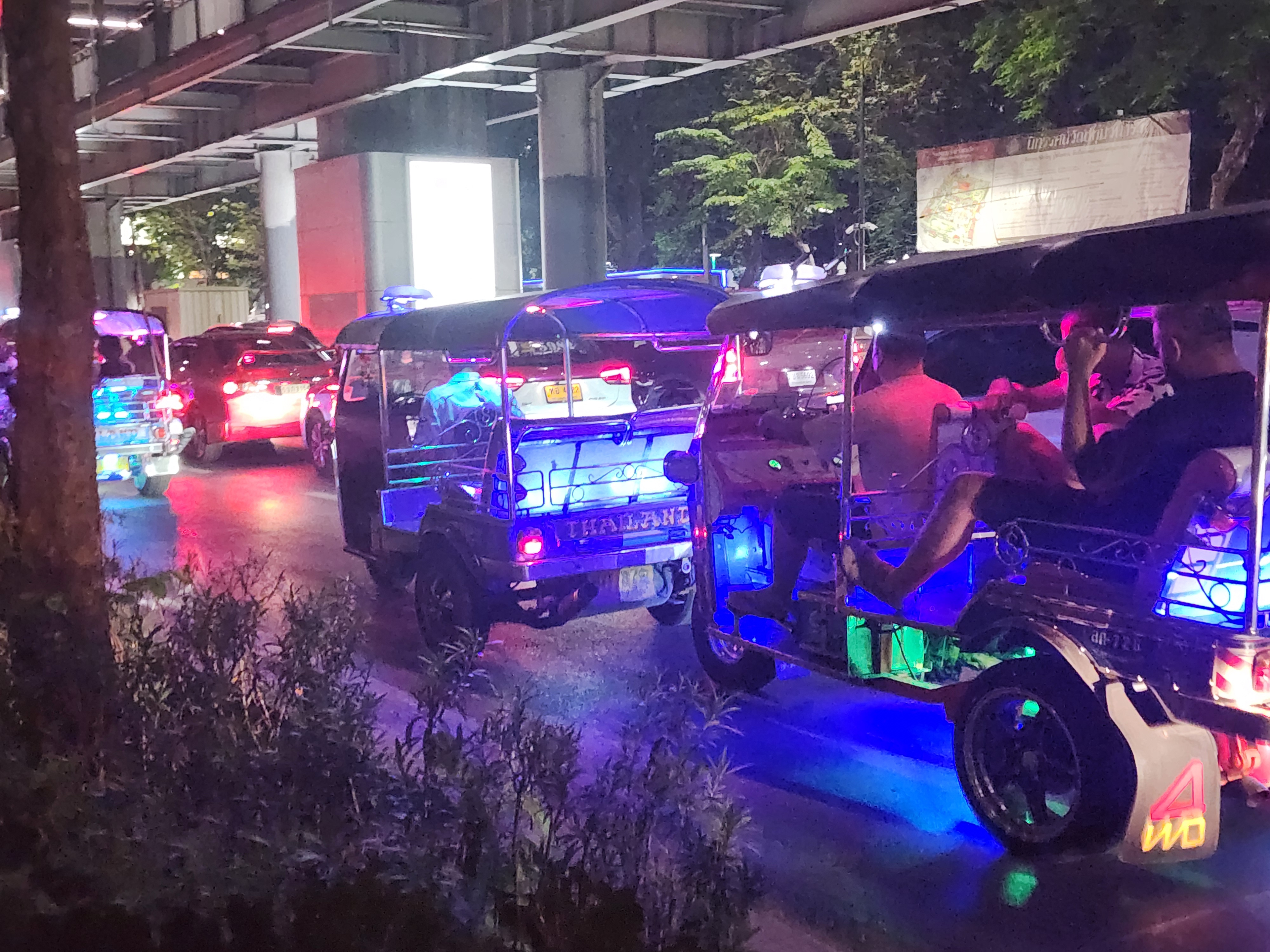
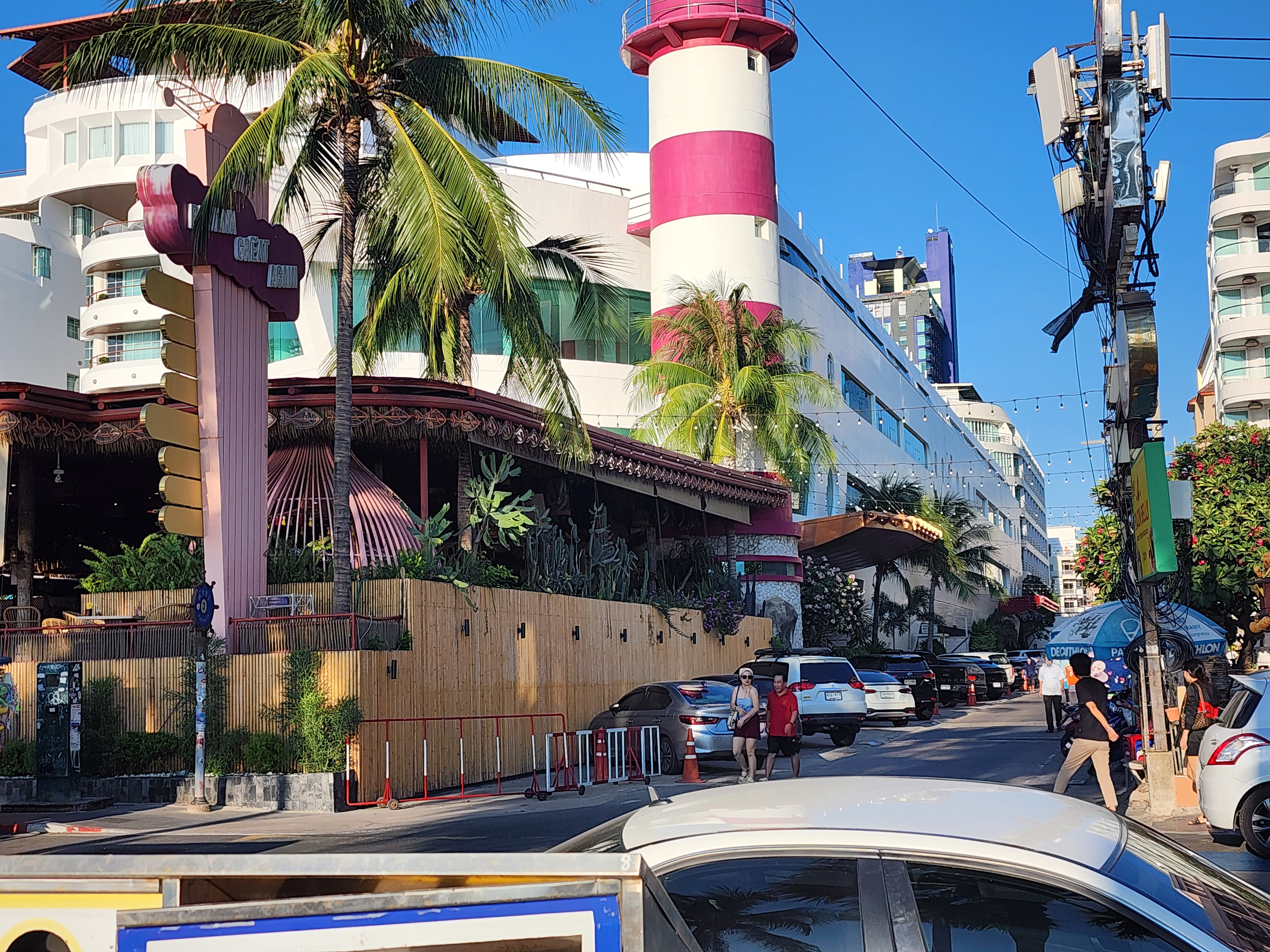
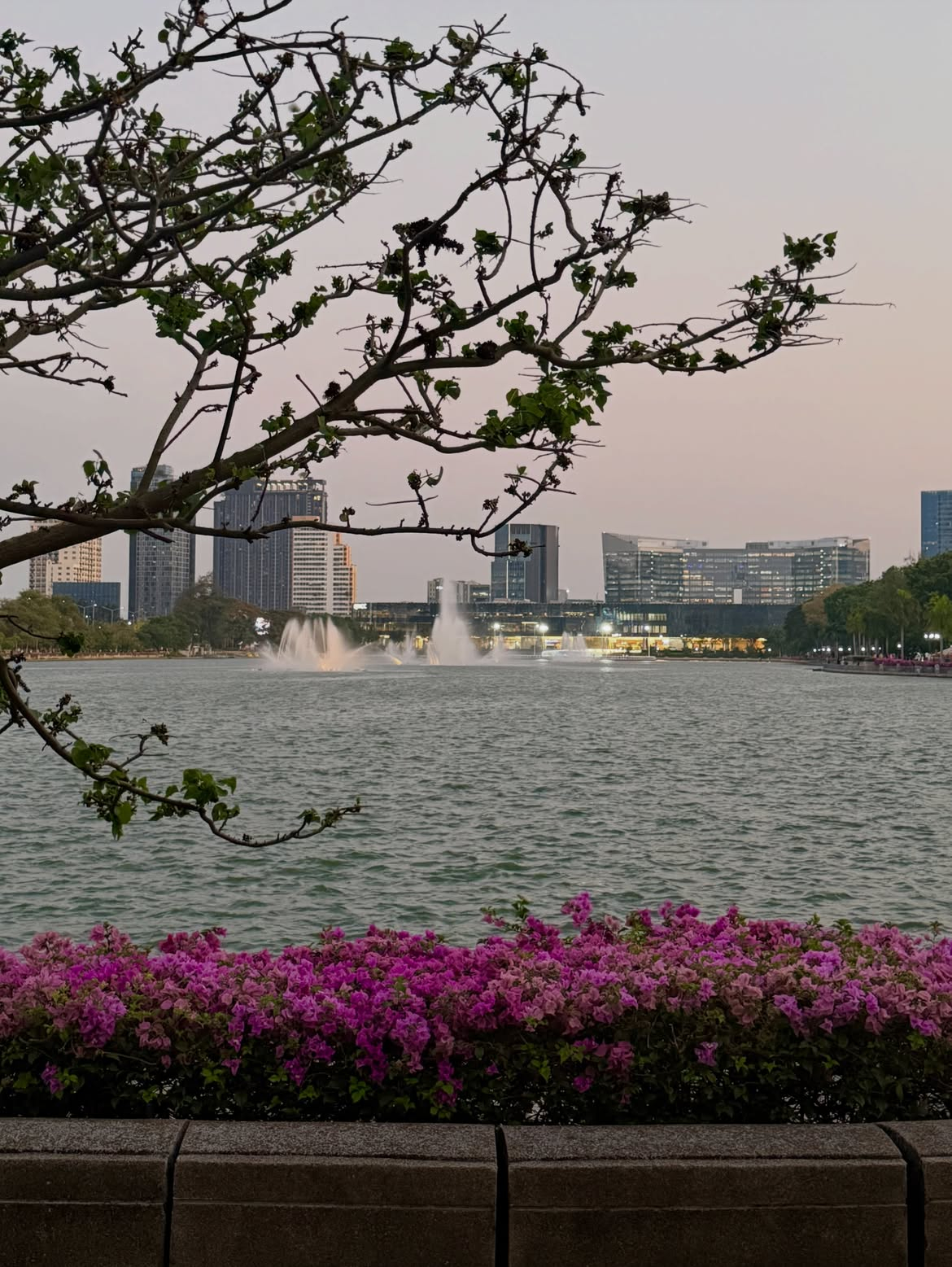
Before you enter Thailand's hidden Samnak, you must first walk Bangkok, where every street conceals another story waiting to be discovered.
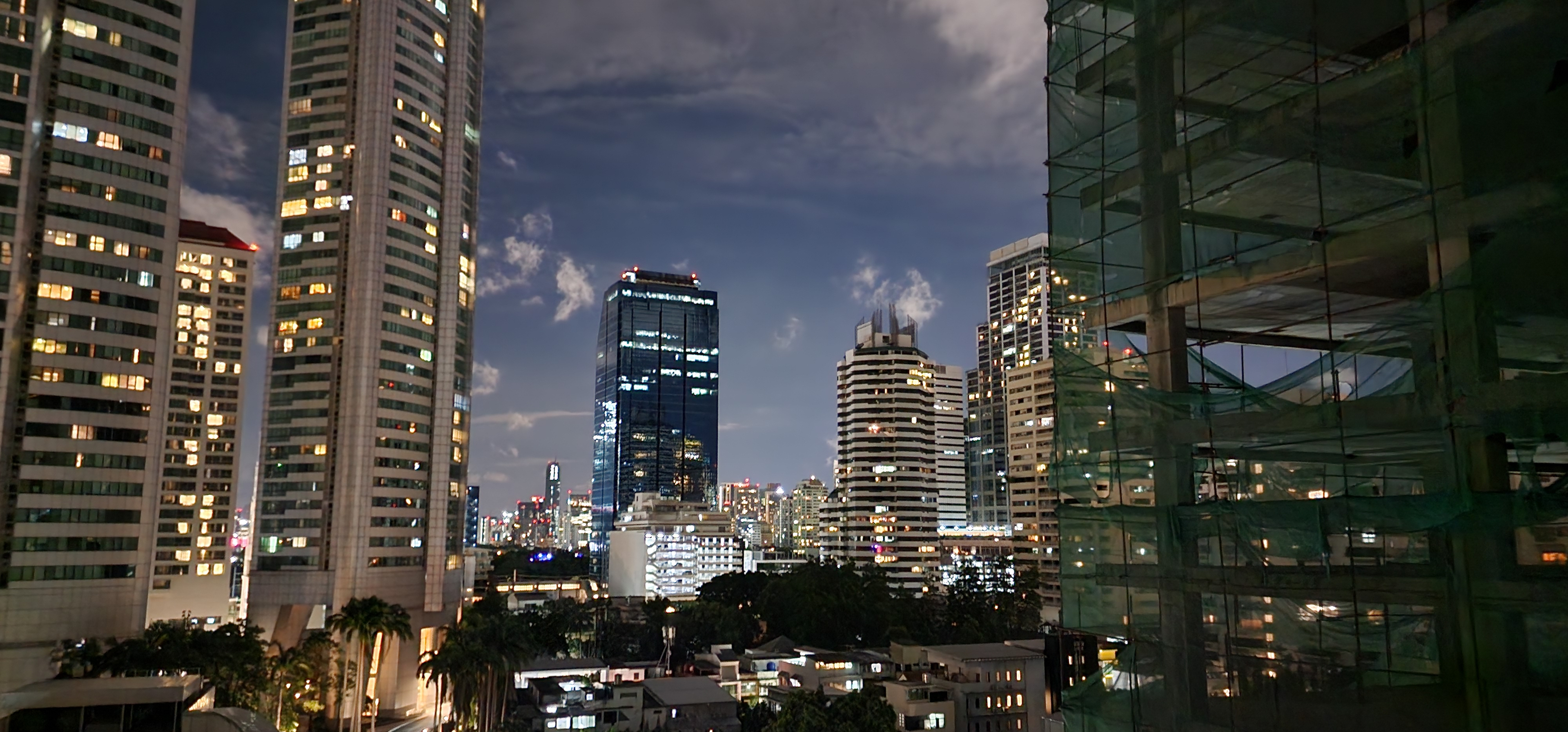
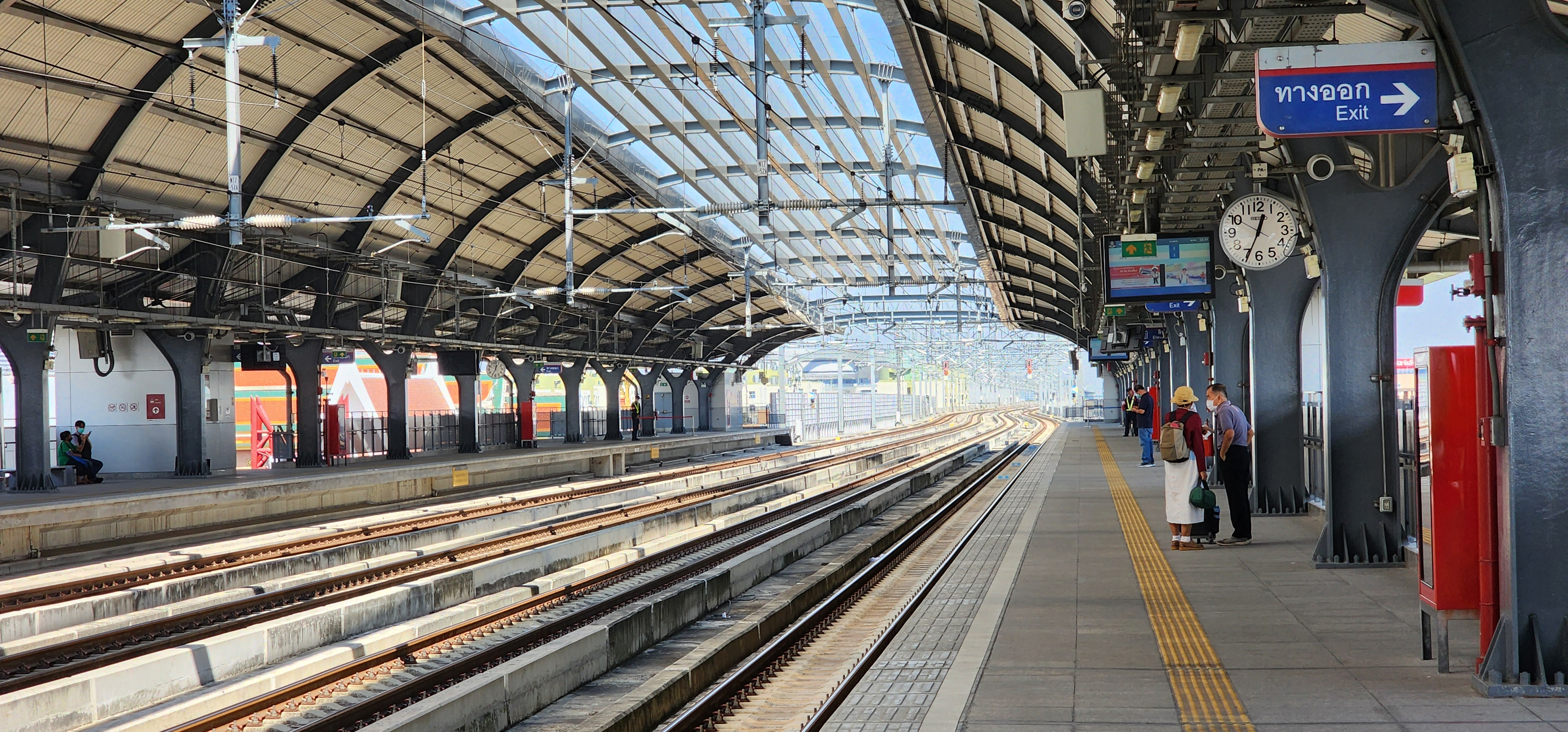
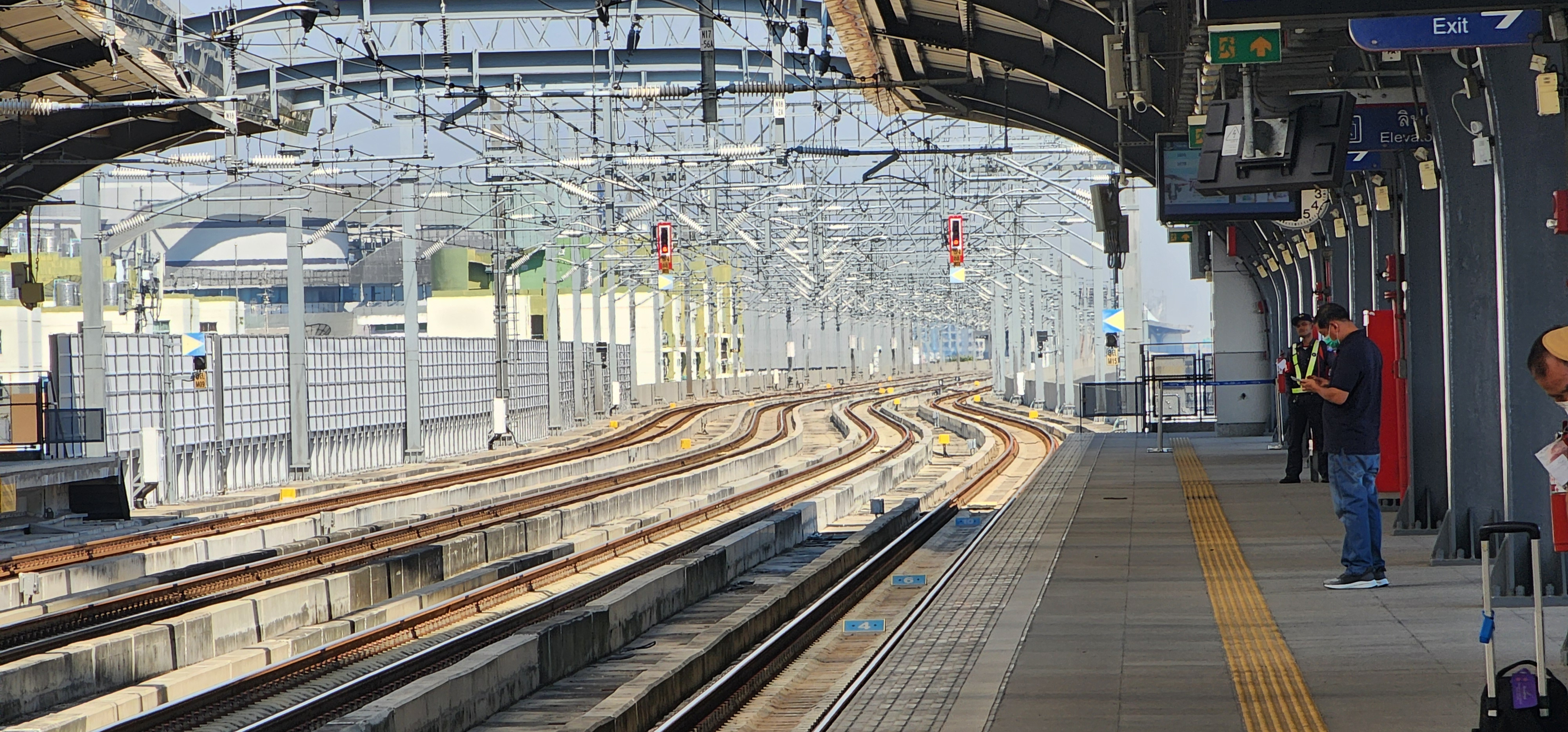
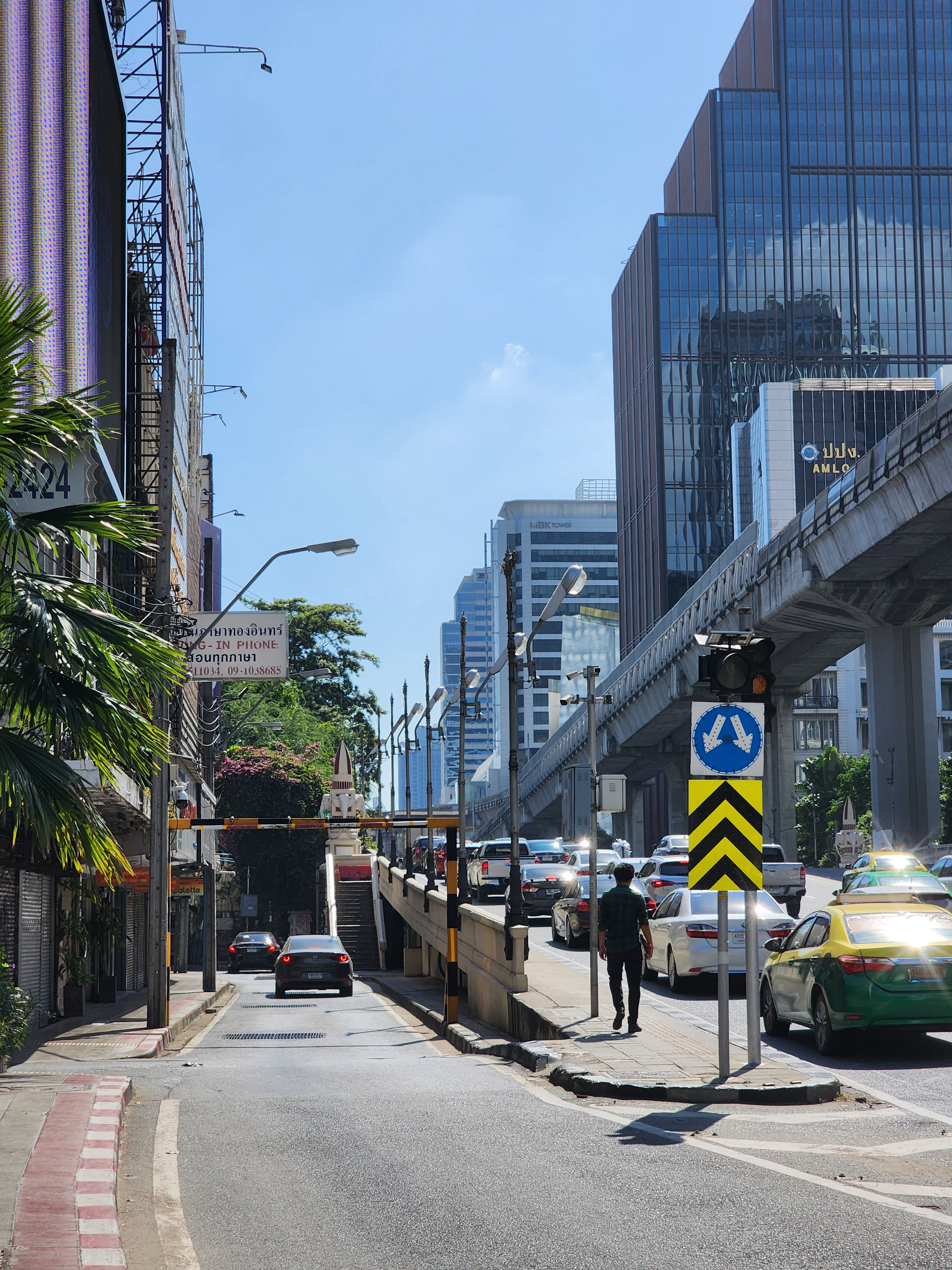
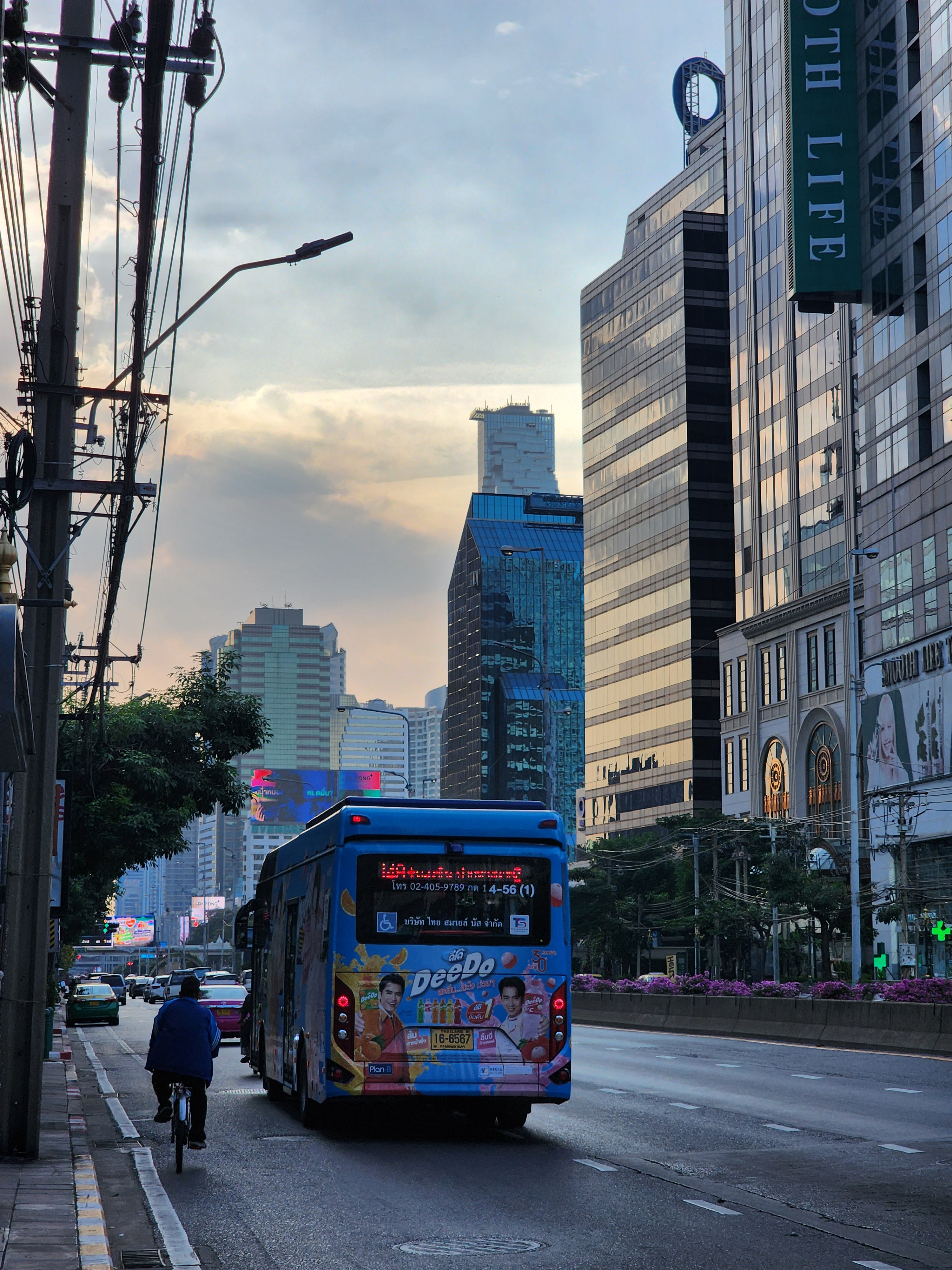
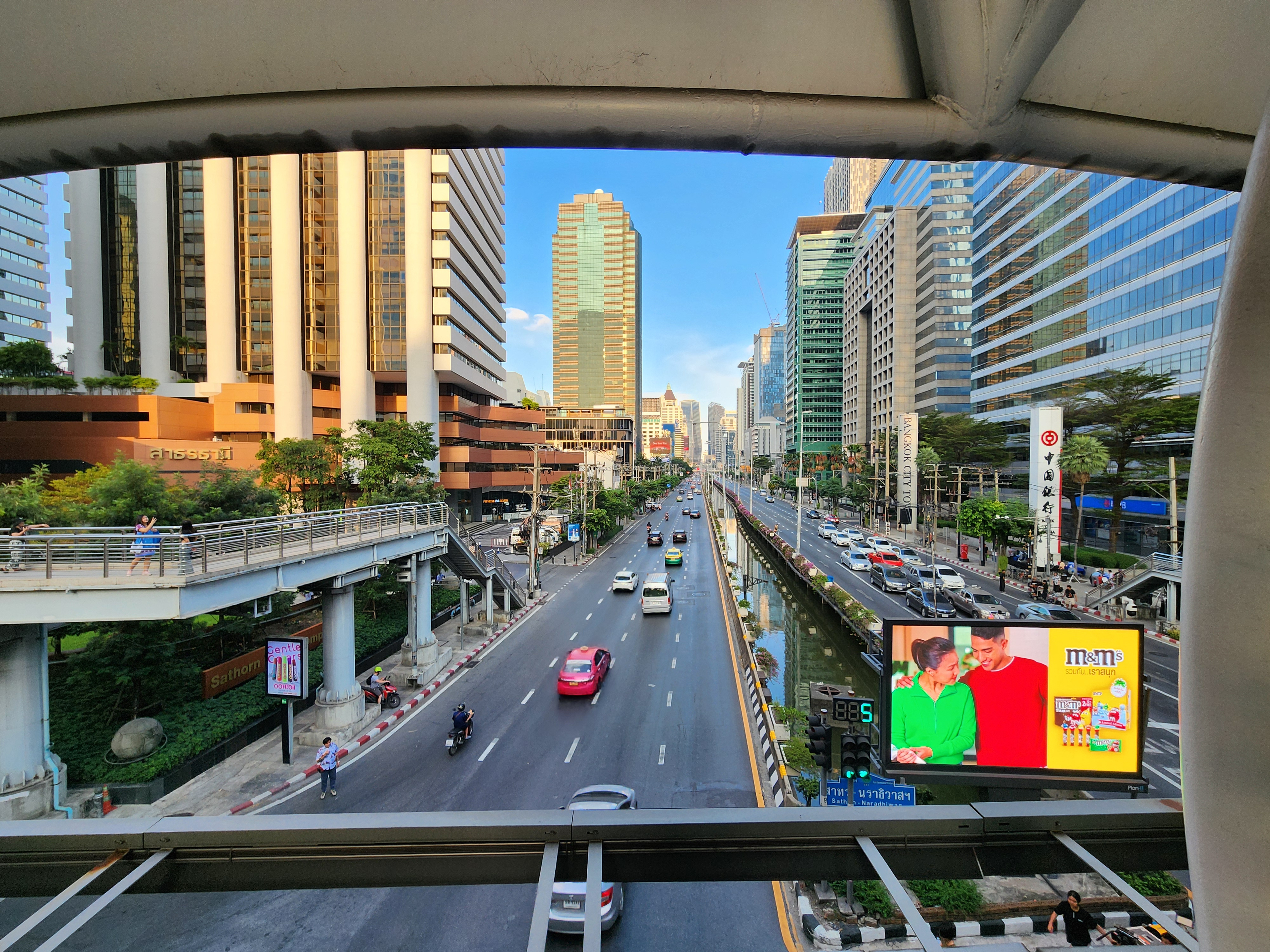
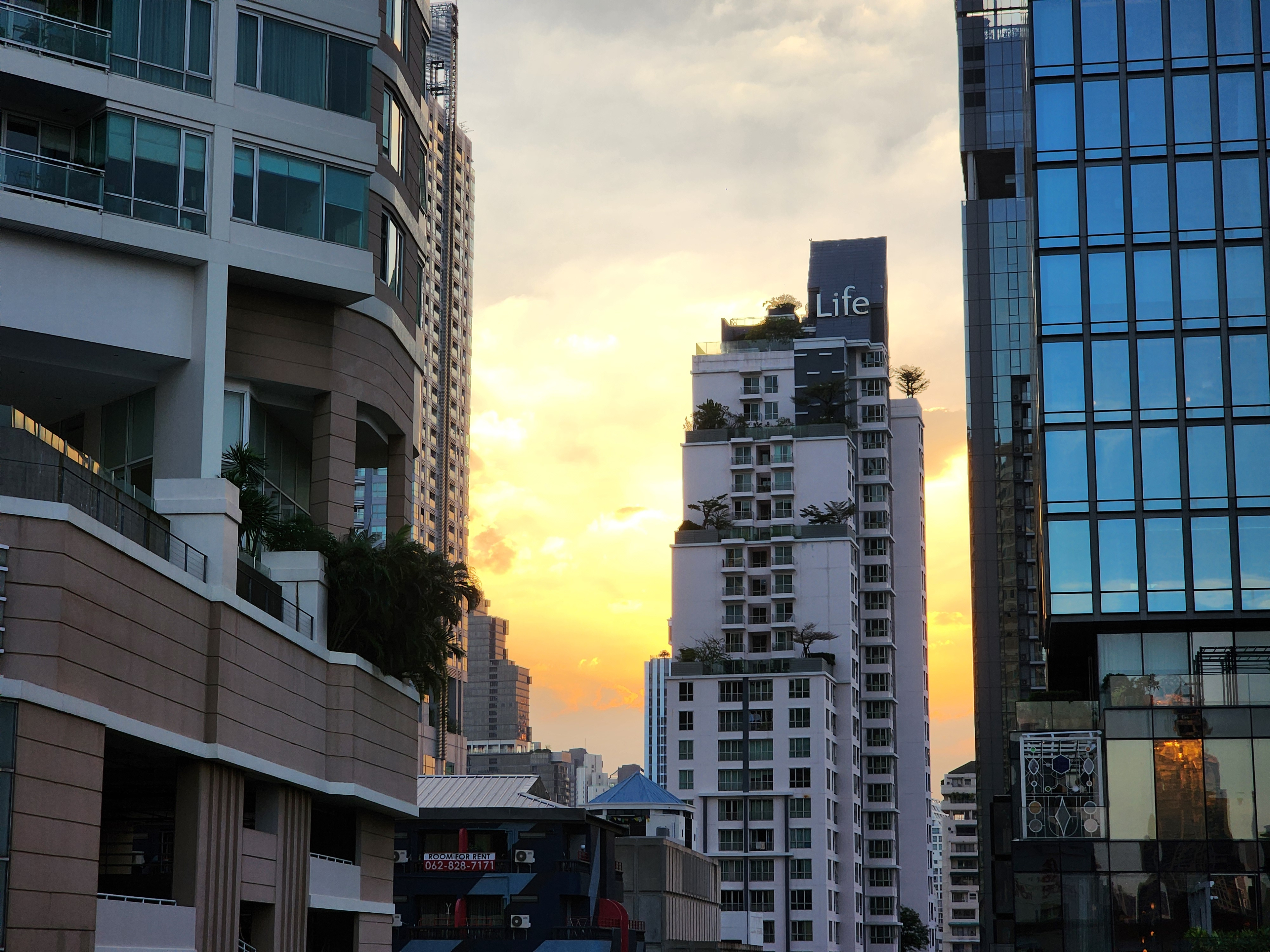
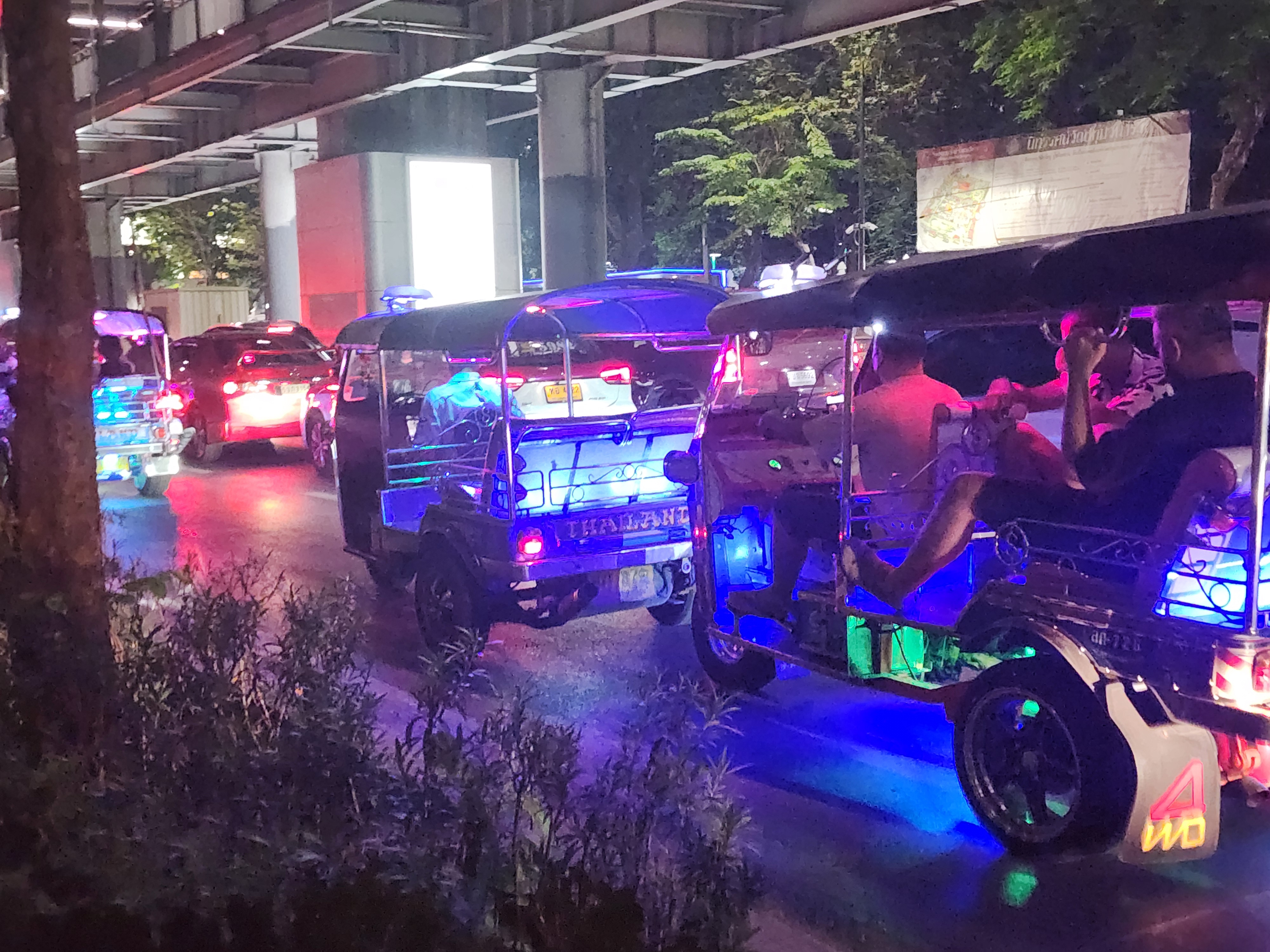
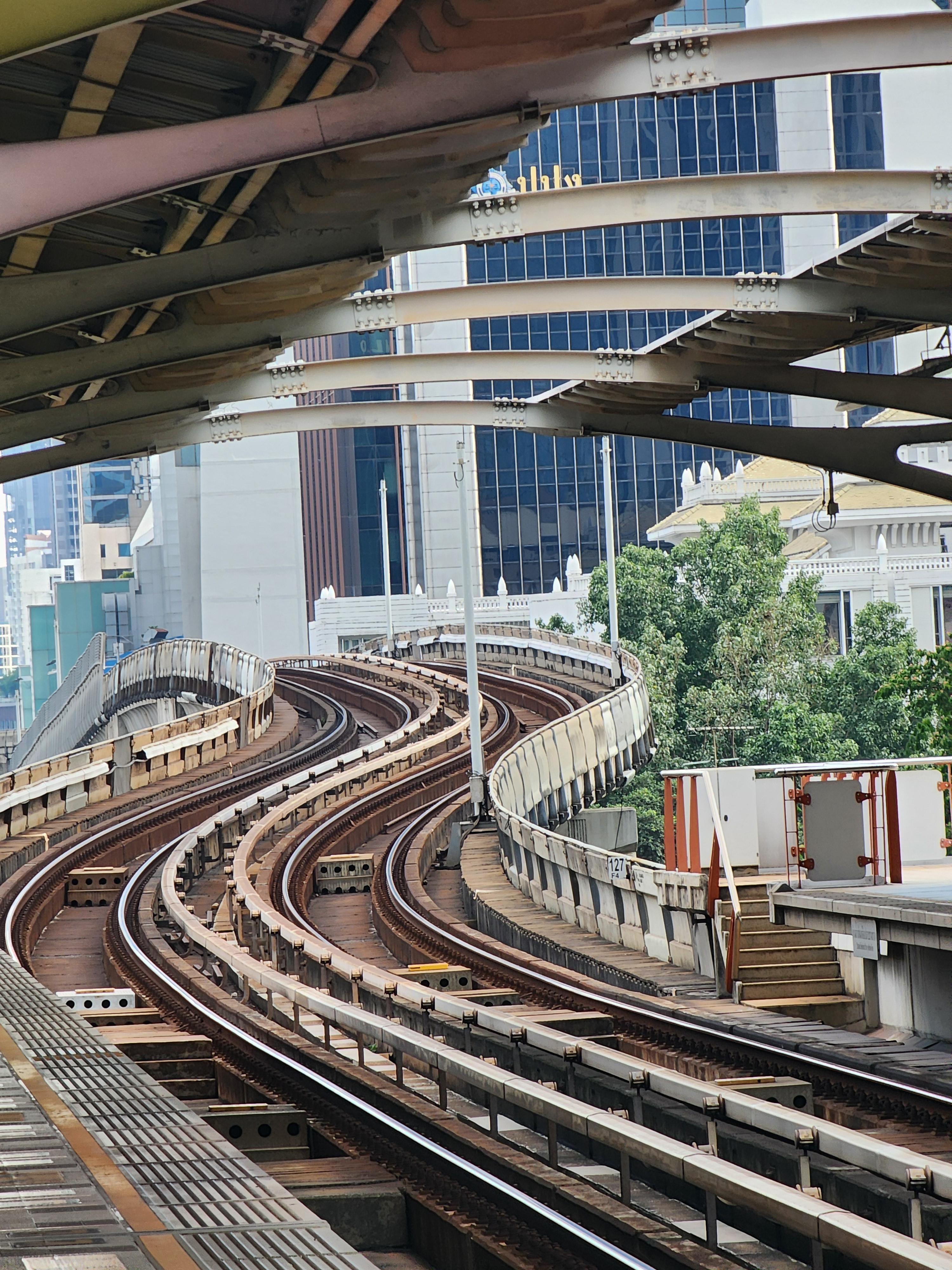
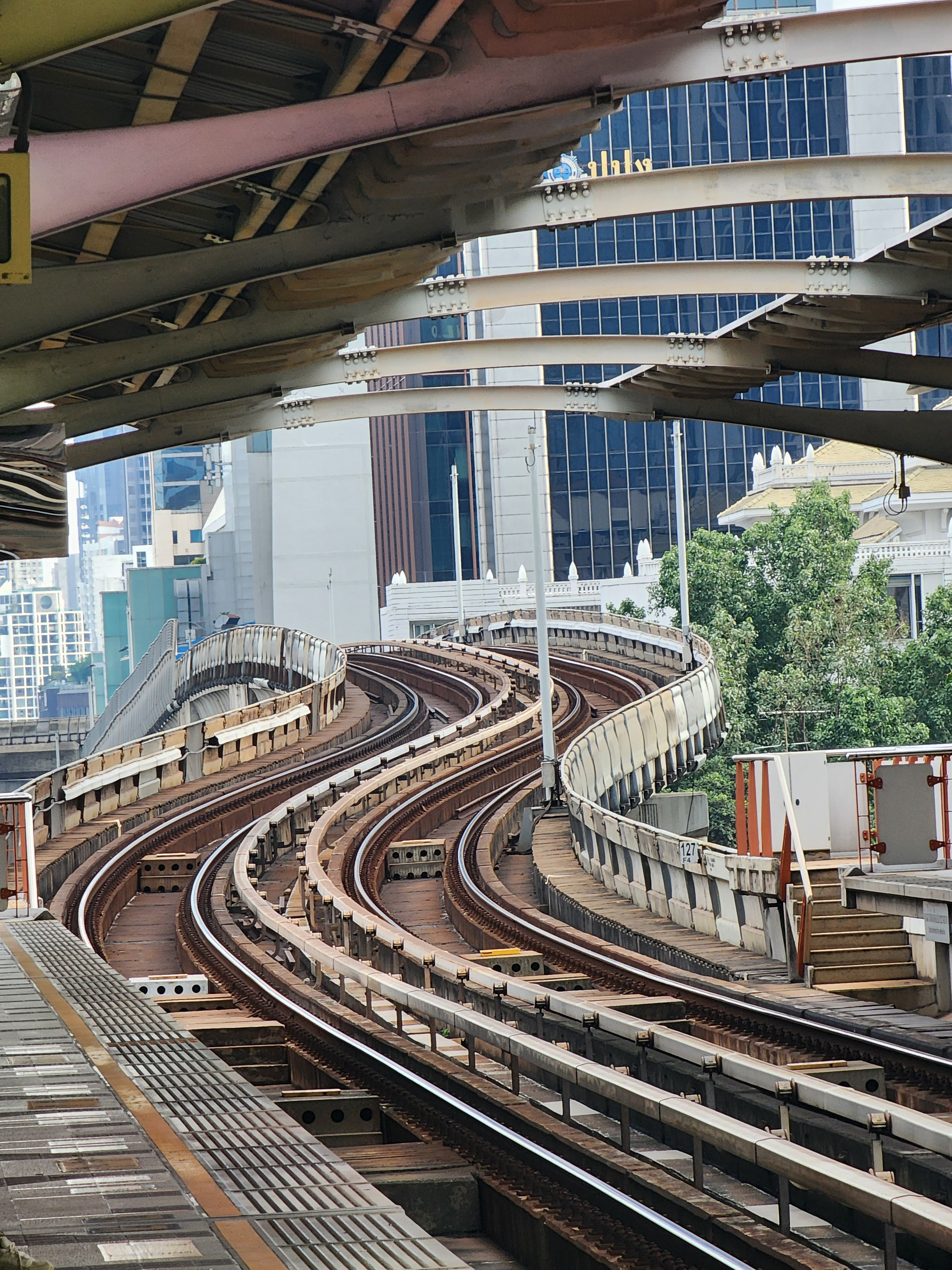
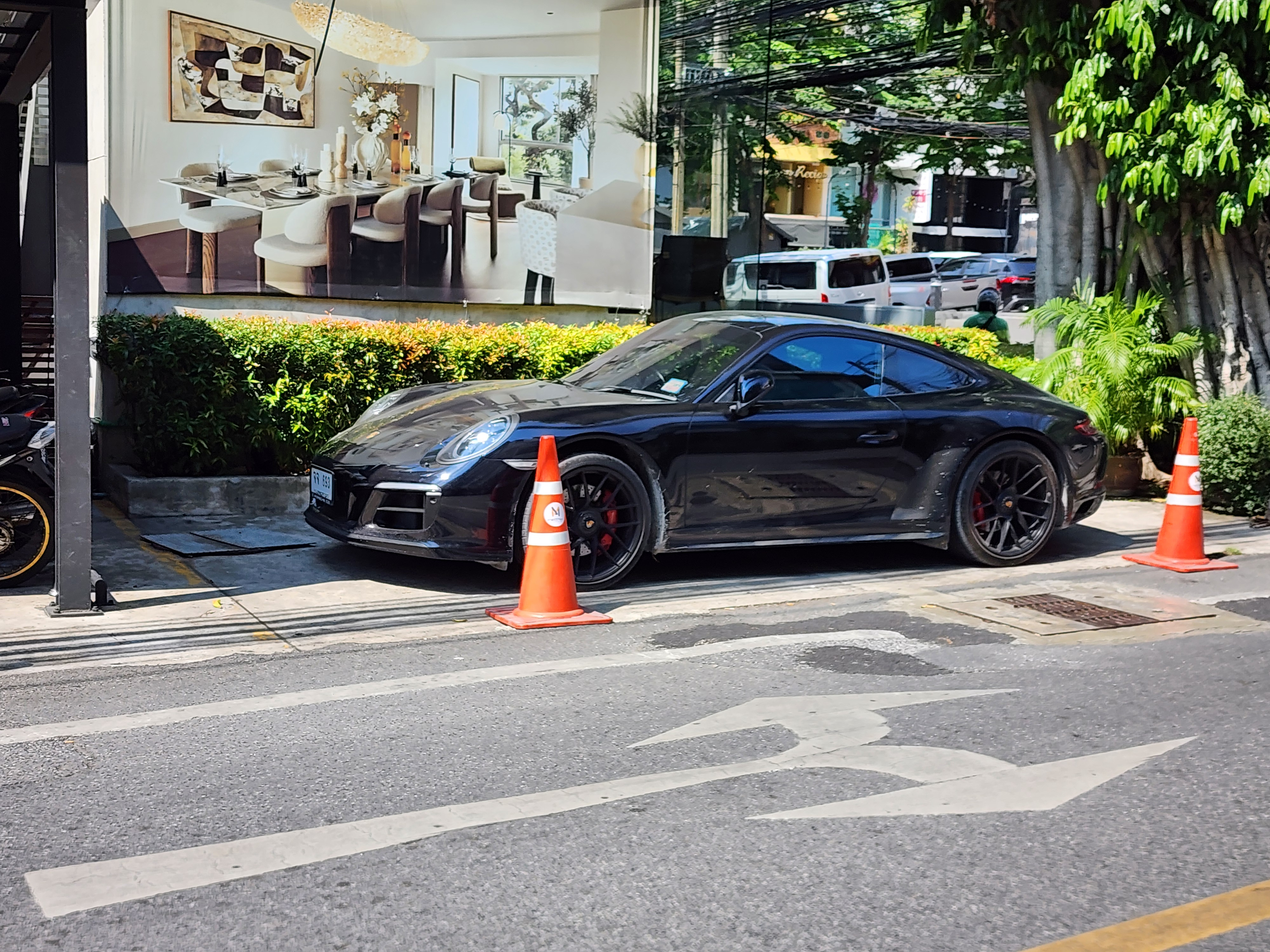
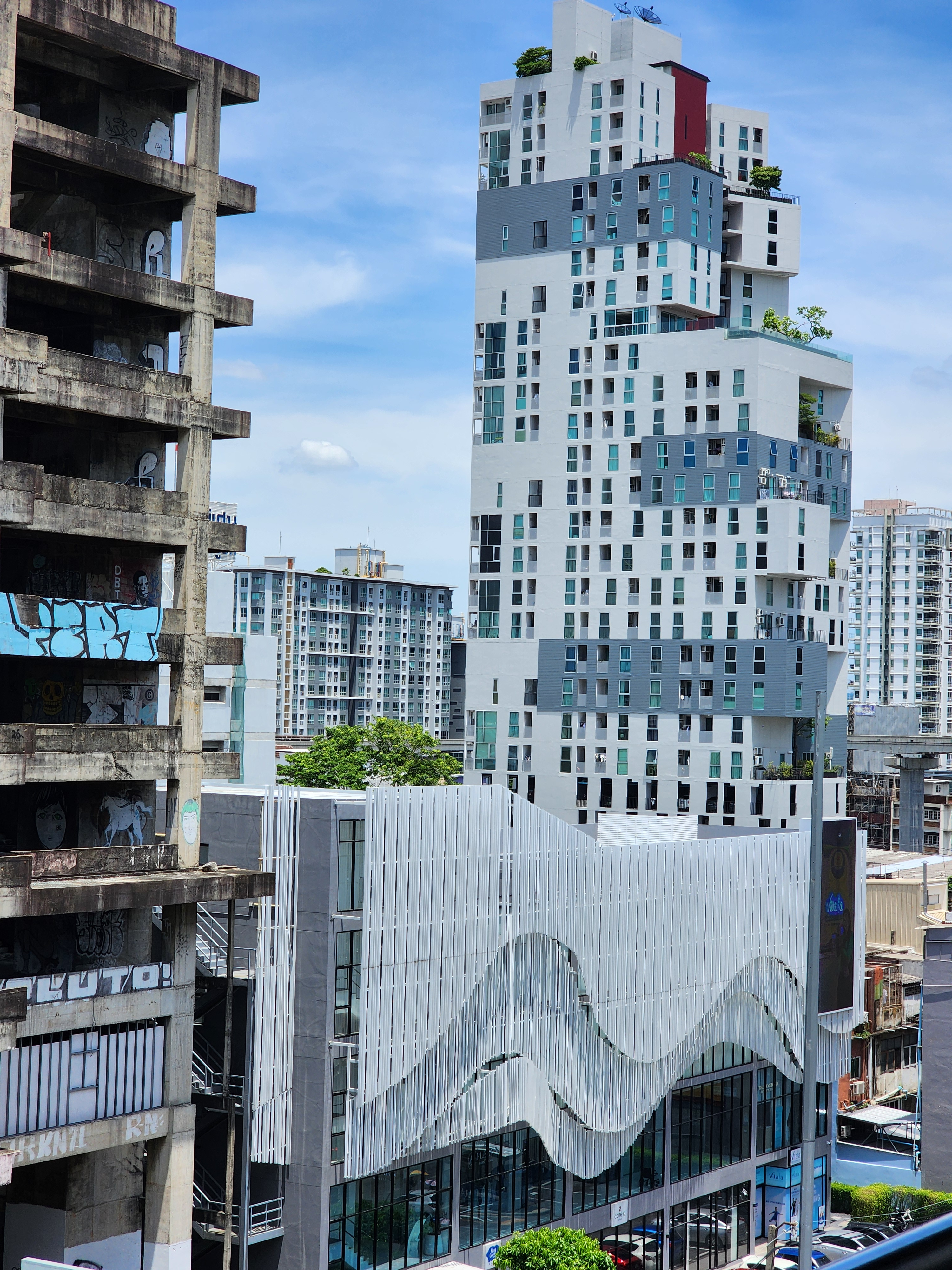
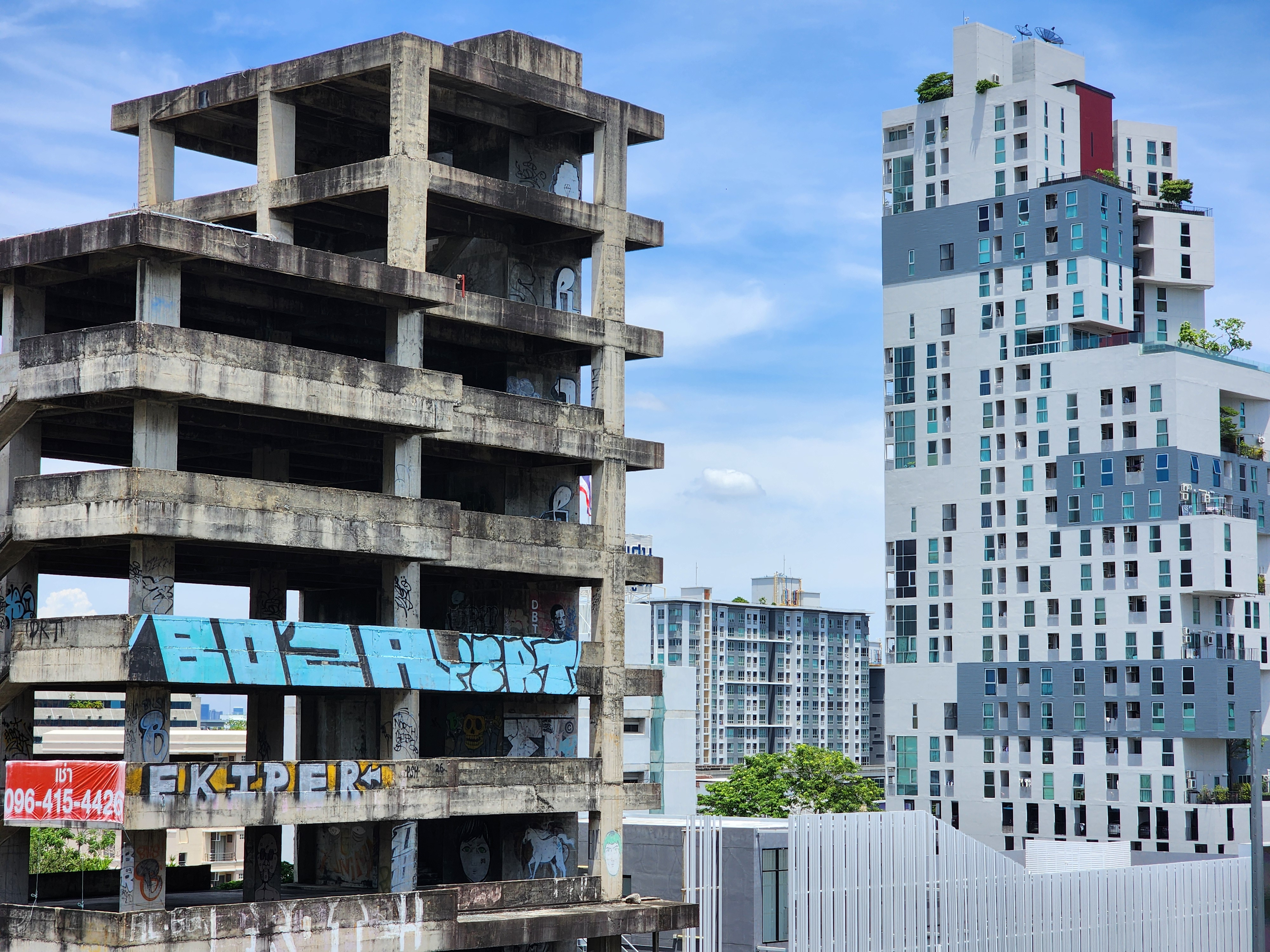
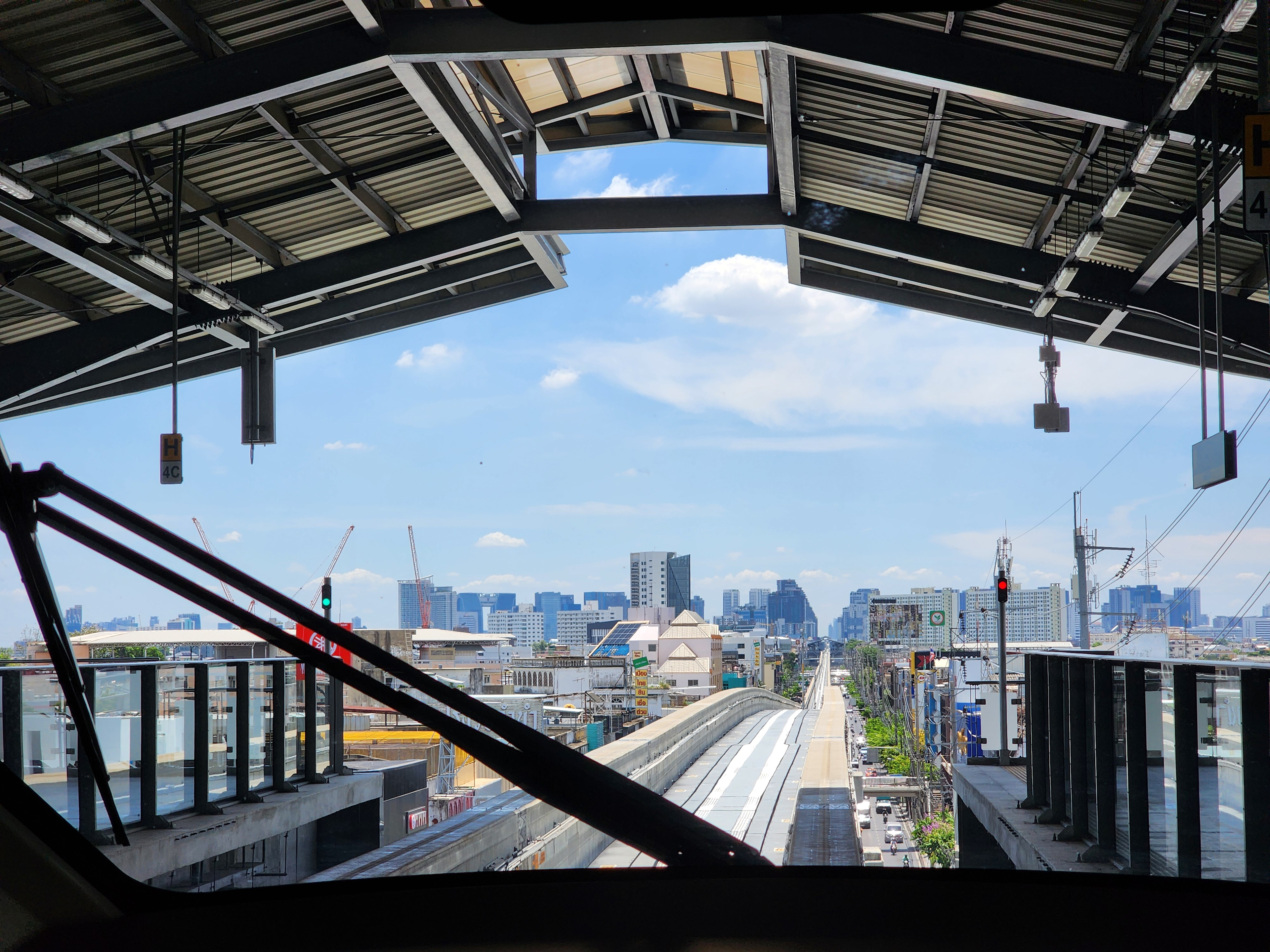
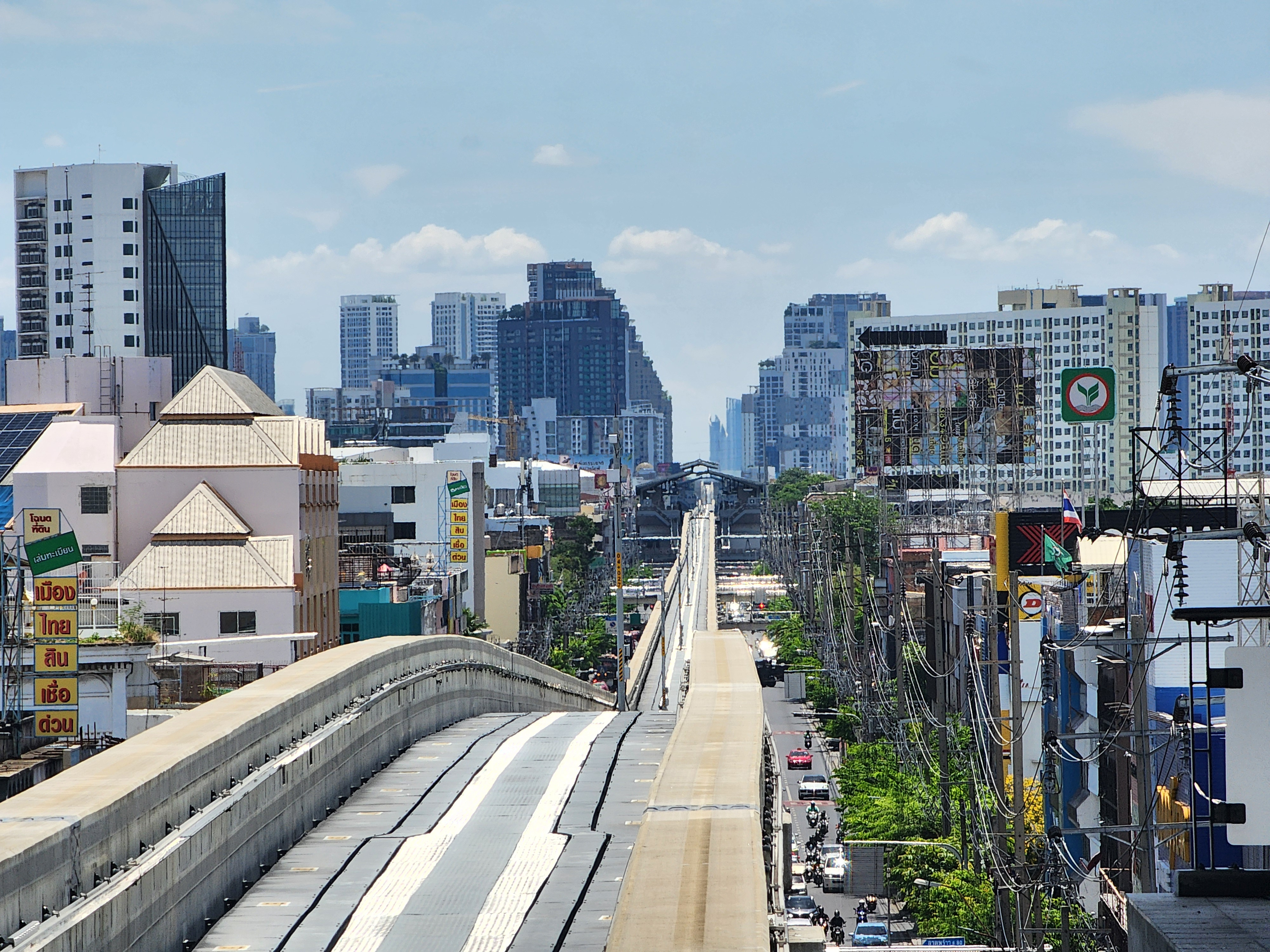
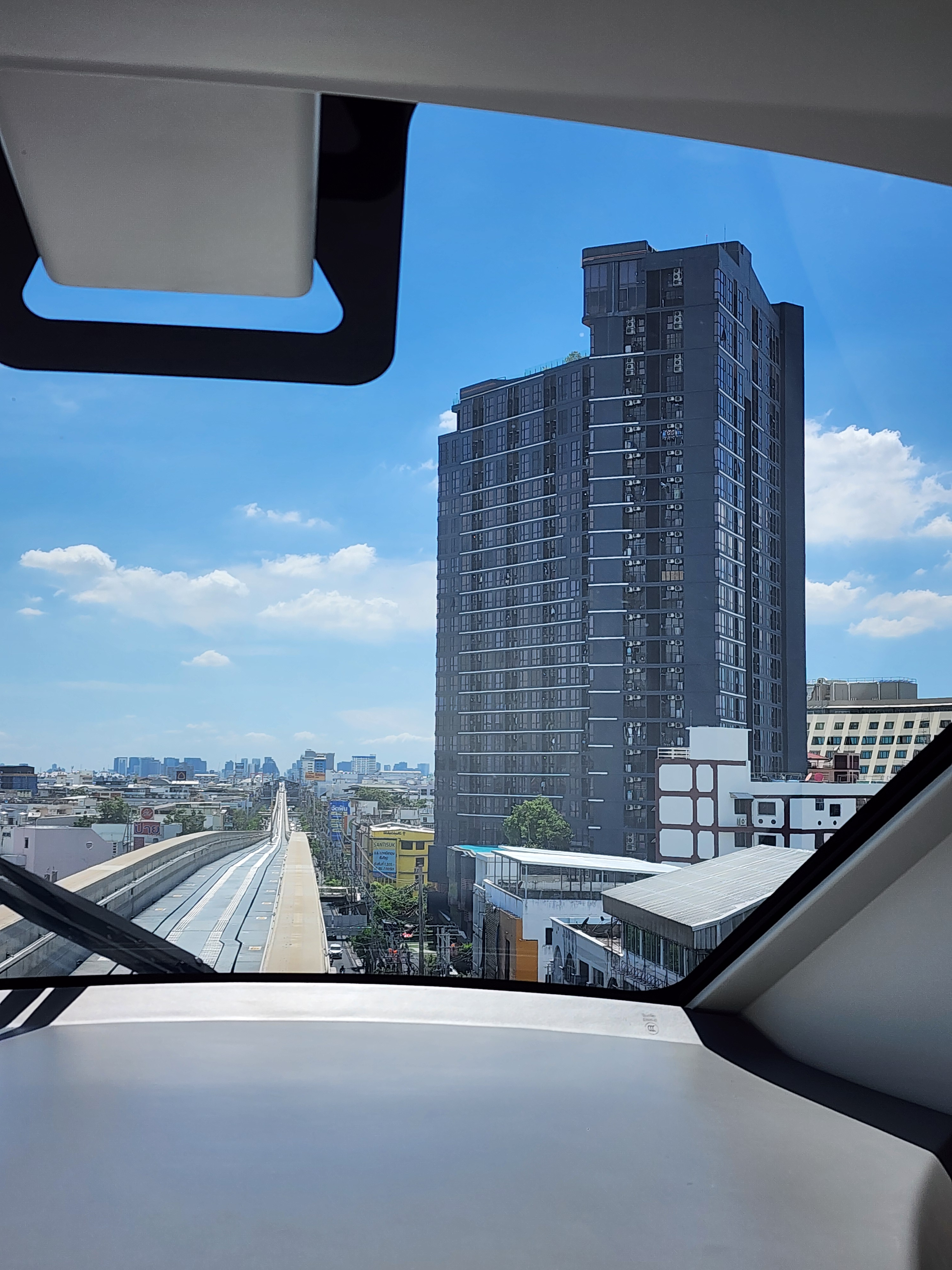
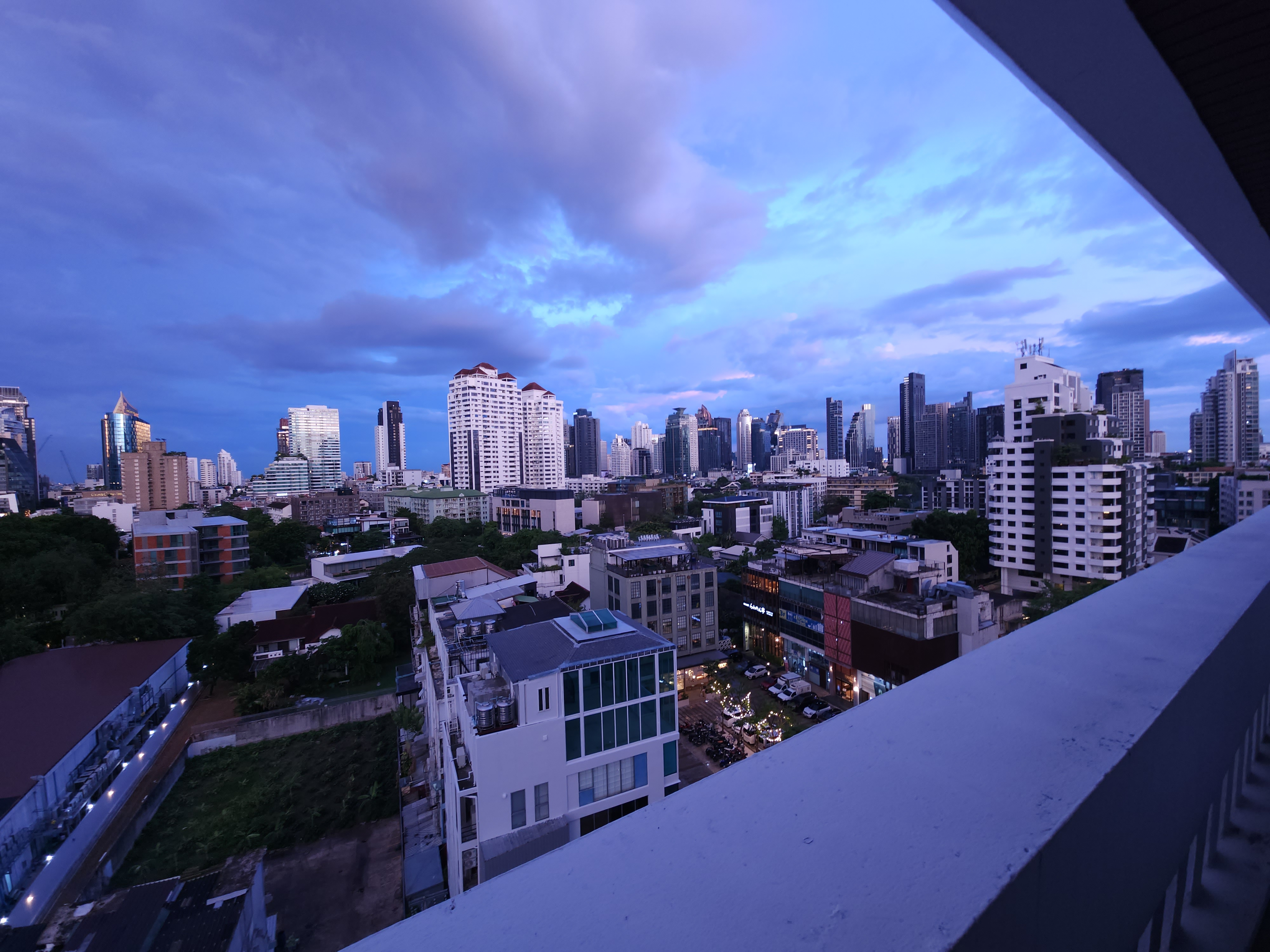
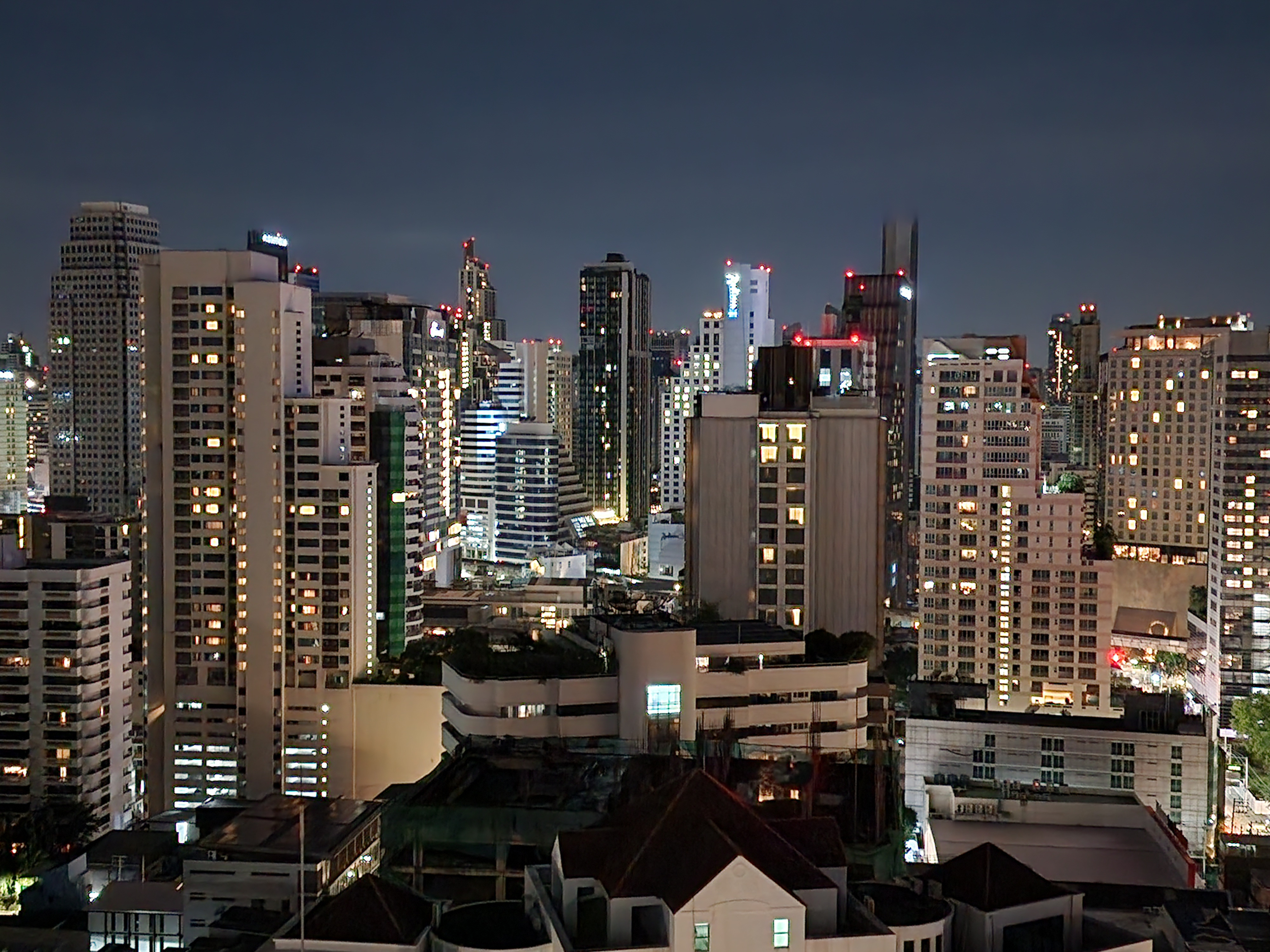
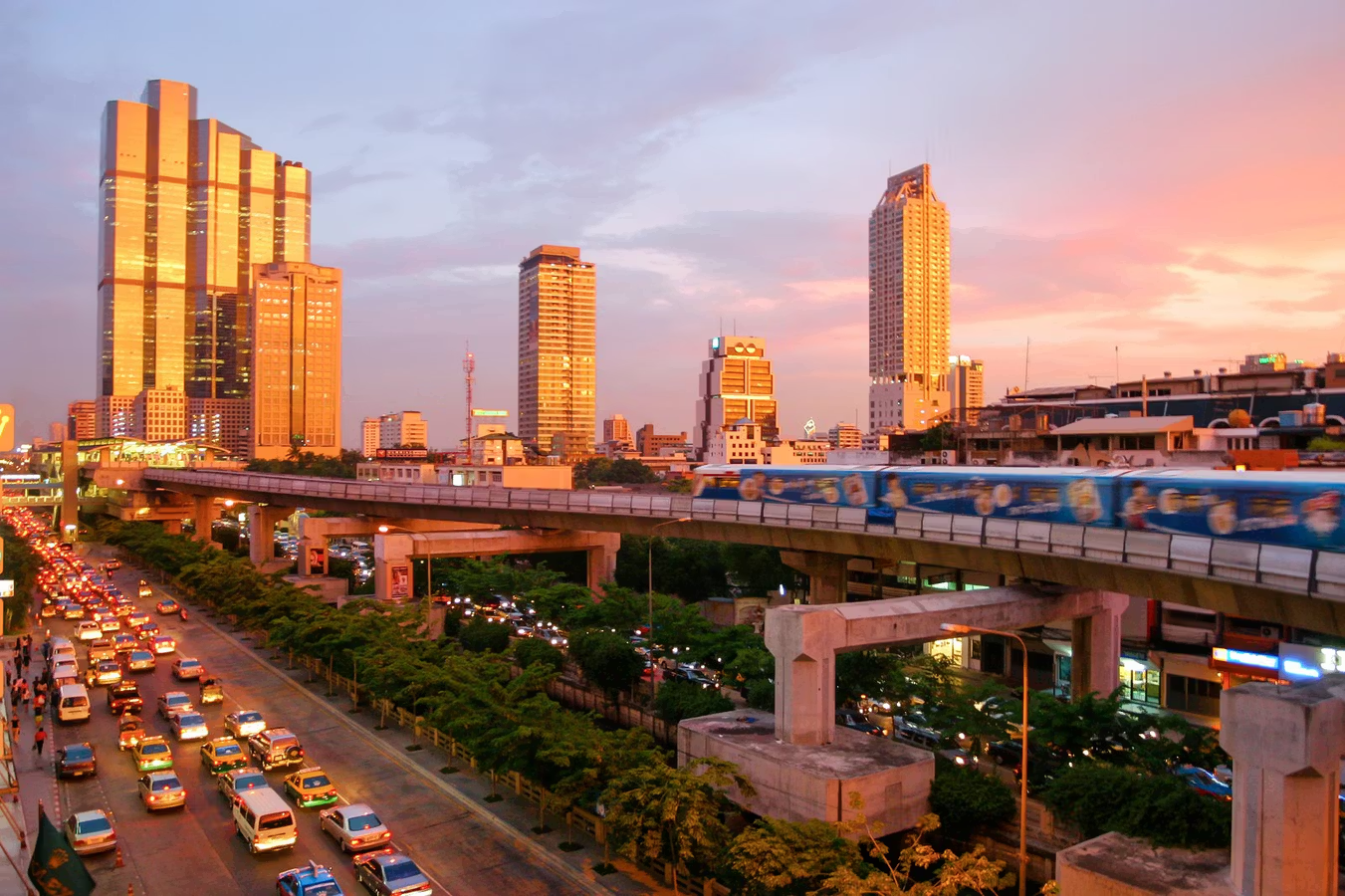
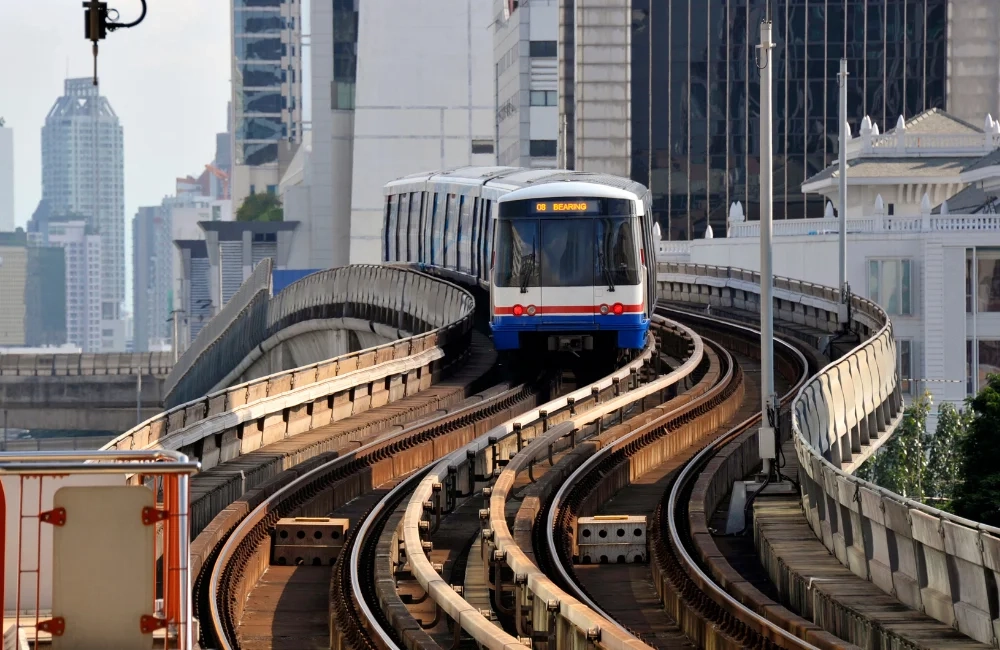
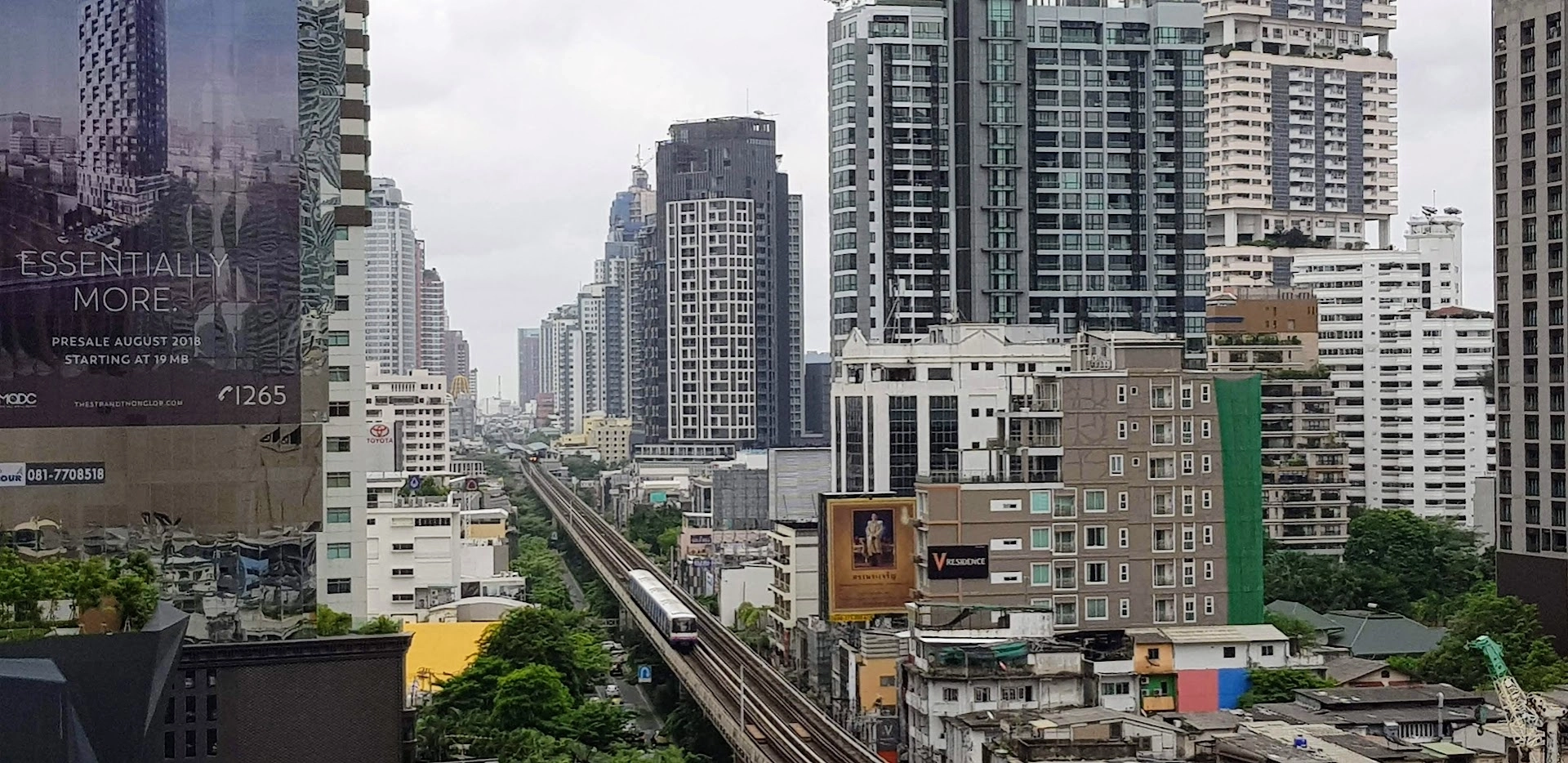
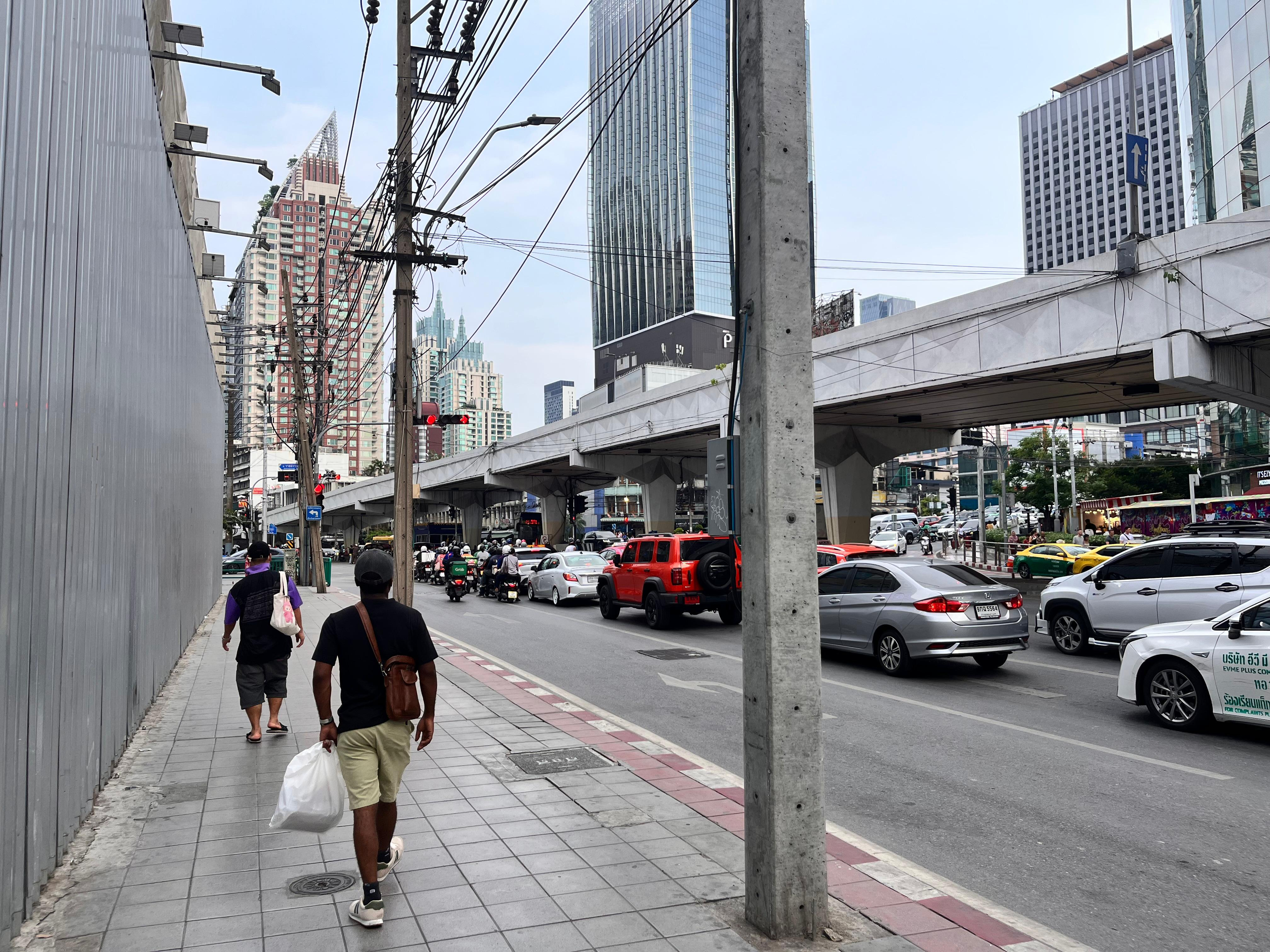
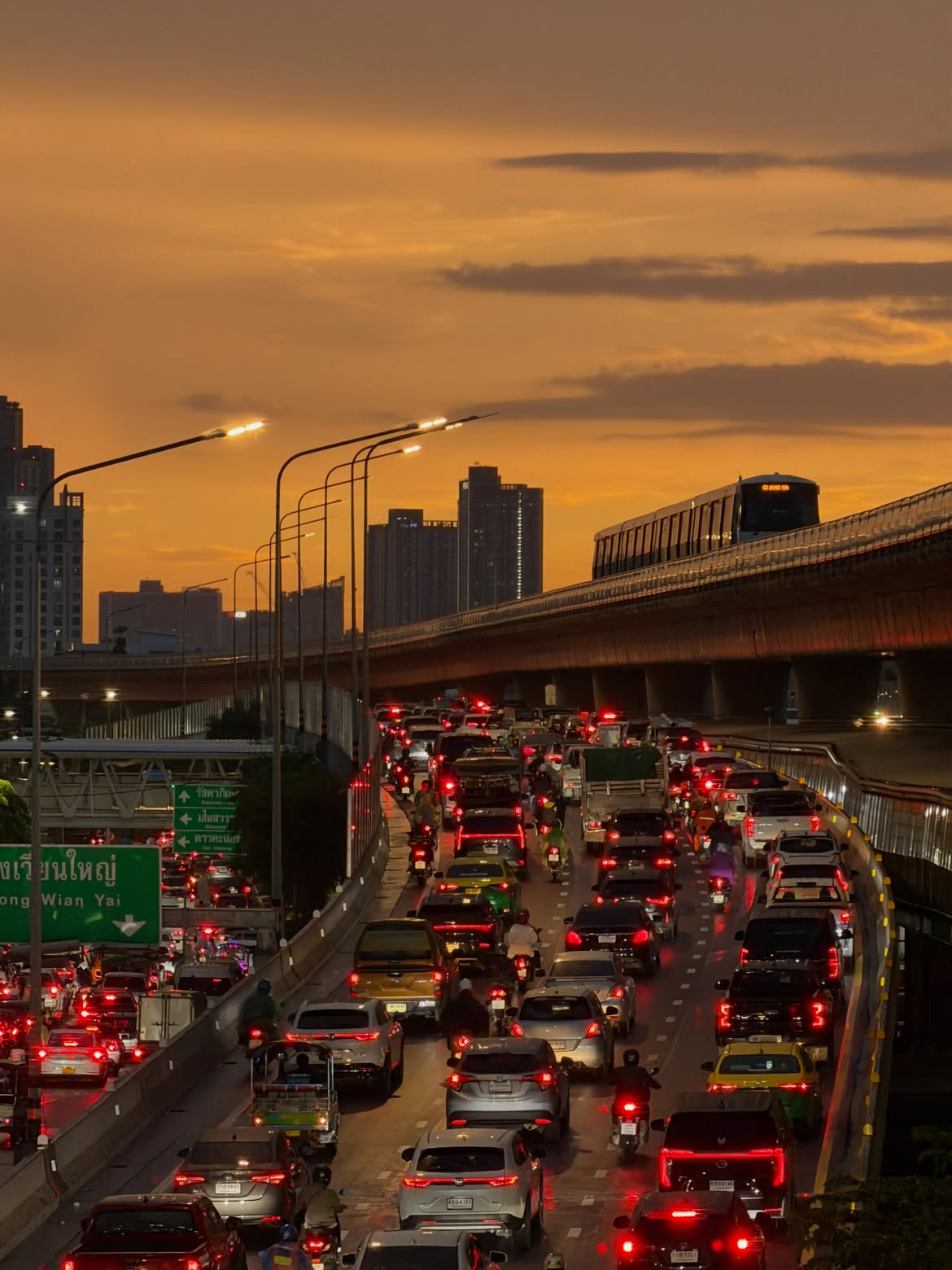
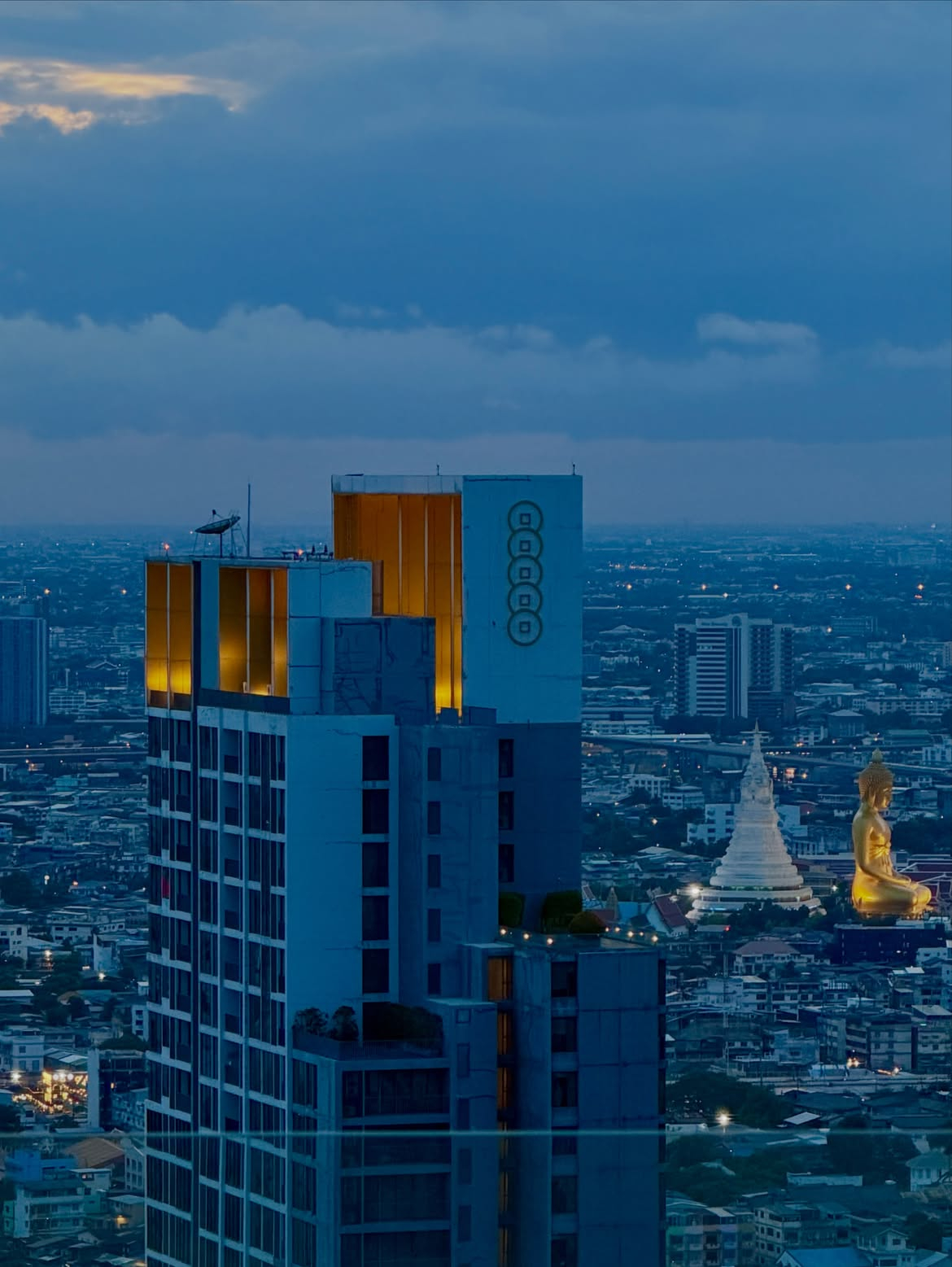
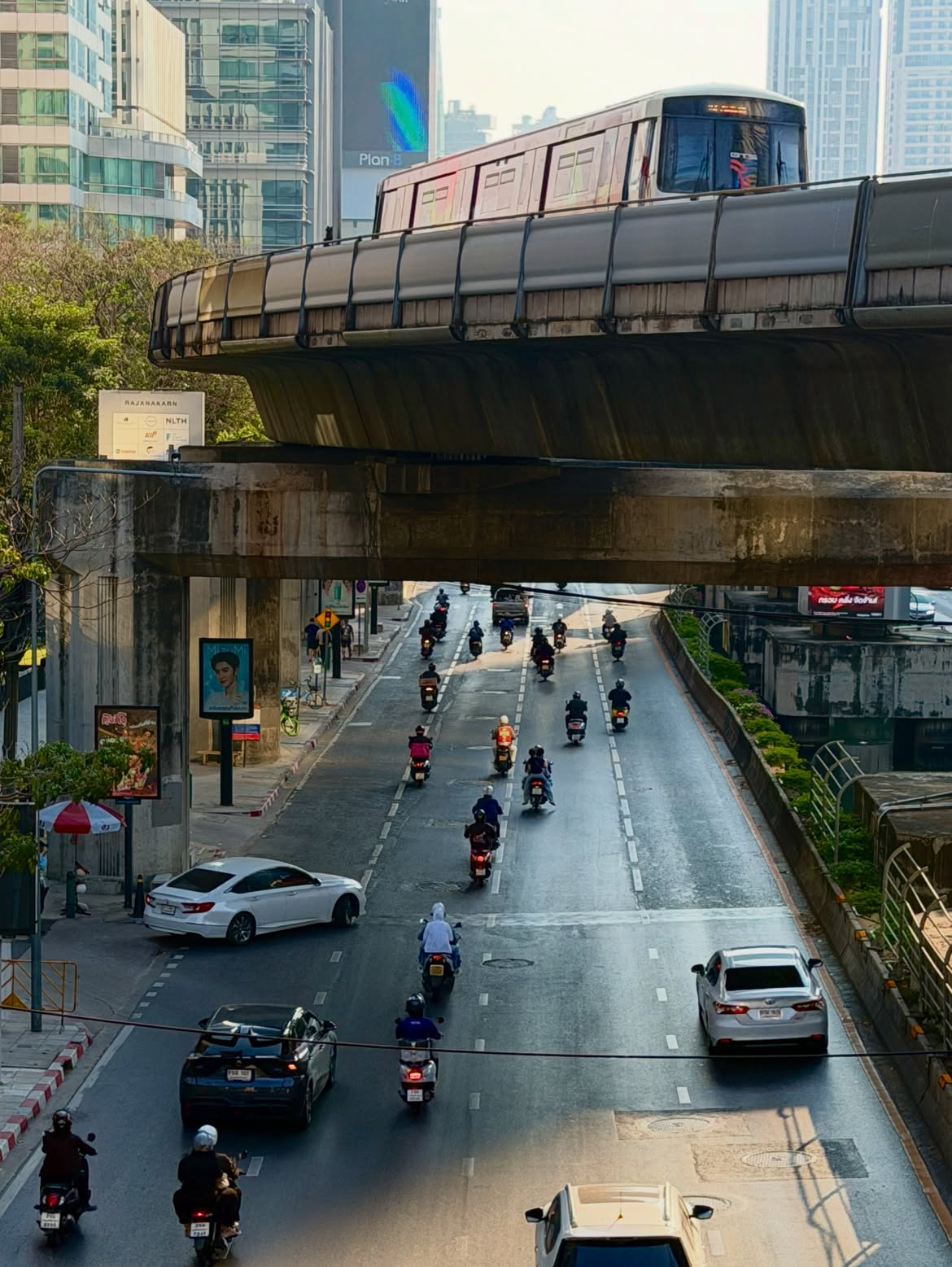
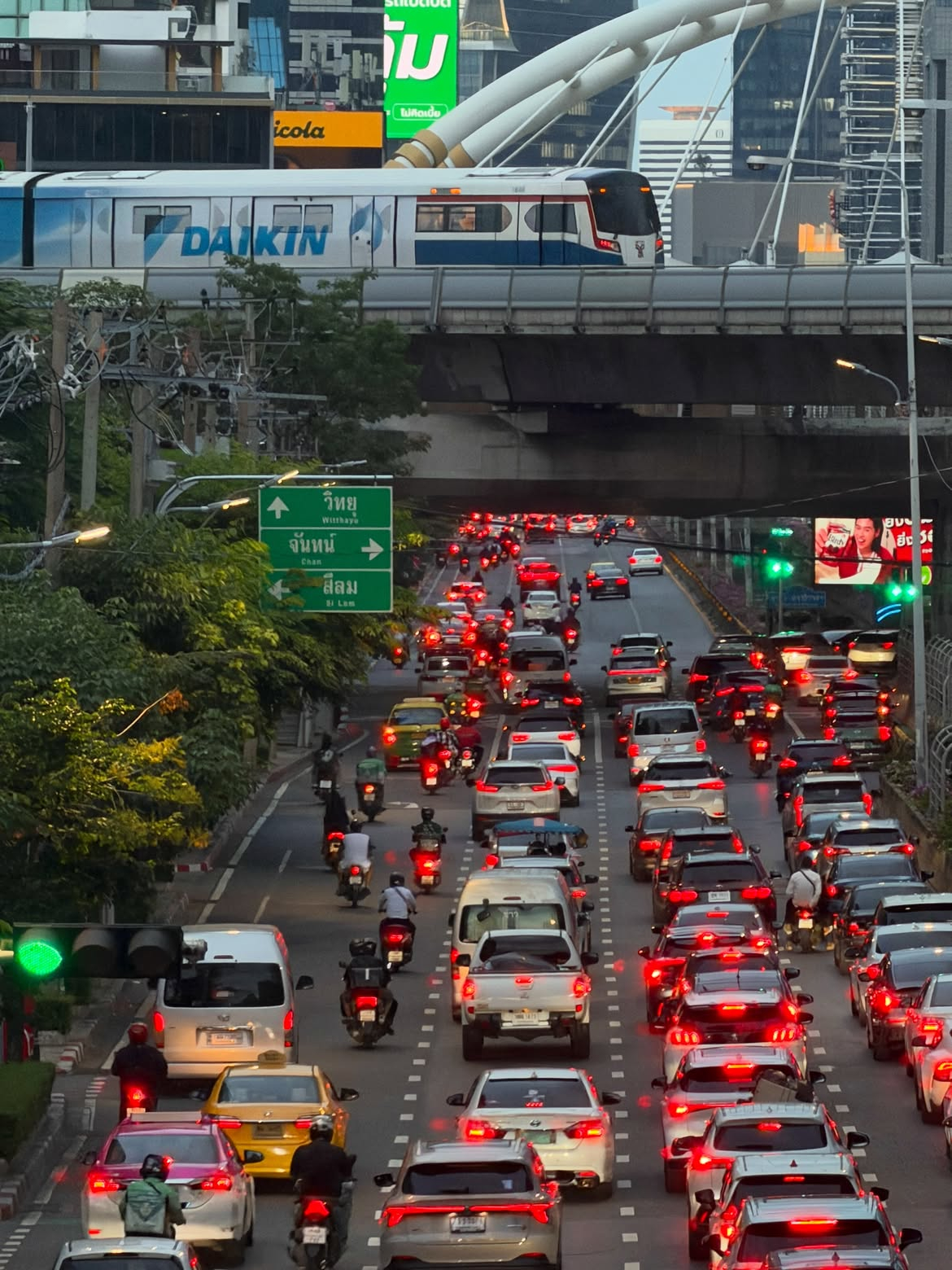
Bangkok first announces itself from above. The BTS Skytrain glides across the city with effortless precision, floating on ribbons of concrete high above Sukhumvit Road. Behind its tinted windows, the noise disappears, replaced by the quiet hum of steel on steel and the endless procession of a skyline that seems determined to outgrow the horizon. Tower after tower rises from the dense urban fabric, their mirrored façades catching the tropical sun and reflecting clouds that dissolve into blue before the afternoon storms gather. Infinity pools cling impossibly to rooftops. Glass offices shimmer beside luxury condominiums draped in vertical gardens. Digital billboards flicker between international fashion campaigns and handwritten Thai advertisements. Every station reveals another district, another cluster of skyscrapers reaching upward, each competing for a place in one of Southeast Asia's most dramatic urban skylines. Below, an uninterrupted sea of concrete stretches for kilometres, broken only by temple roofs coated in gold leaf and the emerald canopies of parks fighting for space among the towers. It is a metropolis built vertically, where the skyline feels endless and every passing minute reveals another architectural statement.
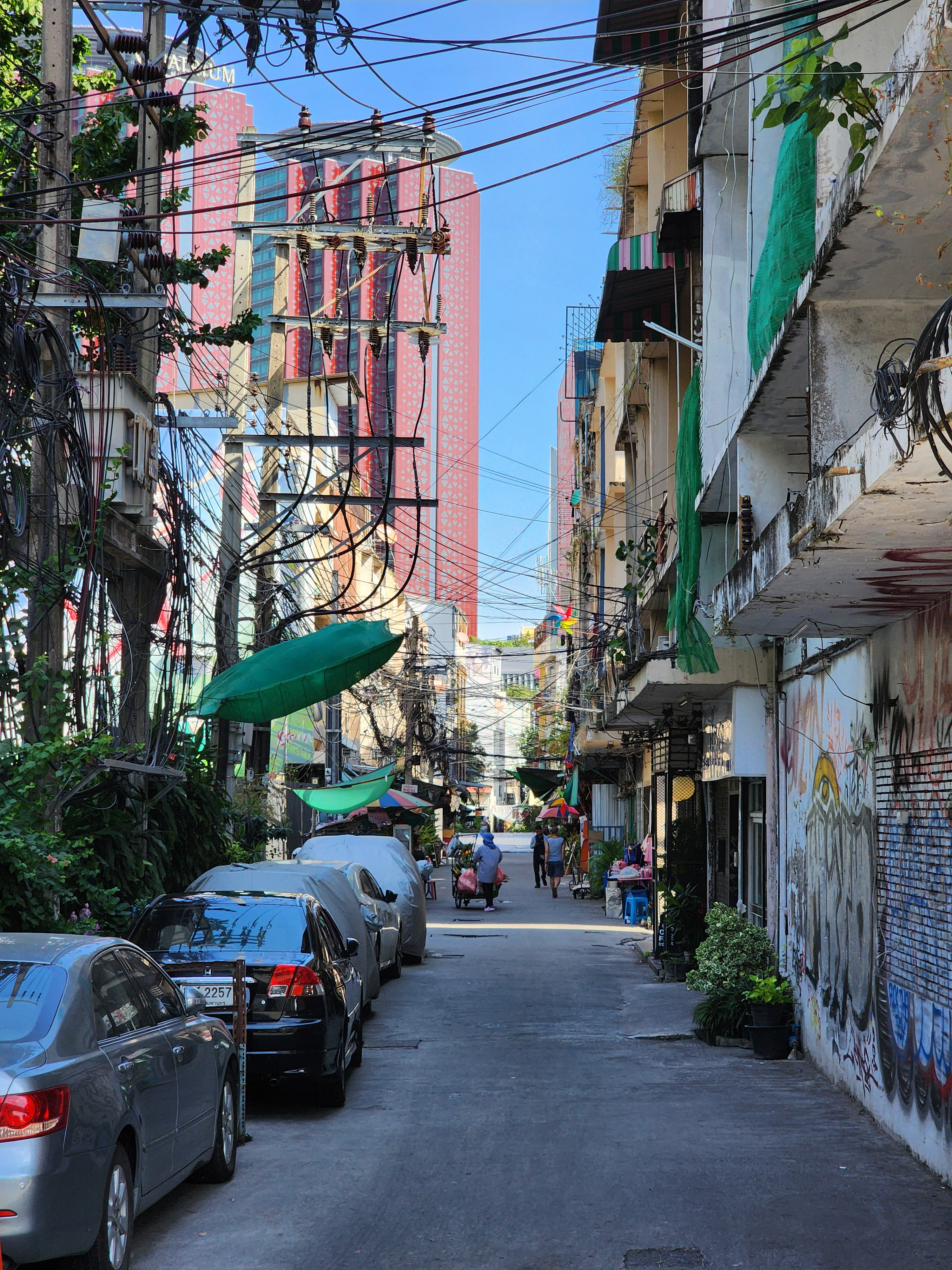
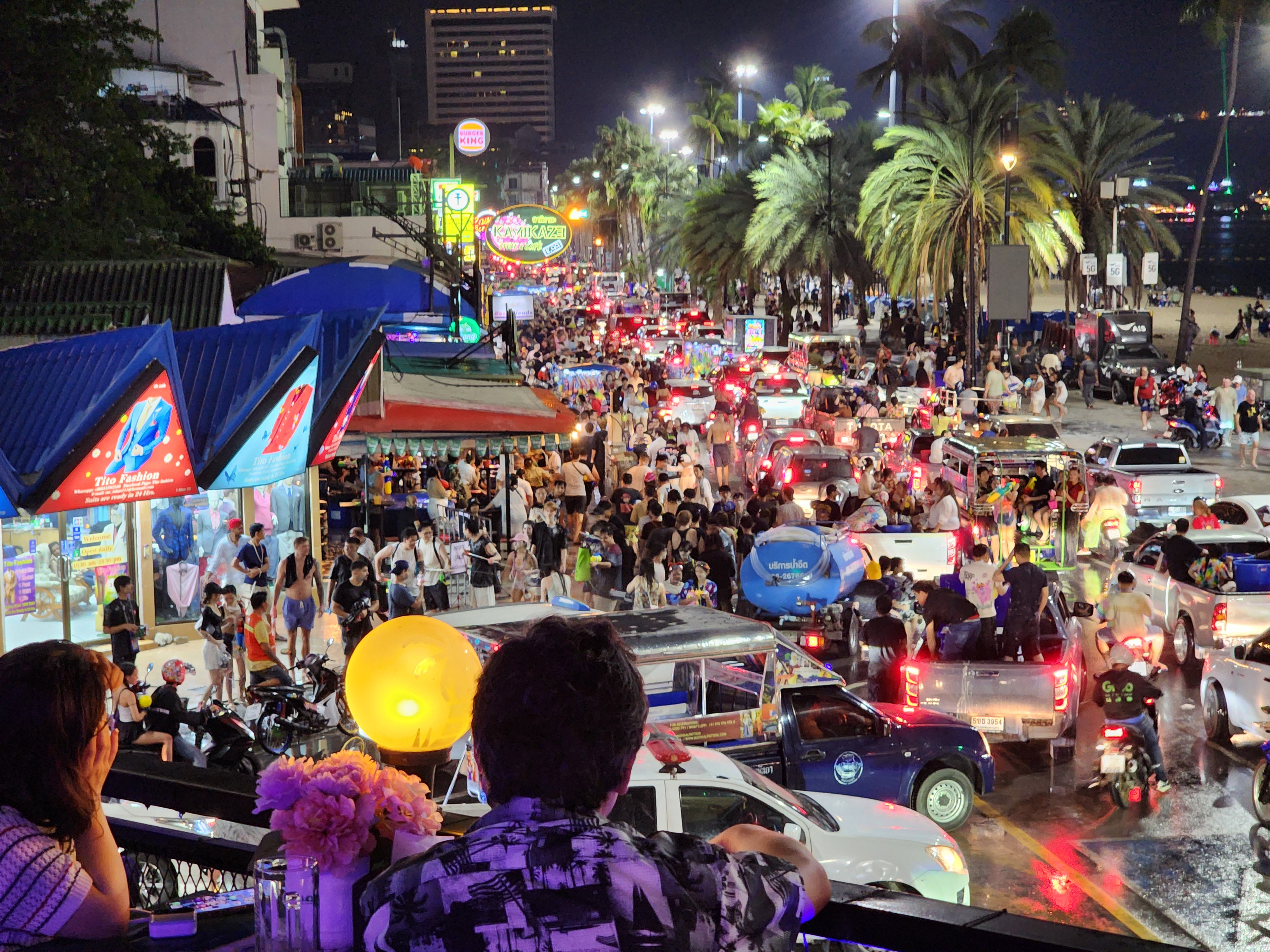
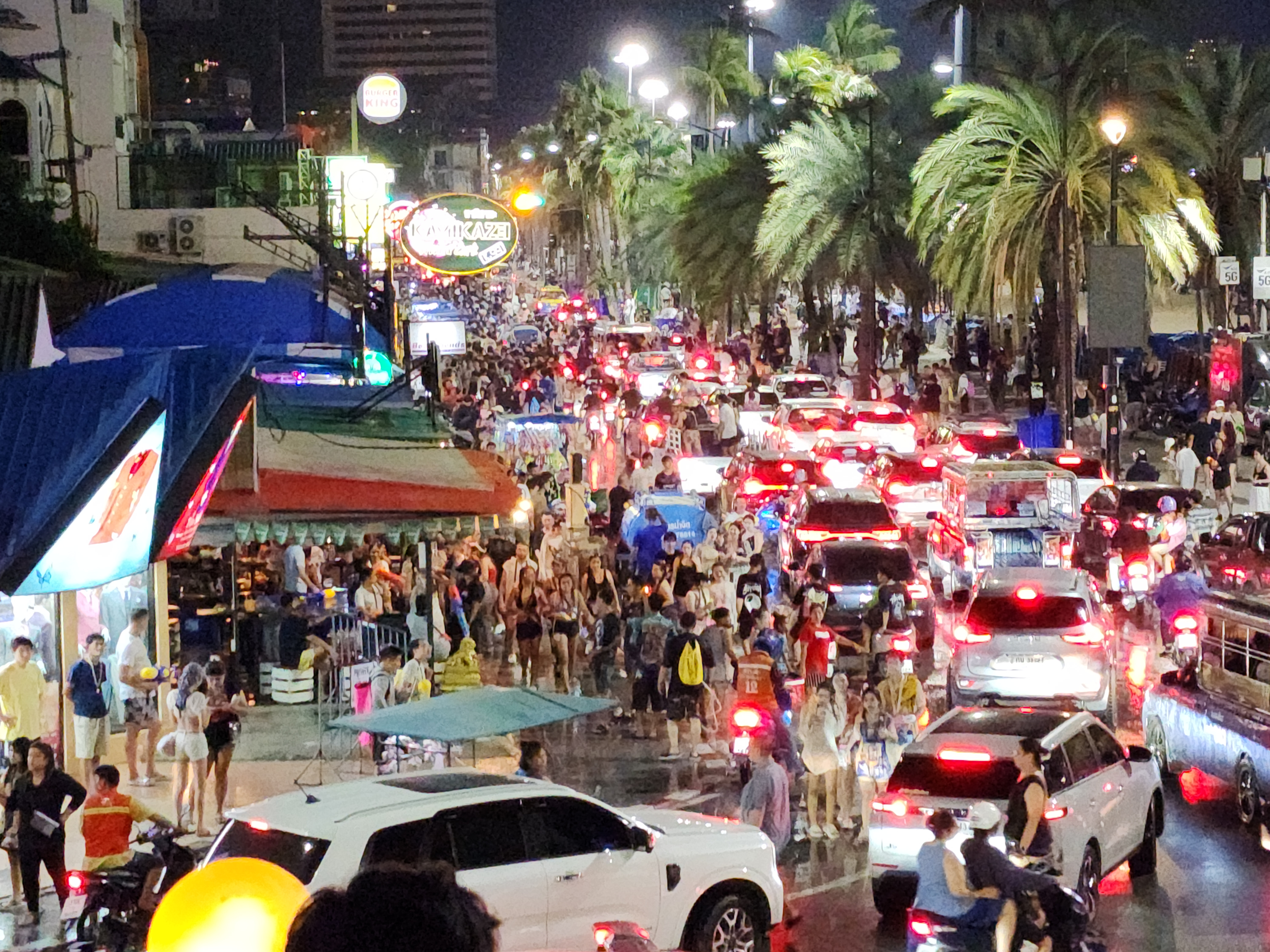
From this elevated vantage point, Bangkok resembles a perfectly orchestrated machine. Sixteen lanes of traffic crawl beneath the tracks like streams of glowing metal. Yellow and green taxis weave between buses painted electric blue. White delivery vans squeeze through impossible gaps while hundreds of motorcycles flow around them like schools of fish avoiding larger predators. Elevated expressways overlap one another in massive layers of reinforced concrete, creating an intricate web suspended above streets that never seem to empty. Beyond Sukhumvit, the city stretches toward every horizon, fading into haze where thousands of apartment blocks, temples, office towers, shopping malls, and factories merge into one colossal urban organism. Yet the view also hints at another Bangkok hidden beneath the glass towers. Corrugated rooftops peek from behind luxury developments. Fresh markets occupy the shadows beneath elevated rail lines. Narrow Sois (a side street, lane, or alley) disappear into neighbourhoods untouched by architects or master plans. From above, Bangkok is astonishing. Ordered. Almost futuristic. But the moment you step off the train and descend the station stairs, that polished illusion gives way to something infinitely more compelling.
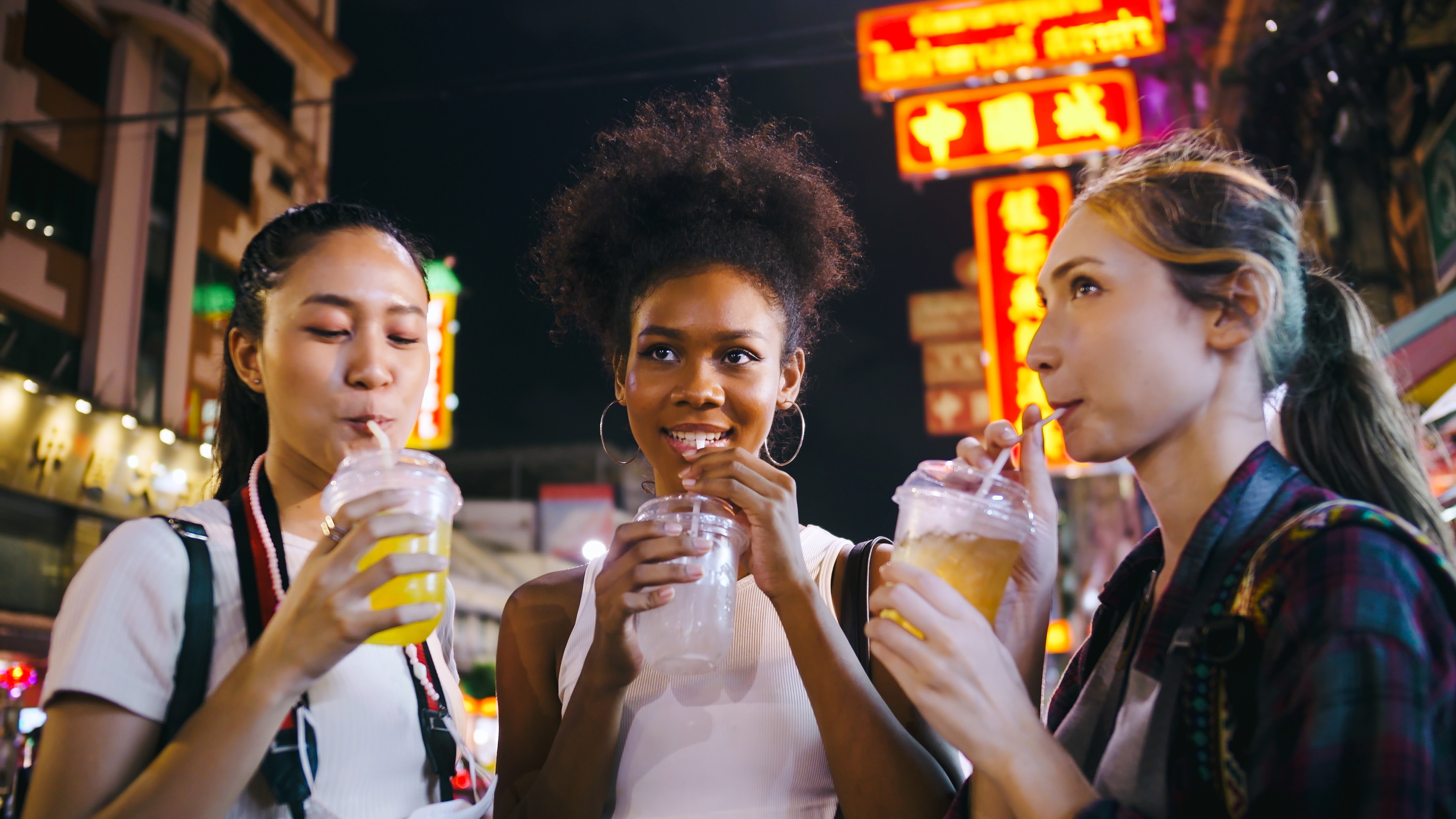
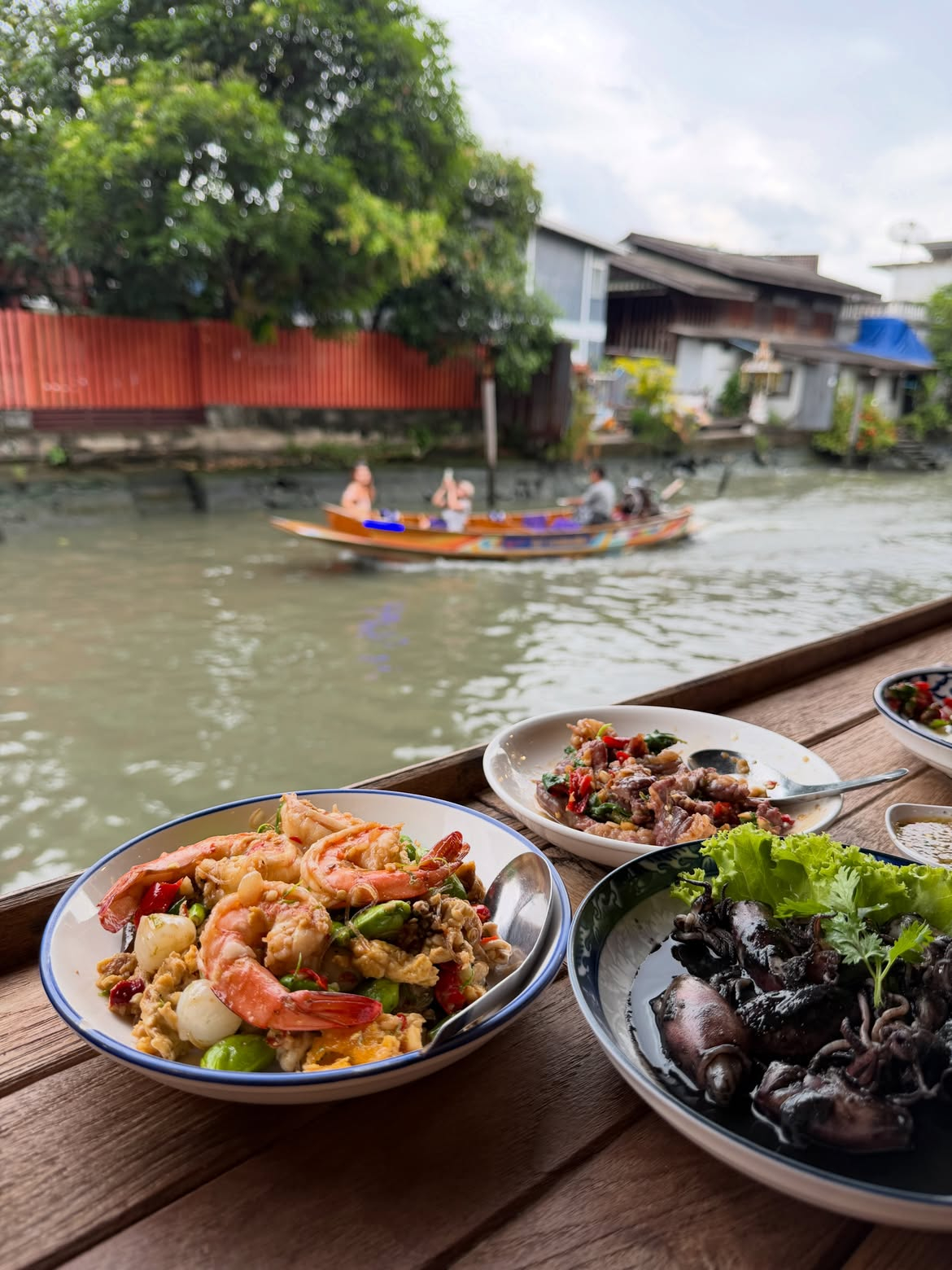
The first breath on the street feels tangible. Heat presses against your face with surprising weight, wrapping itself around your shoulders and settling into your clothes within seconds. Humidity softens every edge of the city, causing distant lights to glow through the air instead of cutting cleanly across it. The scent changes every few steps. Charcoal smoke from skewers of moo ping drifts into clouds of garlic frying in giant woks. Fresh lime bursts through the richness of grilled pork. Fish sauce, shrimp paste, coconut milk, pandan leaves, basil, lemongrass, and crushed bird's eye chilies mingle into an aroma impossible to separate because Bangkok cooks everything at once. Metal spatulas strike carbon-steel woks with rhythmic clangs while vendors fan charcoal fires beneath rows of satay, sausages, squid, prawns, and whole fish blistering over glowing coals. Plastic stools spill onto the pavement, occupied by office workers loosening ties, university students scrolling through their phones, elderly couples sharing bowls of noodle soup, and construction workers eating dinner before another overnight shift. Every few meters another cart appears, selling mango sticky rice, crispy roti folded around bananas and condensed milk, steaming dim sum, coconut ice cream served inside coconut shells, grilled bananas, fried insects for adventurous tourists, or bright orange Thai tea poured theatrically from one metal cup to another.
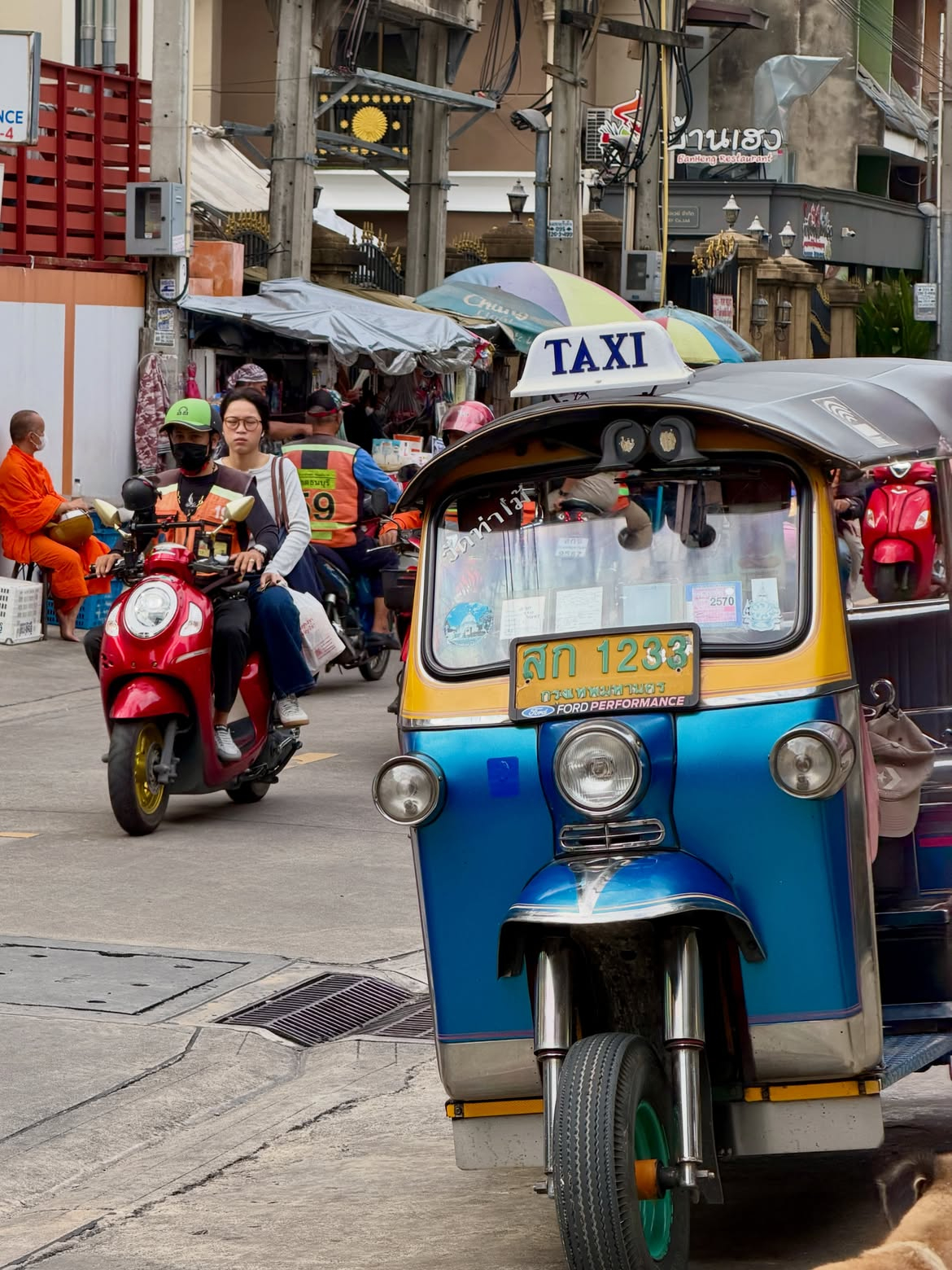
Walking through Sukhumvit feels like moving through dozens of different cities compressed into one continuous street. Young professionals dressed in perfectly tailored suits stride toward BTS stations with iced coffee in hand, barely glancing at the traffic around them. Motorcycle taxi riders in fluorescent orange vests wait patiently beneath pedestrian bridges before launching into traffic the instant a passenger climbs aboard. Delivery riders wearing oversized insulated backpacks thread between buses with astonishing precision. Elderly women sit beside baskets overflowing with orchids, jasmine garlands, lotus flowers, and marigolds destined for nearby spirit houses and temples. Families travel together on a single scooter. A father steers through traffic while a small child stands confidently between the handlebars and another sibling leans sleepily against their mother. Nobody seems surprised. Street cleaners sweep fallen leaves around food stalls while security guards greet regular commuters by name. Every face belongs to a different story, yet everyone moves with the practiced rhythm of people who understand exactly how Bangkok breathes.
The sidewalks possess their own ecosystem. Tiny dogs wearing colourful shirts nap beneath plastic tables while fluffy Pomeranians ride comfortably inside strollers pushed by their owners. Orange tabby cats stretch lazily beside shrines where locals quietly leave bowls of food before heading to work. Pigeons scatter as food vendors unload vegetables from pickup trucks arriving before sunrise. Small sparrows dart through tangled electrical wires overhead, where thick bundles of black cables sag dramatically between poles like giant vines suspended above the street. Vendors balance impossible loads across their shoulders. Florists arrange fresh jasmine necklaces with astonishing speed. Fruit sellers carve perfect spirals from green mangoes while piles of dragon fruit, mangosteen, rambutan, pomelo, durian, longan, and lychee glow beneath fluorescent lights. Every square meter serves a purpose. Every empty corner becomes someone's livelihood.
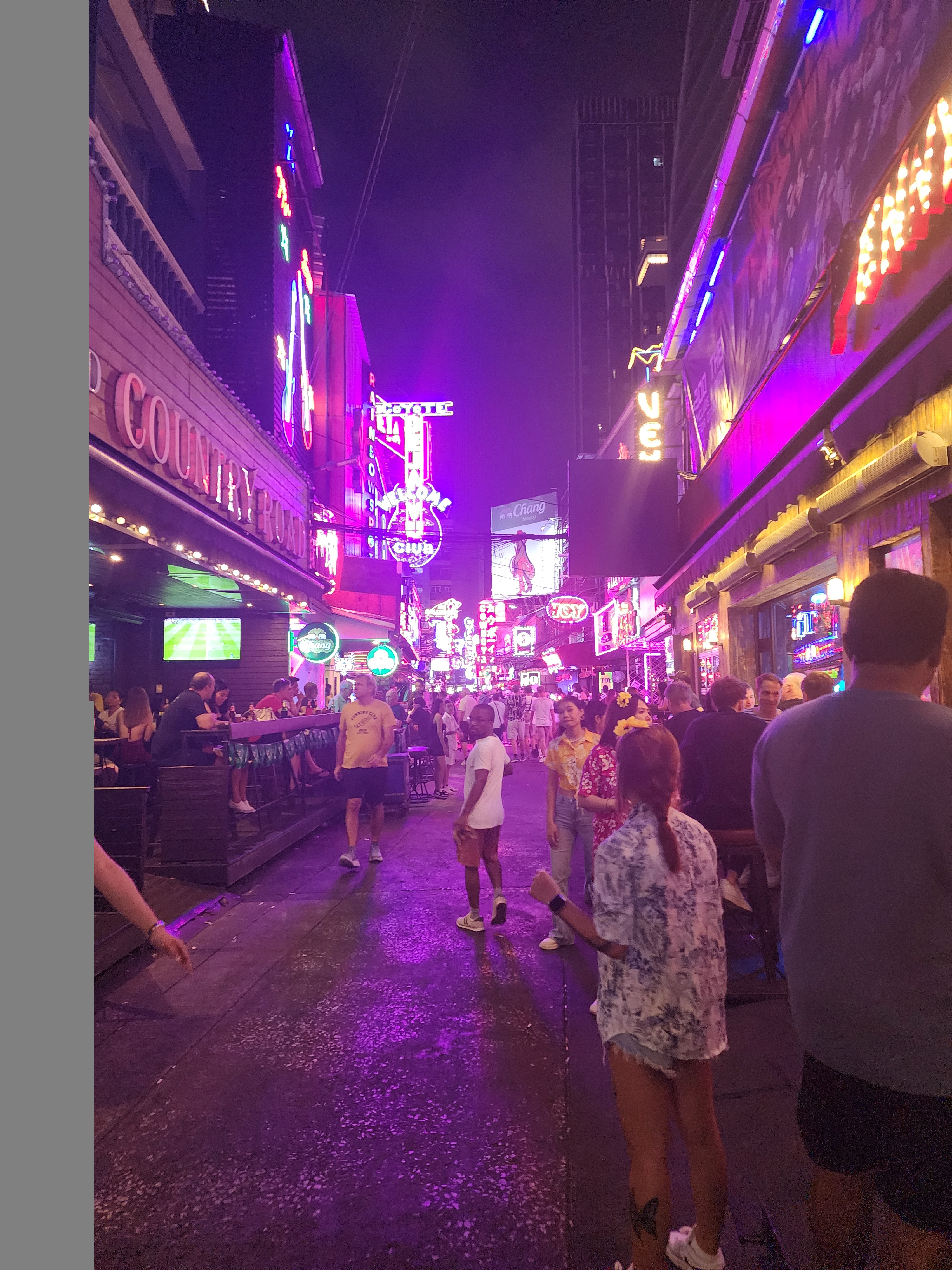
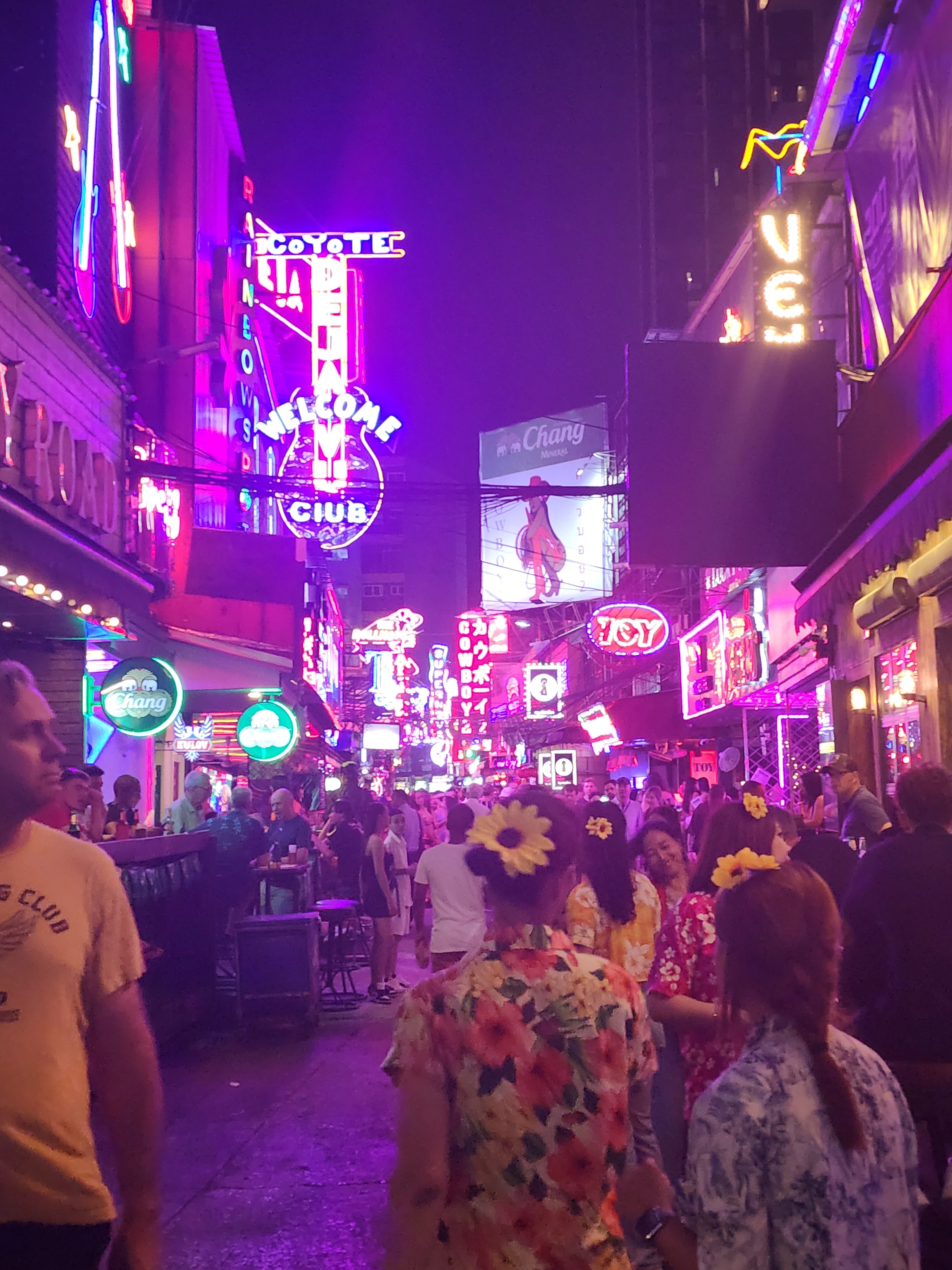
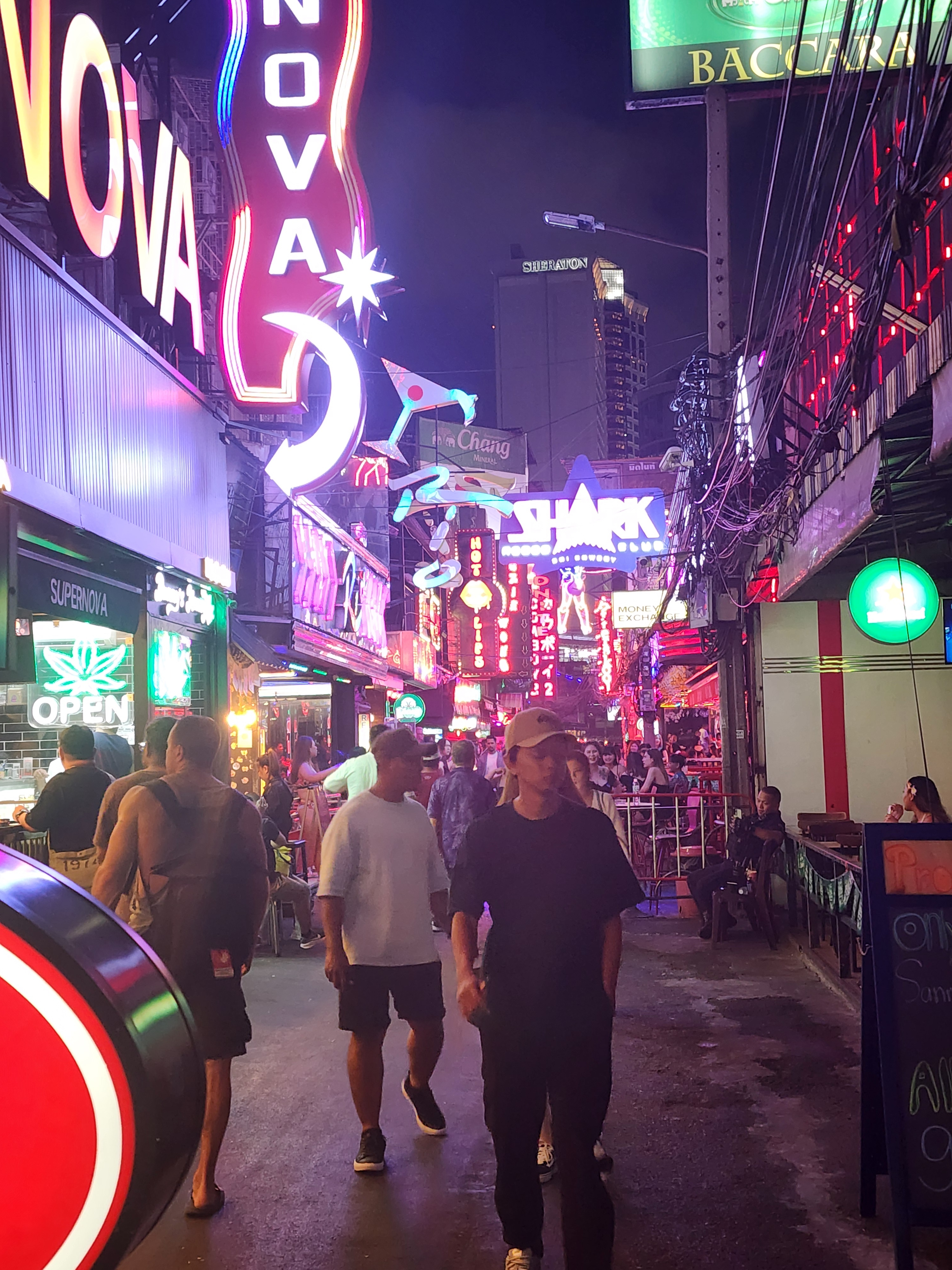
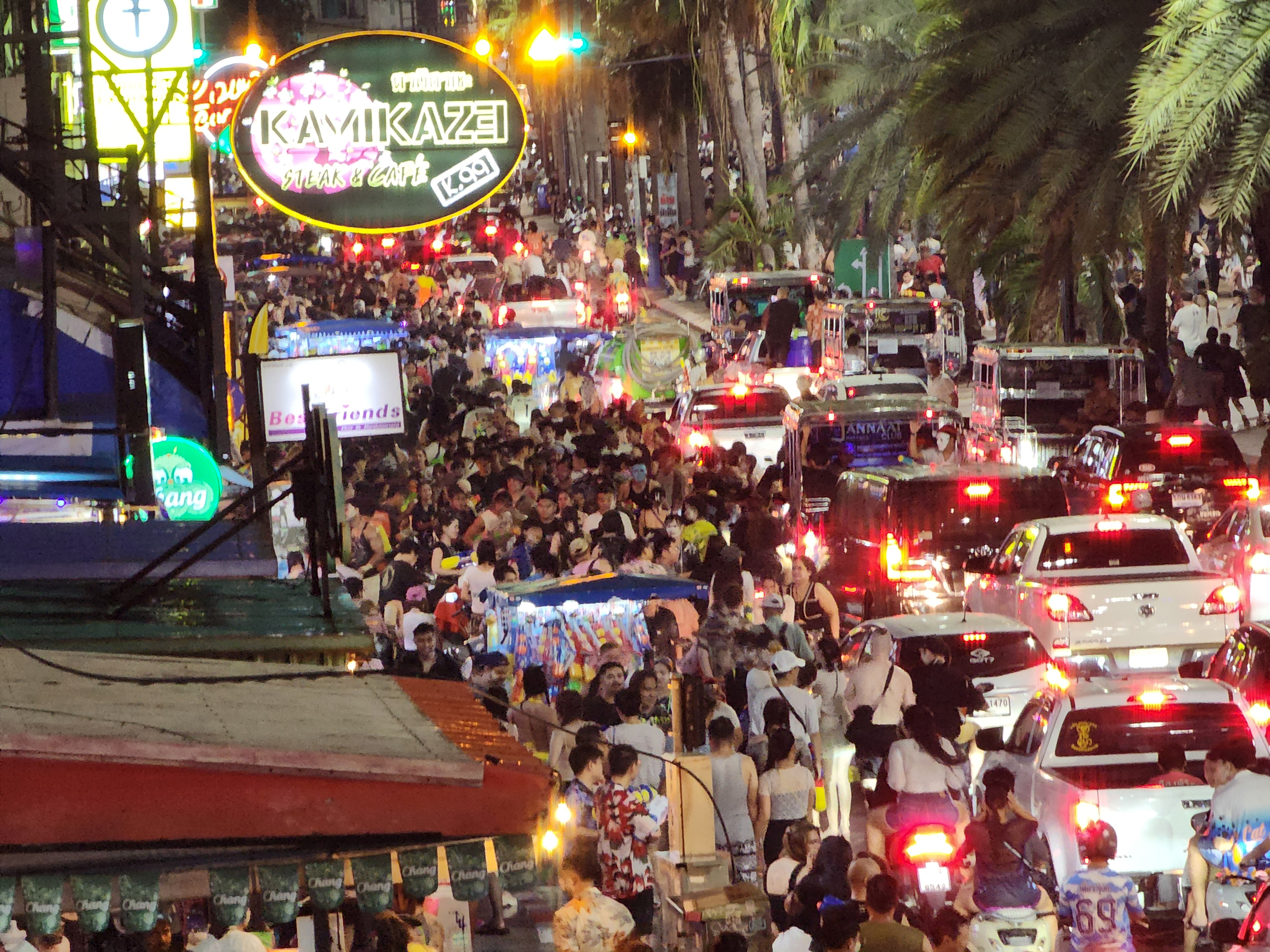
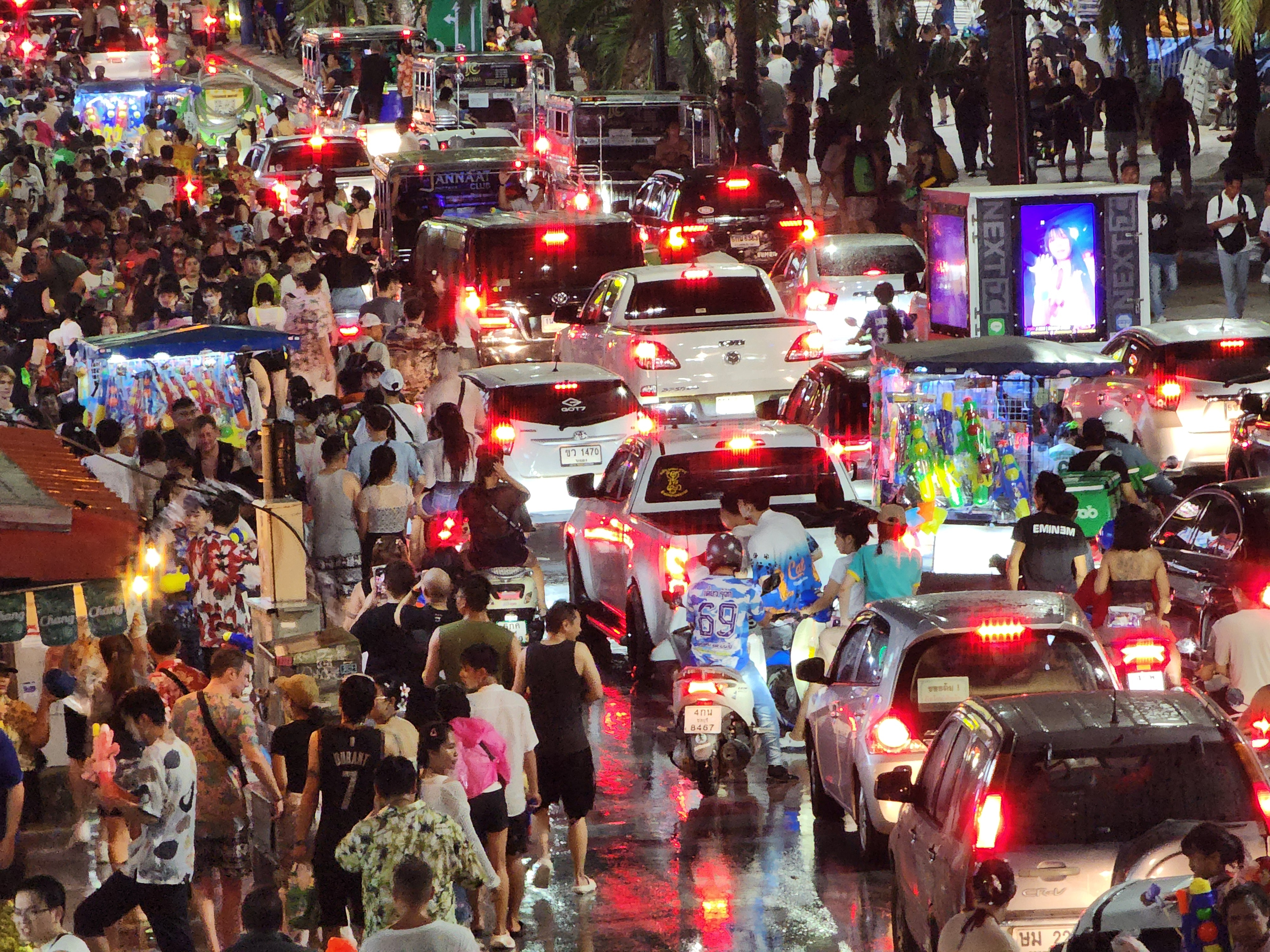
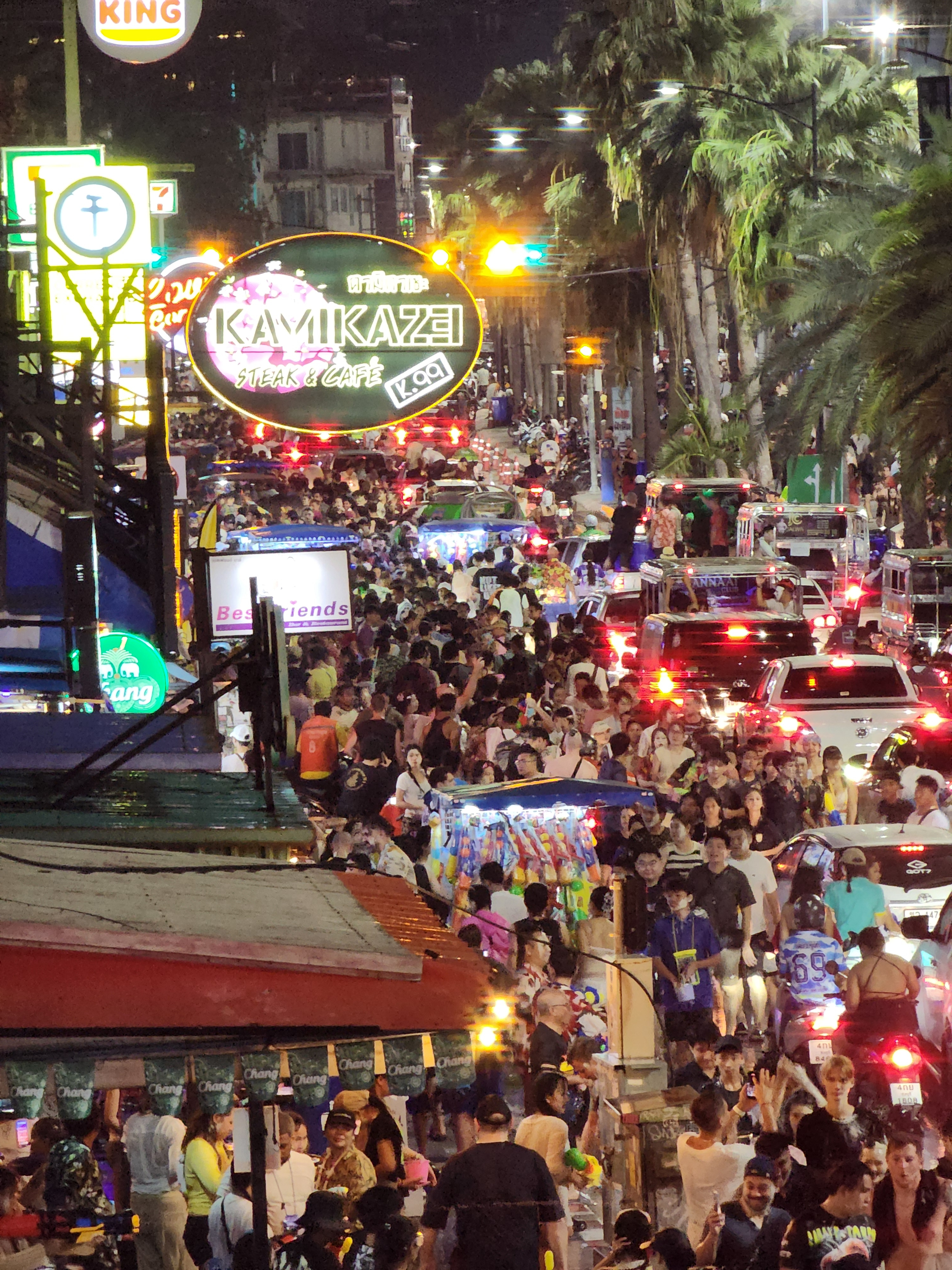
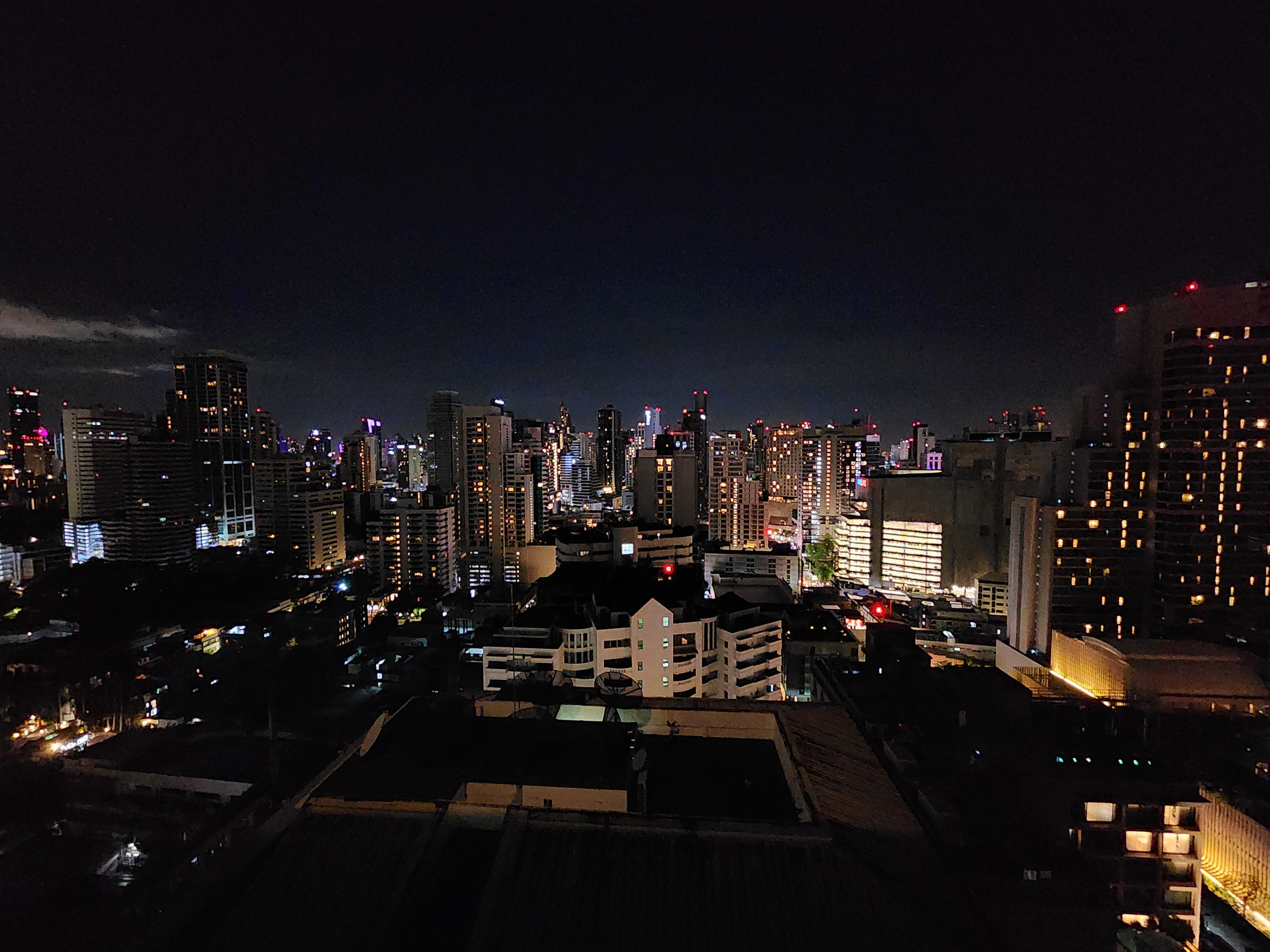
As evening approaches, Bangkok undergoes another transformation. The sun slips behind the towers, but darkness never truly arrives. Neon replaces daylight. LED signs ignite above ramen shops, Korean barbecue restaurants, cannabis dispensaries, rooftop cocktail lounges, massage parlours, pharmacies, tattoo studios, currency exchanges, and family-owned cafés that have occupied the same corner for decades. The BTS trains continue gliding overhead every few minutes, their windows glowing against the deepening blue sky. Beneath them, streams of headlights stretch into the distance like rivers of liquid gold. Music escapes from every doorway. Thai pop collides with jazz, hip-hop, EDM, classic rock, and live acoustic singers performing for diners seated inches from the sidewalk. Conversations happen in Thai, English, Japanese, Mandarin, Korean, Arabic, French, Russian, and dozens of other languages. Sukhumvit has become one of the world's most international neighbourhoods, where residents, expatriates, business travellers, backpackers, diplomats, chefs, artists, and entrepreneurs all occupy the same few streets without ever slowing the city's relentless pace.
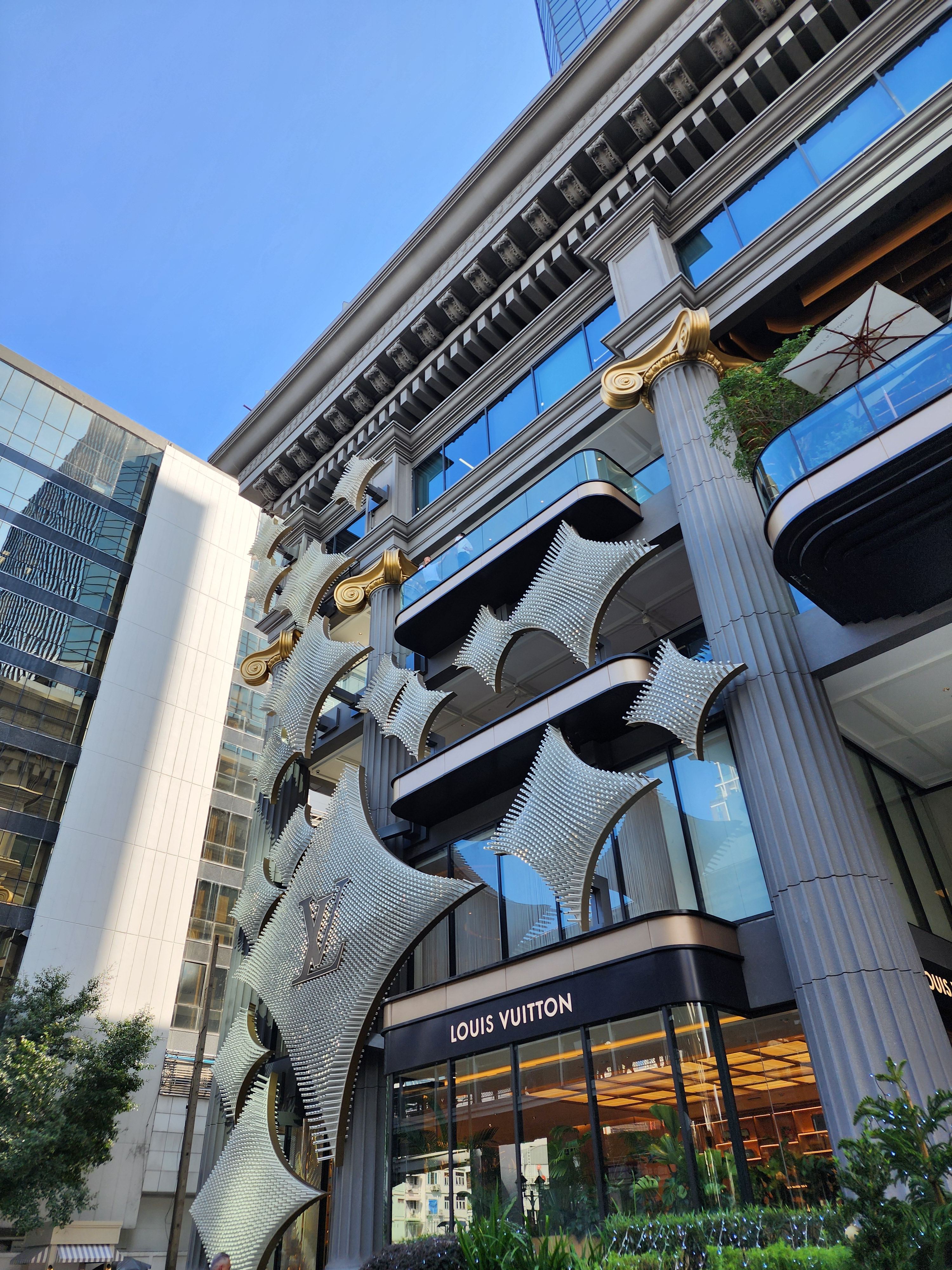
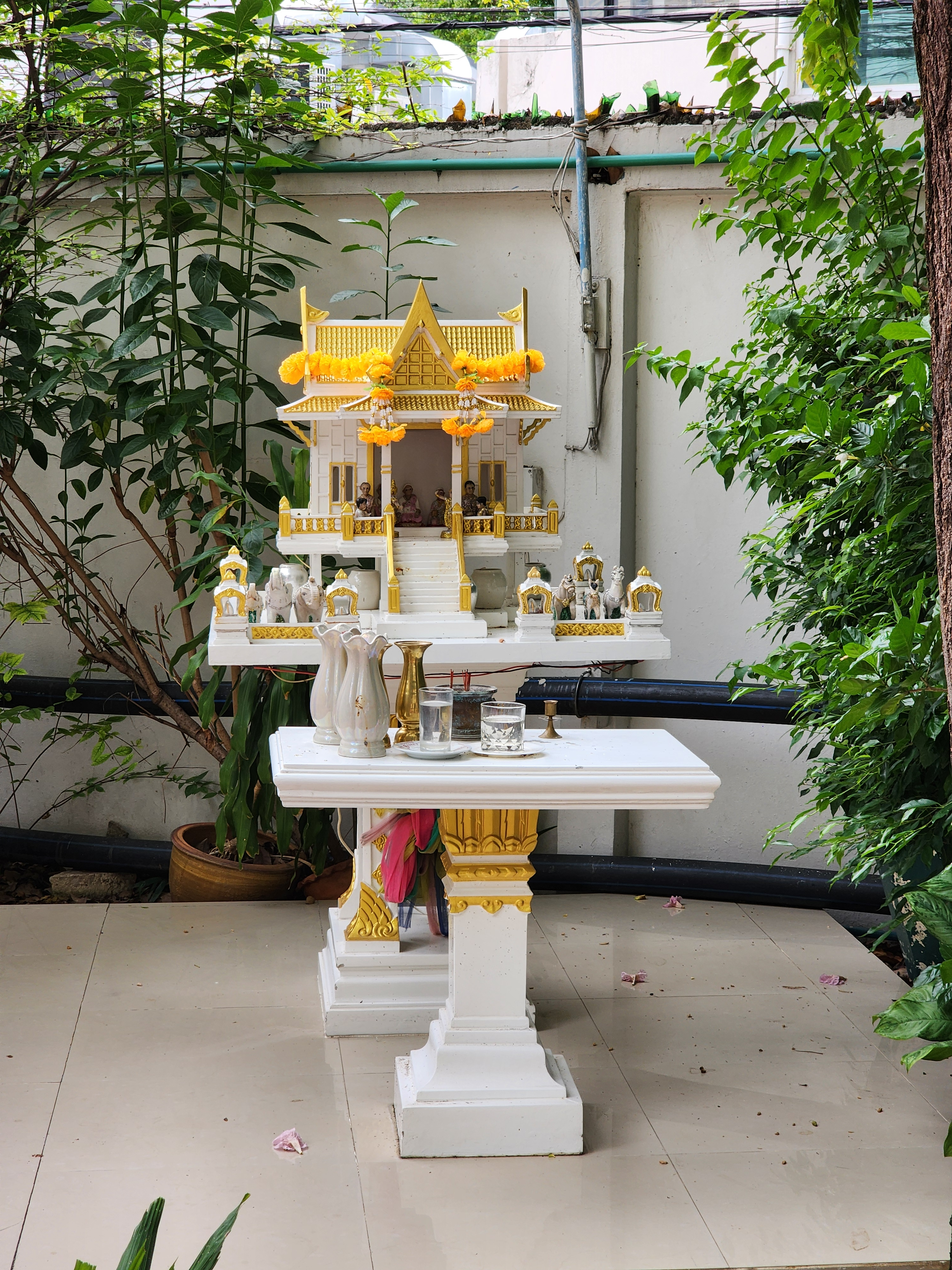
The deeper you wander into the Sois, the more Bangkok rewards curiosity. Quiet residential lanes suddenly open into hidden cafés filled with hanging plants. Small Buddhist shrines glow with flickering candles beneath towering condominiums. Tailors work late beneath fluorescent lights while mechanics repair scooters only meters from fashionable cocktail bars. Every alley offers another surprise. A tiny noodle shop packed with locals. A rooftop overlooking an ocean of illuminated towers. A grandmother laughing with customers she has served for thirty years. A group of teenagers practicing dance routines beneath the BTS tracks. Bangkok refuses to separate luxury from ordinary life. Million-dollar penthouses overlook humble food carts. Five-star hotels stand beside family-run laundries. Designer boutiques share walls with hardware stores selling bolts by the kilogram. Nothing feels curated. Nothing feels staged. The city's beauty lies in its refusal to simplify itself. Bangkok overwhelms every sense at once, then somehow persuades you to keep walking, because every hundred meters promises another scene worth remembering.

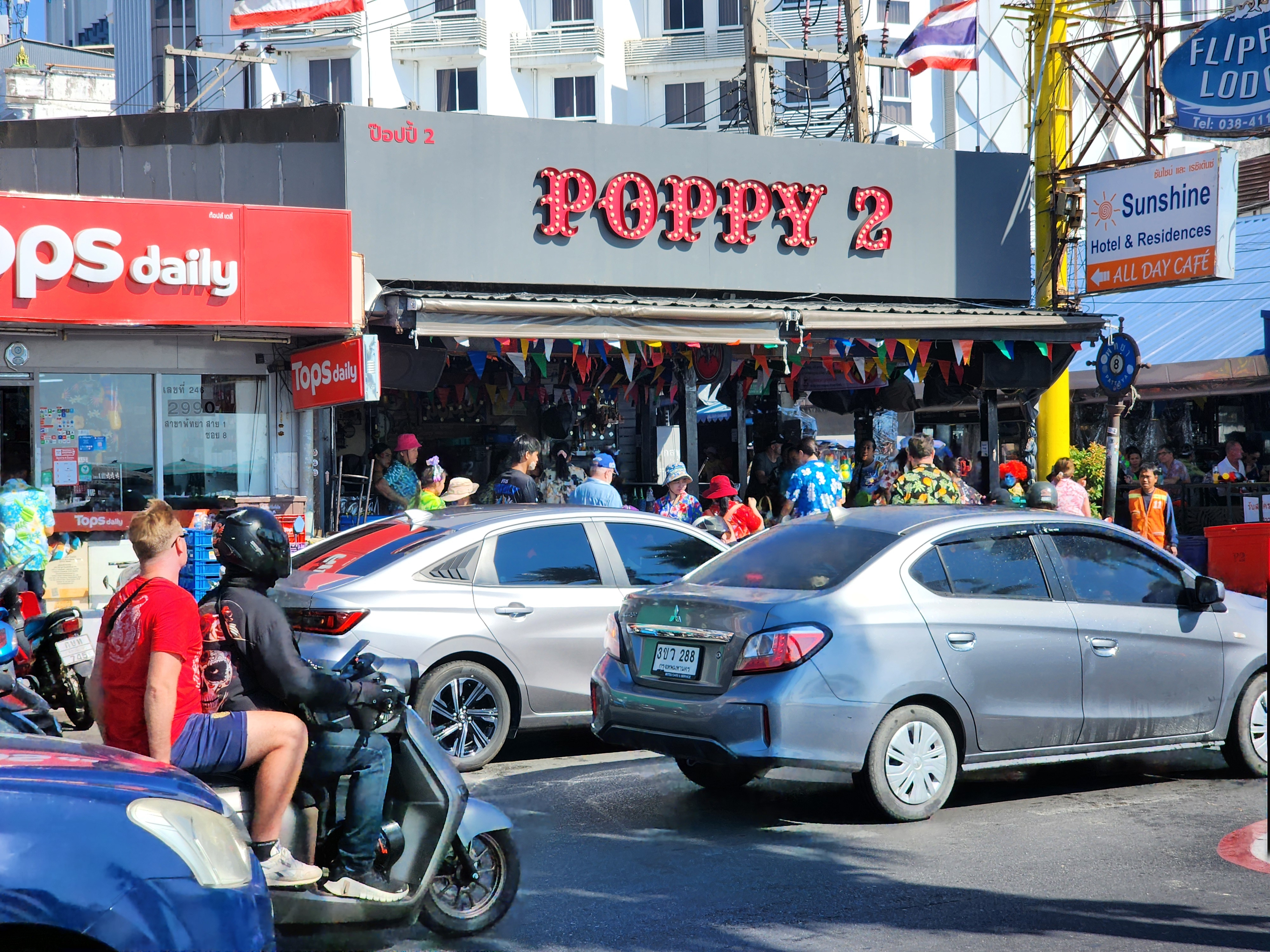
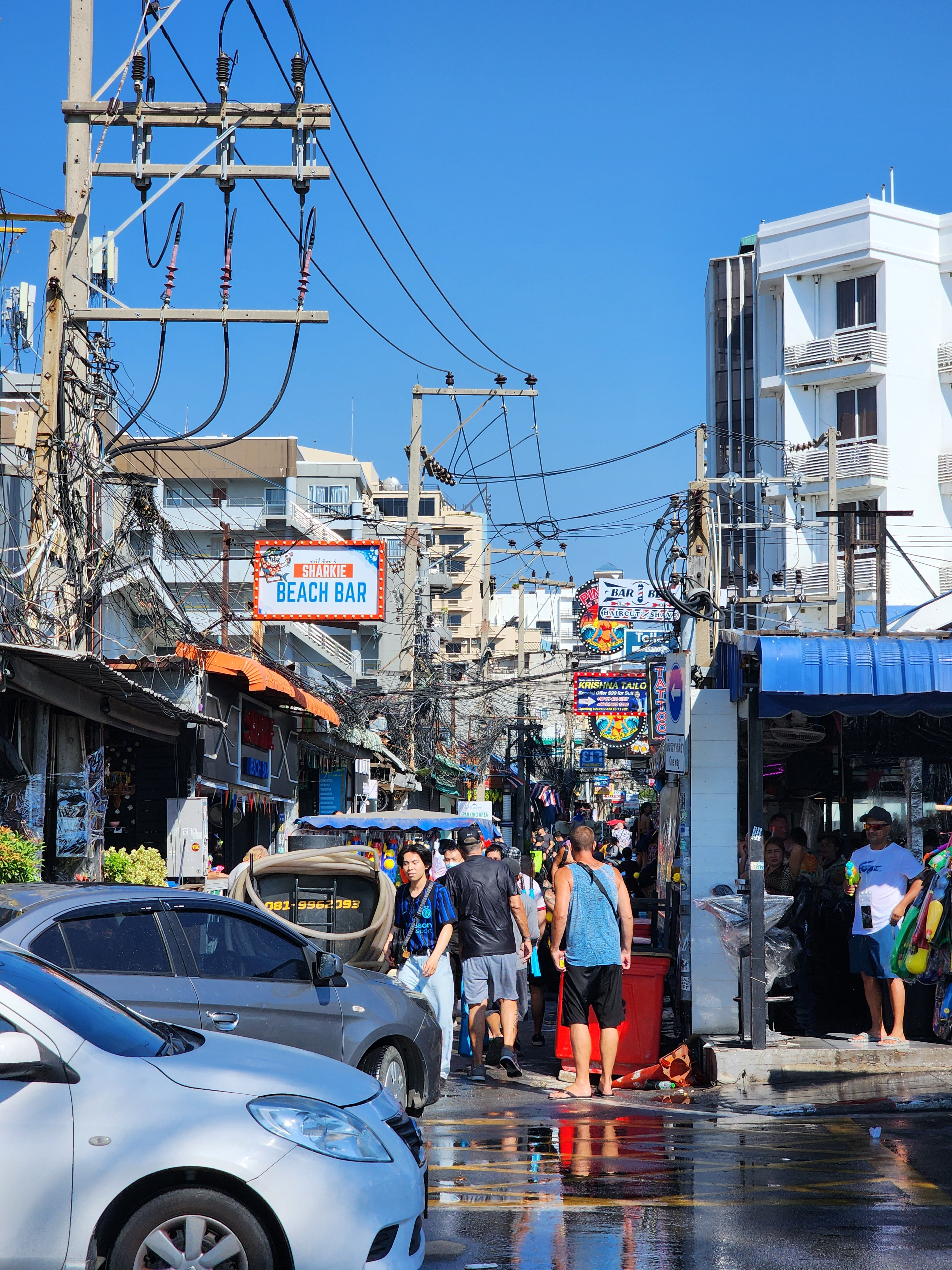
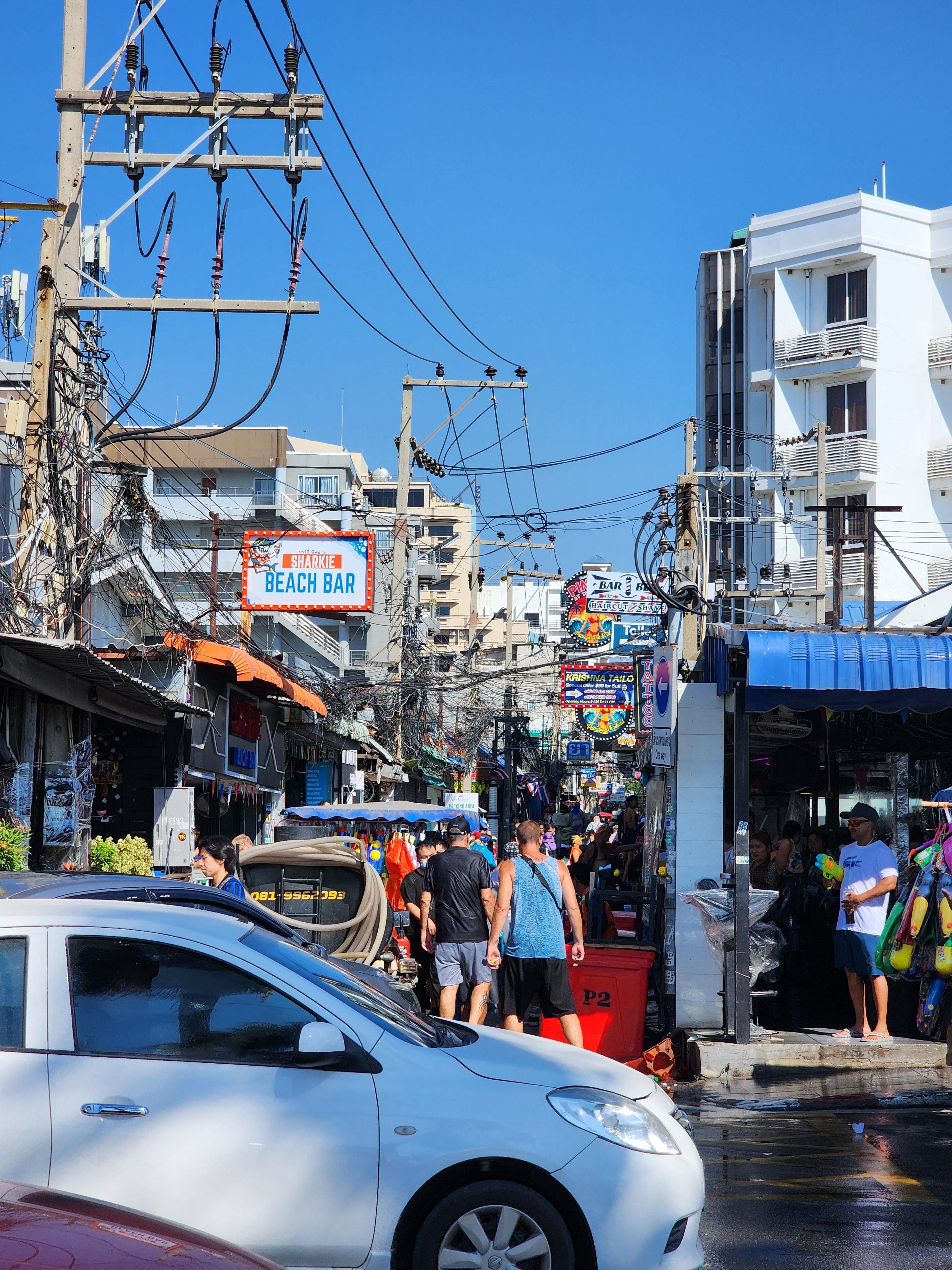
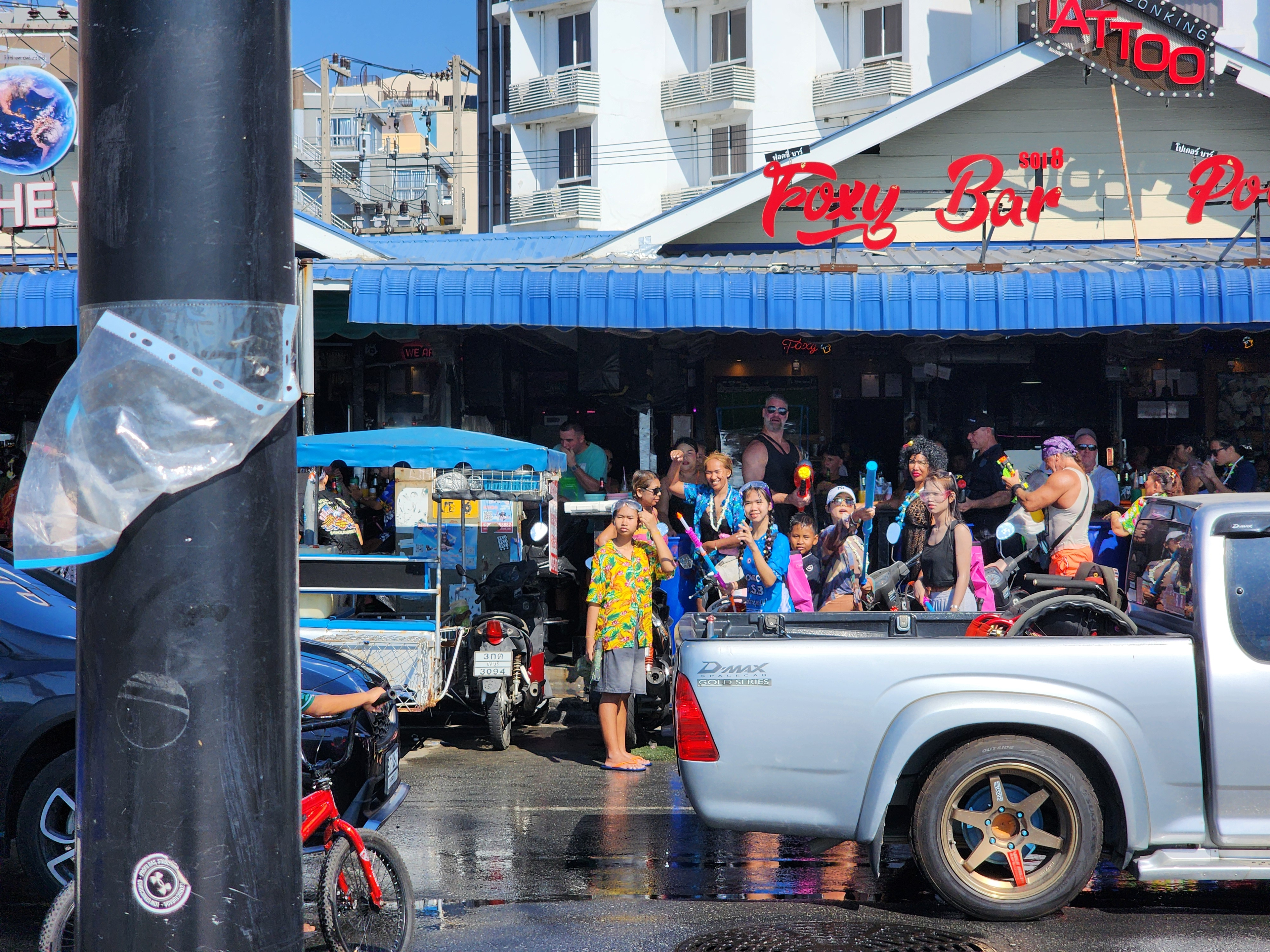
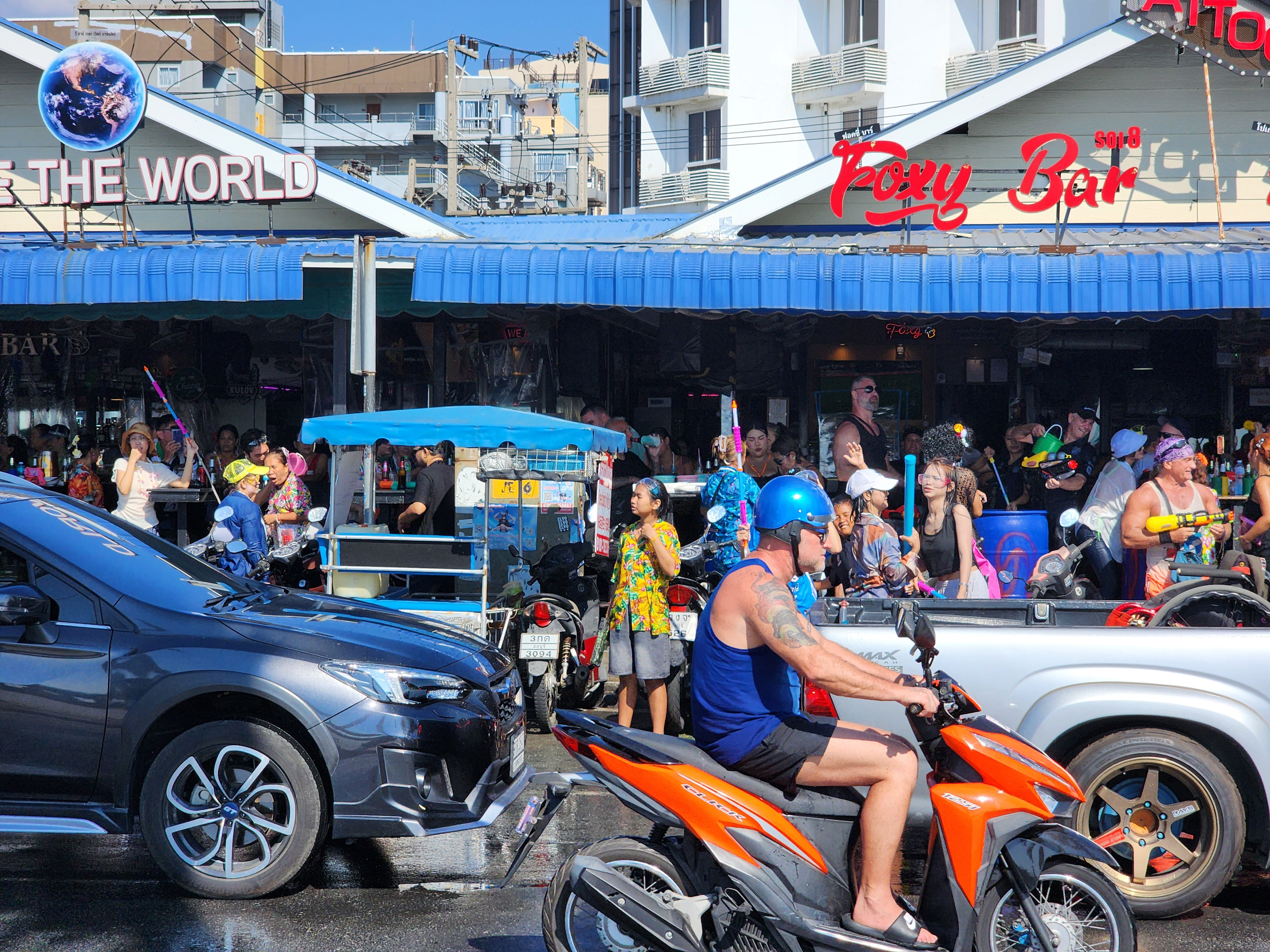
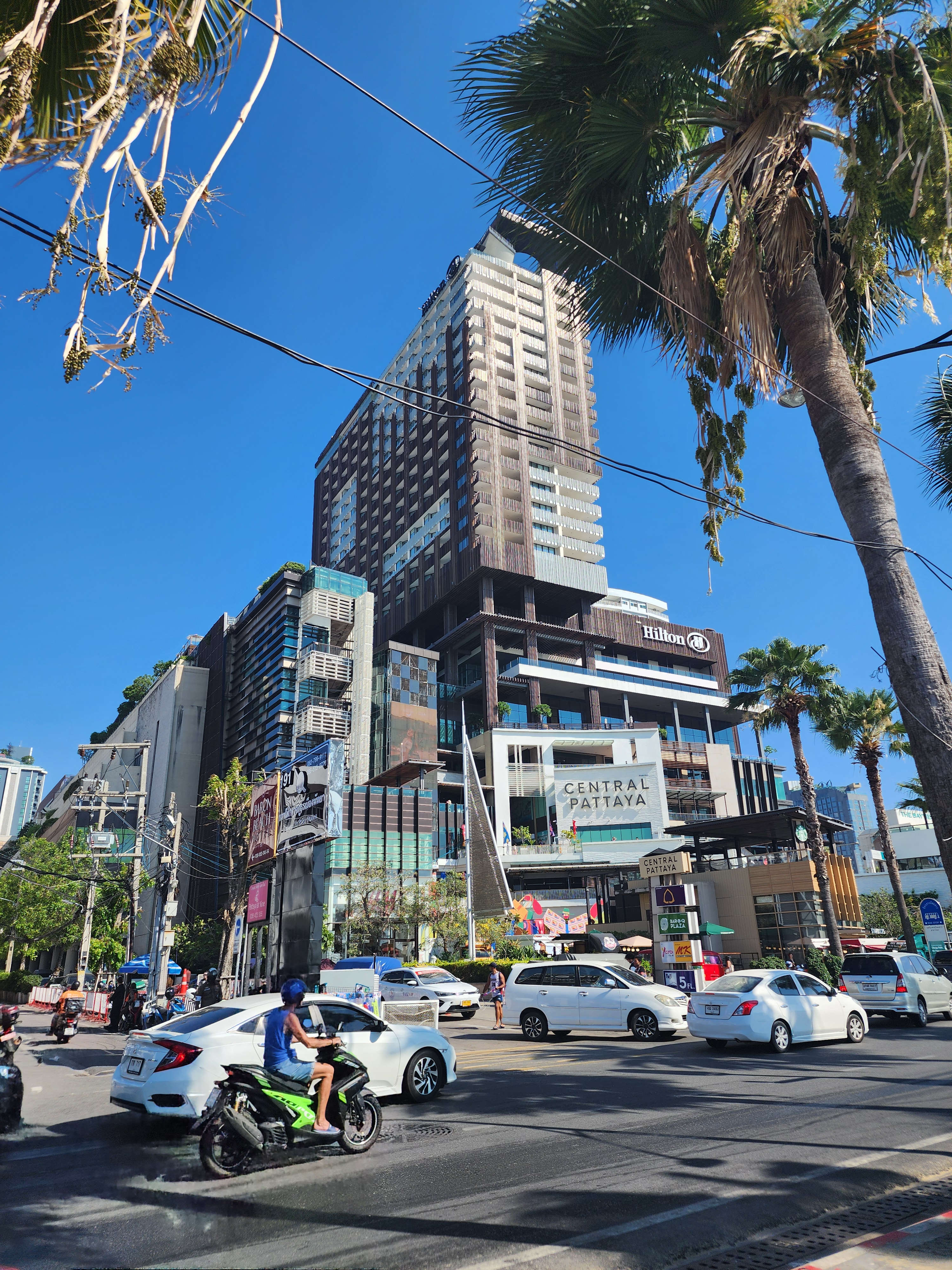
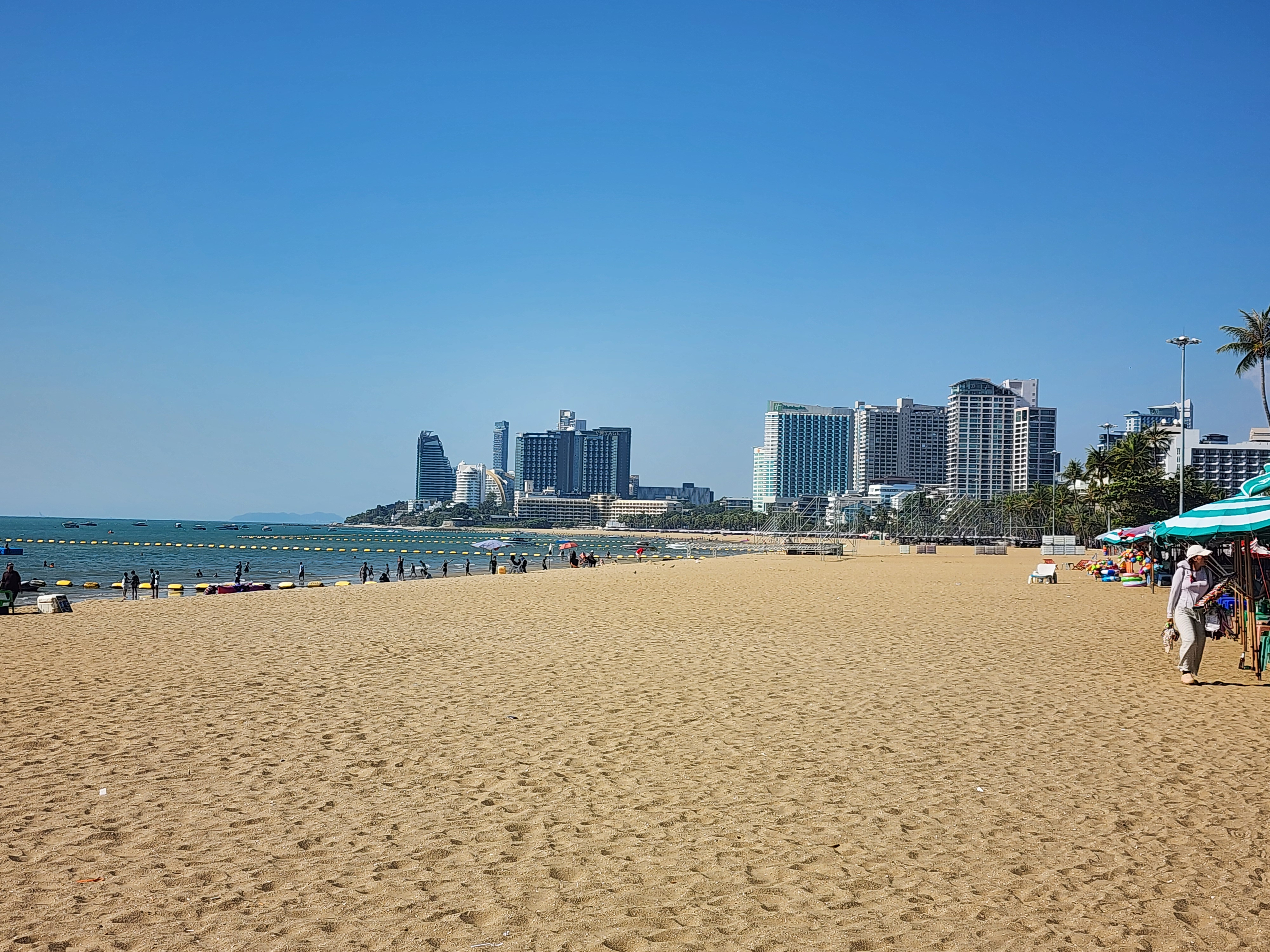
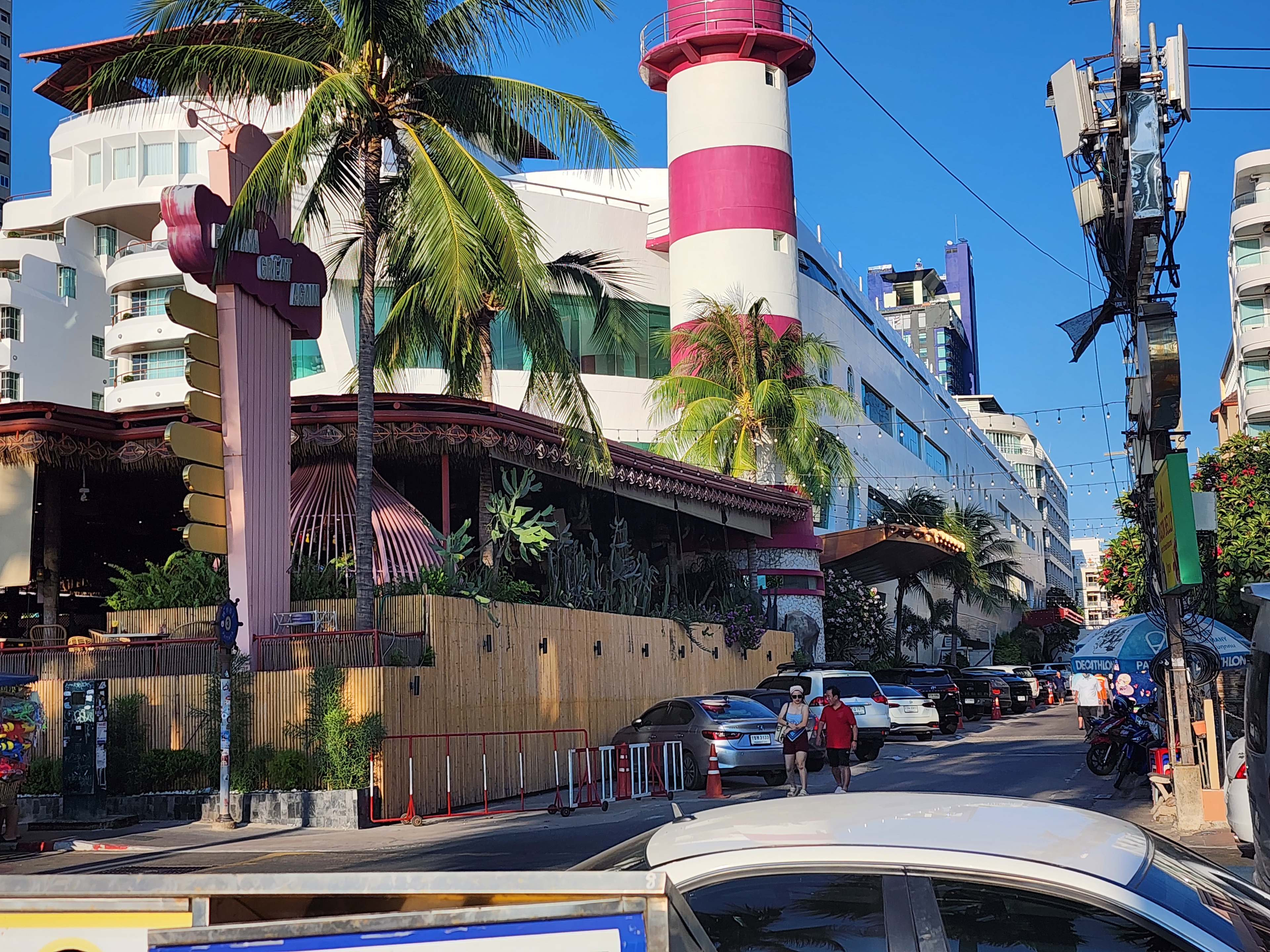

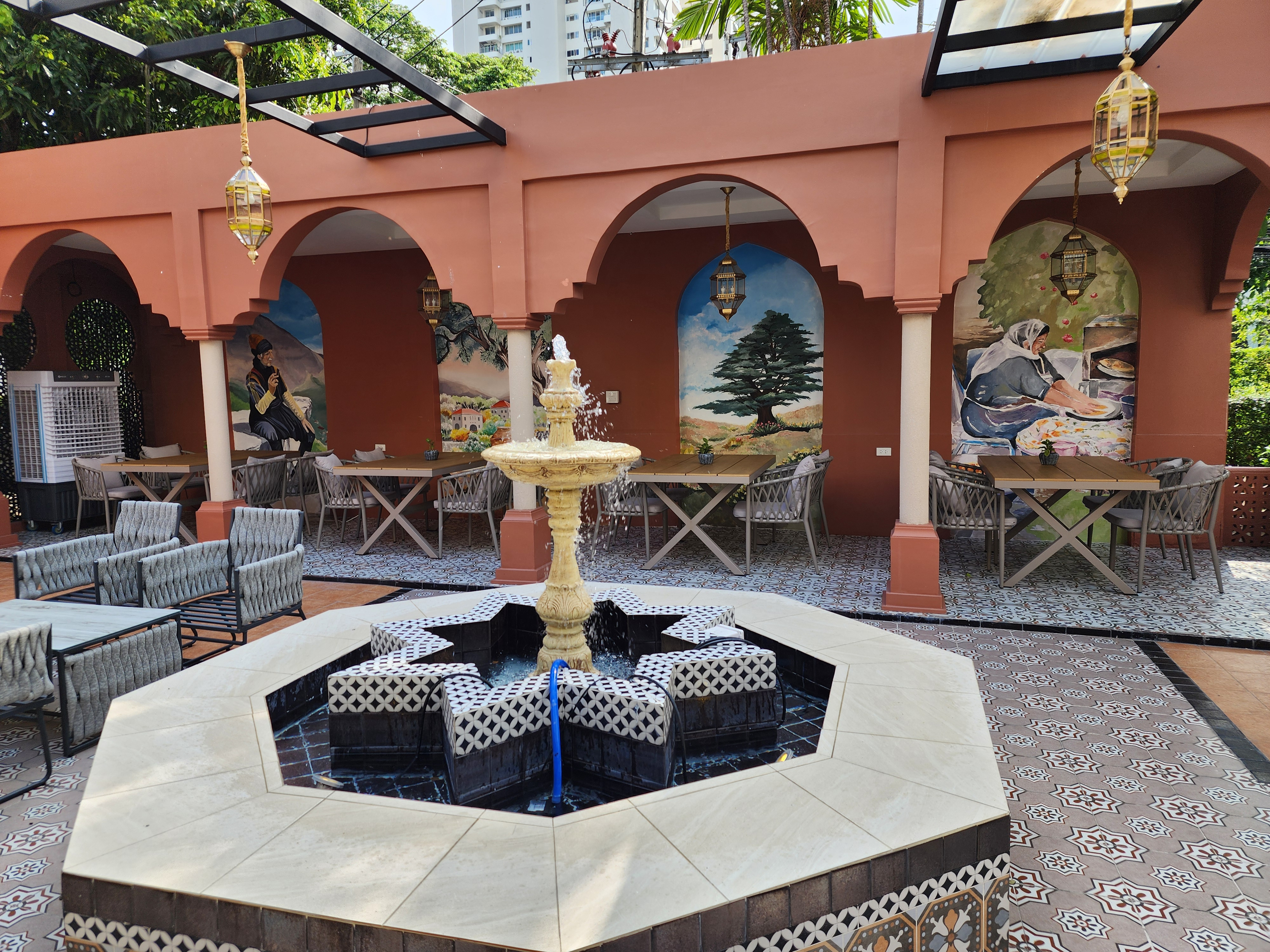
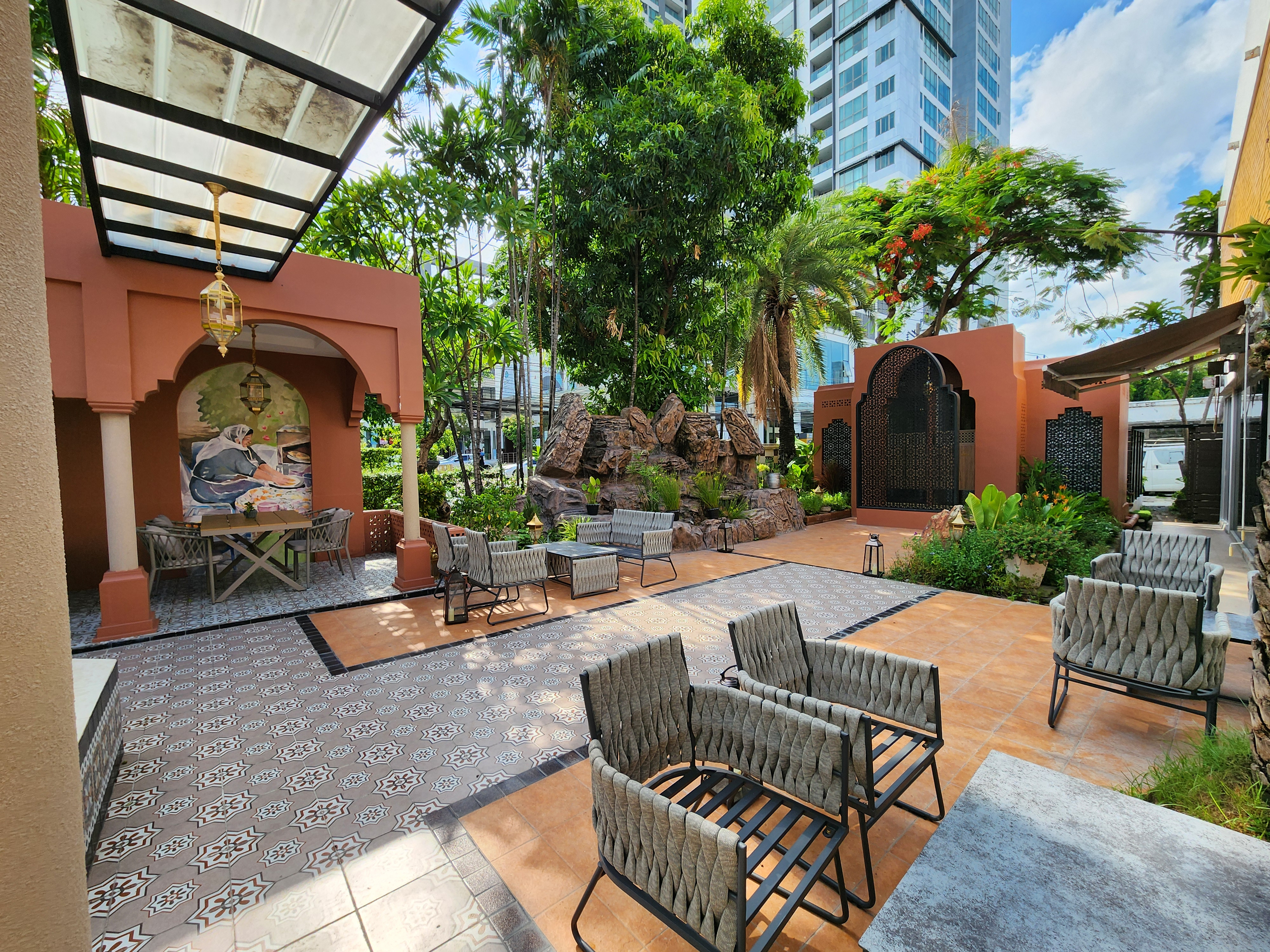
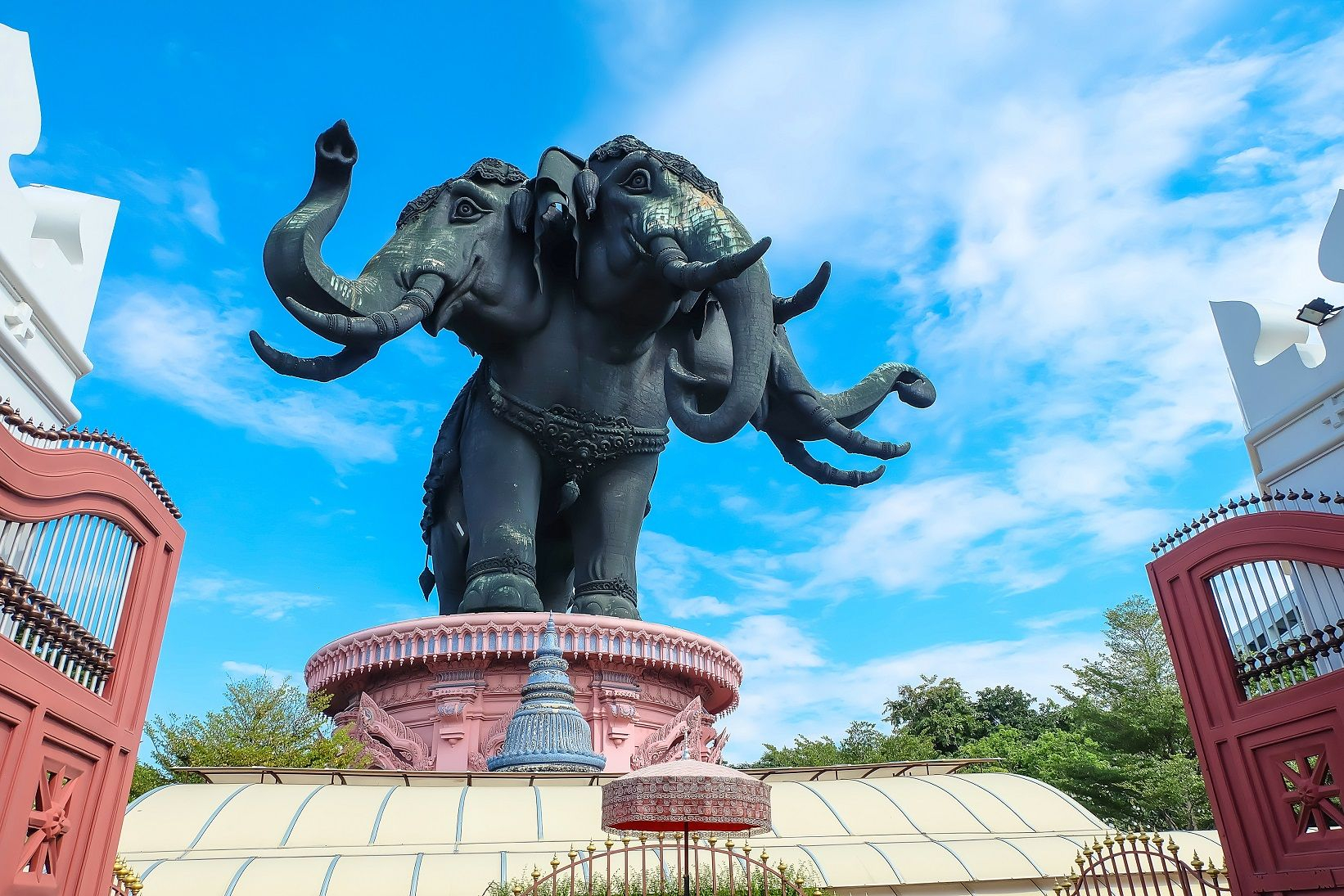
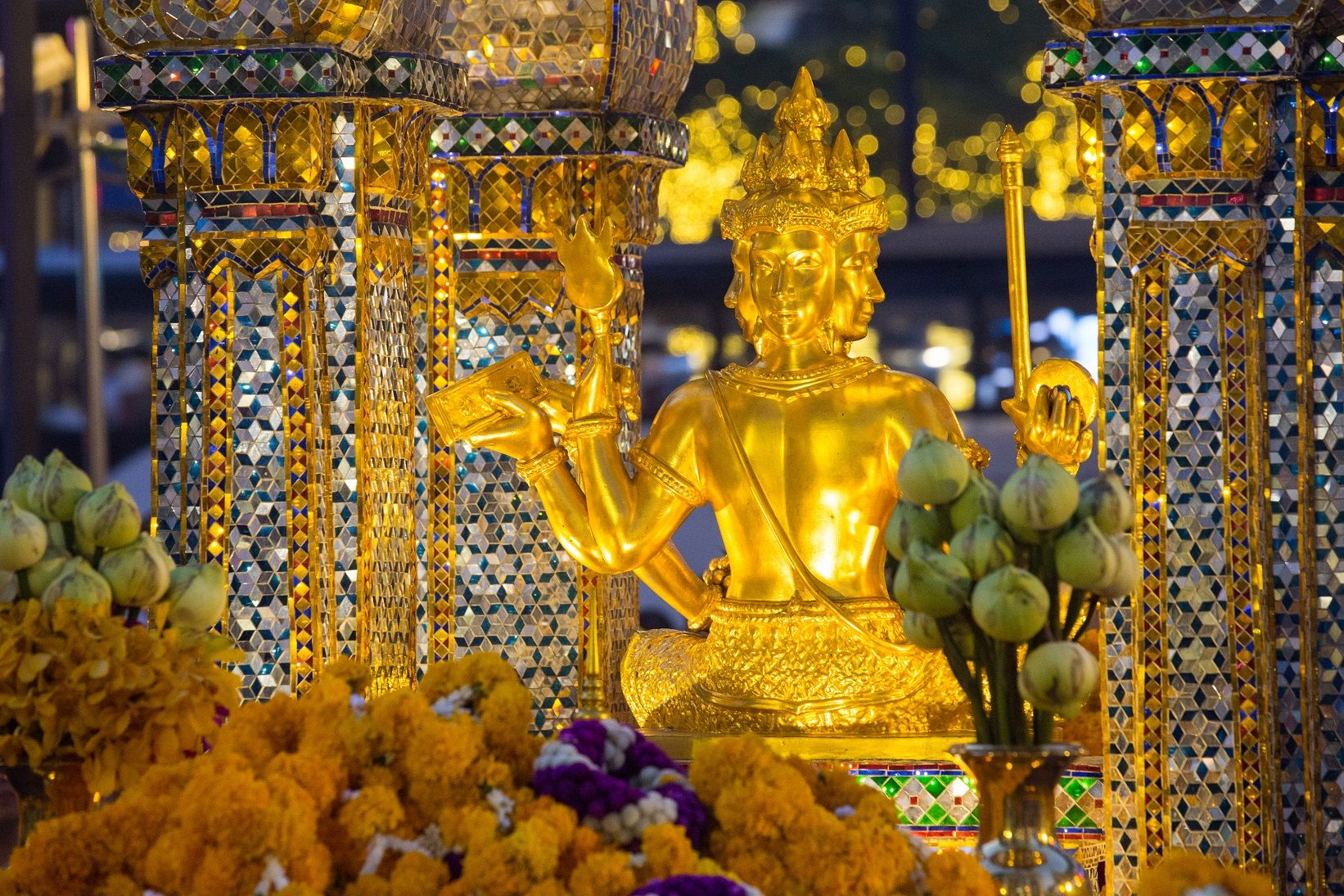

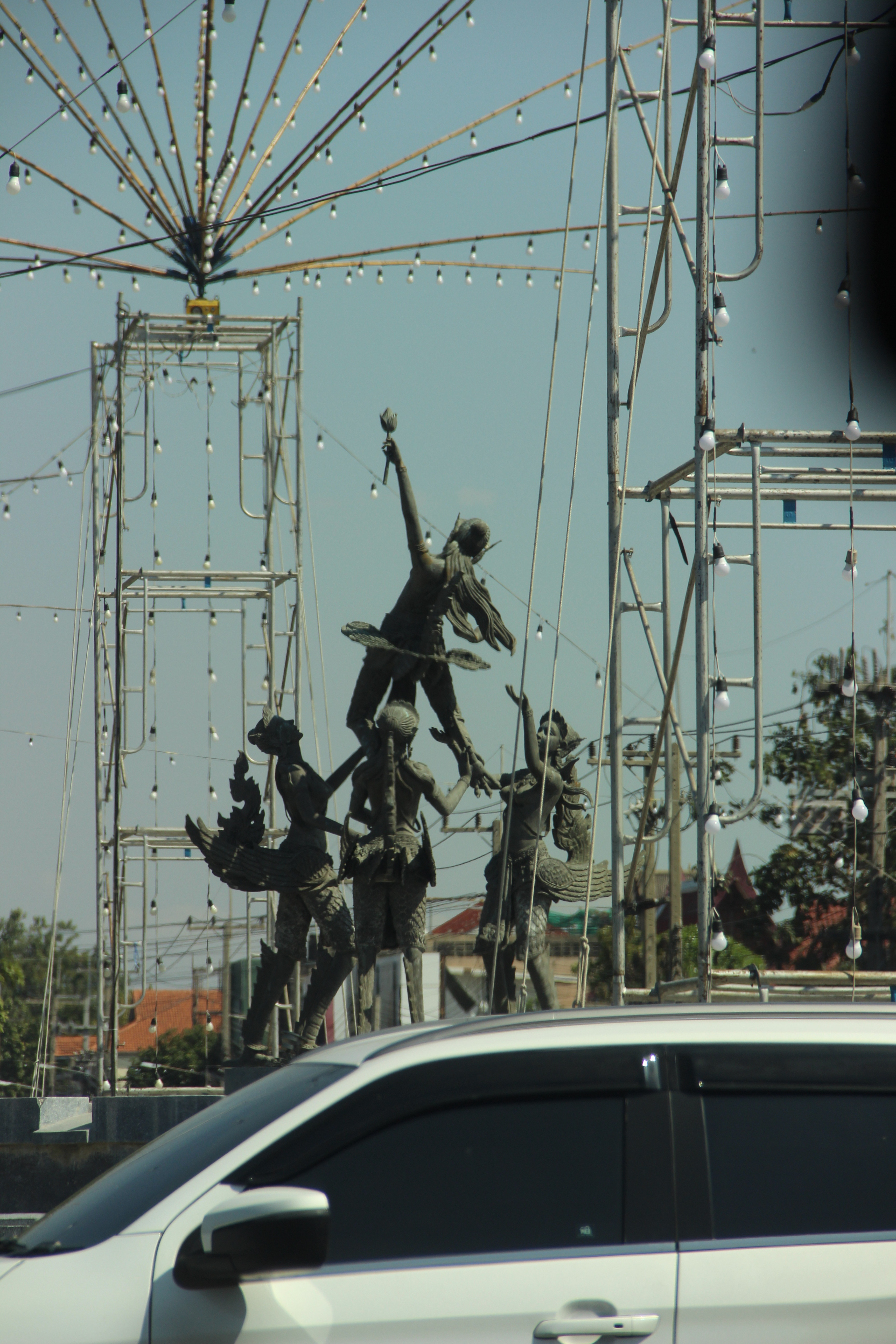
Beyond the tourist tattoo, Thailand's sacred ink reveals a hidden world of bloodlines, spirits, and ancient oaths.
Bangkok teaches you to look. The Samnak teaches you to see. For days, I walked through crowded markets, temple courtyards, BTS platforms, and narrow Sois without realizing I was surrounded by one of Thailand's oldest living traditions. The tattoos appeared everywhere, so ordinary they dissolved into the background. A faded tiger stretched across the shoulder of a motorcycle taxi rider waiting for his next fare. Sacred script climbed the forearm of a butcher slicing pork before sunrise. A grandmother buying vegetables carried an intricate lattice of yantra beneath the sleeve of her floral blouse. Muay Thai fighters bowed beneath the ropes with inked backs glistening under harsh stadium lights, while young monks swept temple grounds, their saffron robes occasionally revealing fragments of ancient geometry. Even the women who animated Bangkok's nightlife carried delicate yantras across their hips and thighs, hidden beneath silk and denim, each line whispering stories of protection, fortune, attraction, or resilience. The city was speaking through ink. I simply had not learned its language.
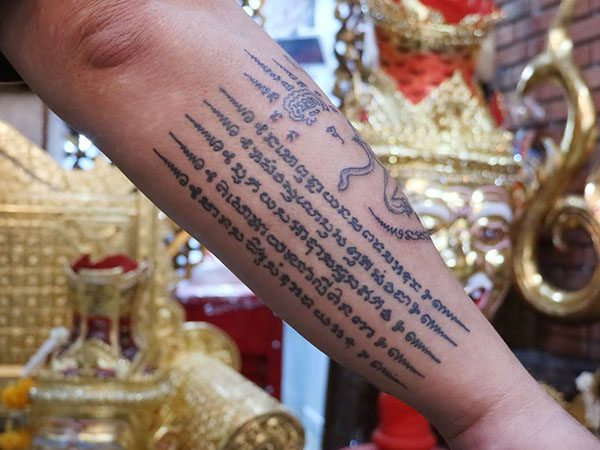
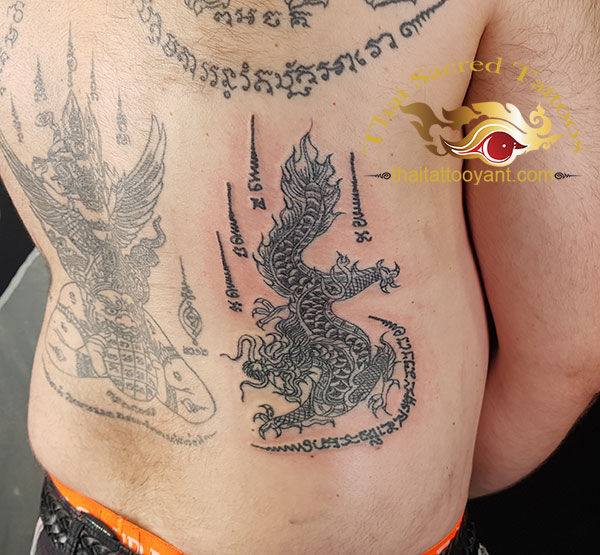
To a passing outsider, Sak Yant looks like a striking curiosity, another photograph to collect before moving to the next temple or night market. Stay longer, and that illusion begins to unravel. The tattoos are not fashion. They are inheritance. They belong to an unbroken lineage that reaches through centuries of Theravada Buddhism, ancient Khmer ritual traditions, Brahmanic cosmology, and older animist beliefs that long predate organized religion. Every yantra carries intention. Every geometric pattern, every animal, every line of Khom or Pali script is chosen for a purpose, whether to shield its bearer from violence, strengthen courage, attract prosperity, command respect, or guard against unseen forces. In Thailand, the skin often serves as a living manuscript, preserving spiritual knowledge that has never depended on books or museums to survive.
Following those markings eventually leads away from the polished image of Bangkok and toward places rarely found in guidebooks. Hidden behind ordinary homes, tucked into quiet neighborhoods, concealed behind metal gates or narrow alleys, the samnak reveal themselves with remarkable humility. Nothing outside suggests that generations of sacred knowledge are being preserved within. Inside, however, incense hangs thick in the air. Shelves overflow with Buddha images darkened by candle smoke. Offerings of marigolds, jasmine garlands, fruit, cigarettes, whisky, and folded banknotes rest before household shrines. Long steel rods and split bamboo needles lie neatly beside bowls of consecrated ink prepared from charcoal, botanical extracts, sacred oils, and formulas guarded within family bloodlines. Here the Ajarn is more than a tattooist. He is a ritual specialist, teacher, healer, astrologer, and guardian of a lineage entrusted to him by those who came before.
Only after sitting quietly on those polished wooden floors does the rhythm of the samnak reveal itself. Conversation gives way to silence. The sharp, deliberate click of steel meeting skin settles into a steady cadence. Pali incantations rise almost as whispers, each breath measured to accompany the movement of the rod. The room asks for patience rather than spectacle. There are no mirrors reflecting fresh tattoos, no display walls inviting comparison, and no audience waiting for photographs. What unfolds is not a performance but a covenant. Every puncture joins flesh with faith, every spoken kata seals intention into blood, and every completed yantra binds its bearer to a tradition that continues to live, not in temples or history books, but beneath the skin of ordinary people walking the streets of Thailand every single day.
The ink that outlived kingdoms.
Long before Thailand existed as a nation, before Bangkok became a forest of concrete and glass, the foundations of Sak Yant were already taking shape across mainland Southeast Asia. Its roots reach back more than a thousand years to the Khmer Empire, whose influence stretched across present-day Cambodia, Thailand, Laos, and parts of Myanmar. As traders, monks, Brahmins, and scholars moved through the region, they carried more than goods. They brought sacred geometry known as yantra, Sanskrit philosophy, Hindu cosmology, and the liturgical language of Pali. Over generations these traditions merged with local animist beliefs, where forests, rivers, mountains, and ancestral spirits were already woven into everyday life. The result was not the adoption of a single religion but the birth of something uniquely Southeast Asian. Sak Yant emerged from this meeting of civilizations, preserving fragments of each while becoming distinctly Thai.
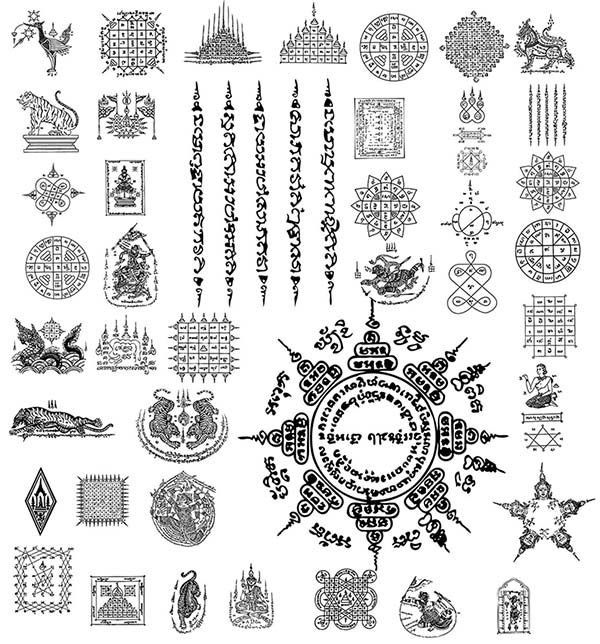
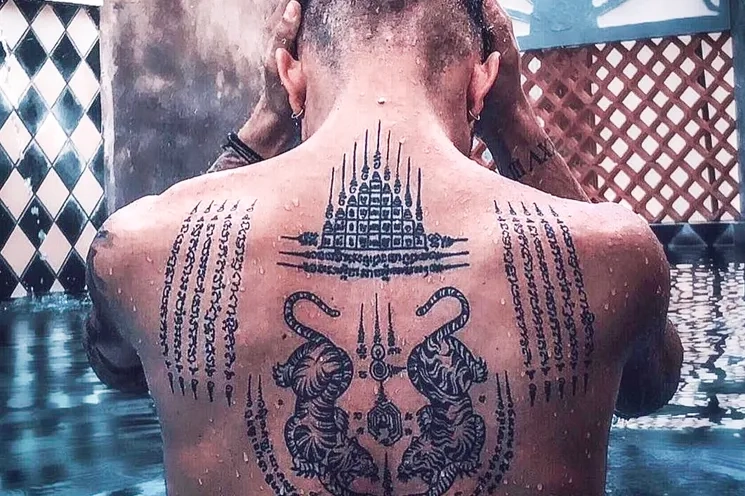
The word itself reveals that layered history. "Sak" simply means to tattoo or inscribe. "Yant" derives from the Sanskrit word yantra, referring to a sacred geometric diagram believed to channel spiritual energy. Yet a Sak Yant is never defined by its lines alone. Every tattoo combines three inseparable elements: the geometric yantra, sacred Khom or Pali inscriptions, and spoken mantras known only to trained masters. Remove any one of those elements and the tattoo loses its ritual completeness. The design is only the visible surface. Its power, according to the tradition, comes from the prayers recited during its creation, the disciplined lineage of the Ajarn applying it, and the moral conduct expected of the person who carries it.
By the kingdoms of Sukhothai and later Ayutthaya, Sak Yant had become deeply embedded in Thai society. Warriors sought tattoos before battle, believing the sacred inscriptions offered protection against blades and arrows. Royal guards, soldiers, and Muay Thai fighters carried yantras across their bodies as spiritual armor rather than decoration. Some designs promised courage, others authority, invulnerability, or success in combat. During periods of warfare, men covered themselves with protective tattoos and amulets so frequently that stories spread of Thai soldiers surviving impossible encounters, giving rise to legends that their skin had become resistant to weapons. Whether understood as faith, psychology, or folklore, those beliefs cemented Sak Yant as part of Thailand's cultural identity rather than a passing custom.
That history continues to breathe today, though it has adapted to a changing world. Some Sak Yants are still bestowed by Buddhist monks inside temple compounds, while others are entrusted to lay masters, the Ajarns, who preserve hereditary ritual lineages outside the monastery. Foreign visitors often arrive searching for an unusual tattoo, inspired by celebrities or social media photographs. They leave with something far older than they expected. In the eyes of the tradition, the tattoo is not purchased. It is received. It establishes a lifelong relationship between the bearer, the master, and the unseen forces invoked through the ritual. Every new line etched into the skin extends a chain that has survived empires, wars, political revolutions, and modernity itself, carrying an ancient language of faith beneath the surface of contemporary Thailand.
Inside the Samnak, where the master gives the ink its spirit.
History tells you where Sak Yant came from. The Samnak explains why it survived. Hidden behind ordinary homes, quiet temple compounds, and unmarked gates across Bangkok, Ayutthaya, and Chiang Mai, these modest shrines preserve a tradition that has endured for centuries through oral teaching rather than written doctrine. This is where you meet the Ajarn. The word, derived from the Sanskrit acharya, simply means "teacher," yet within the world of Sak Yant it carries far greater weight. An Ajarn is not merely a tattooist. He is a ritual specialist, spiritual guide, astrologer, healer, and custodian of a living lineage. Every sacred formula, every blessing, every geometric pattern, and every spoken kata has been inherited from a master before him. Many spend decades apprenticing under a single teacher before they are entrusted to perform the rituals themselves. The authority of an Ajarn comes not from certificates displayed on a wall, but from the uninterrupted bloodline of knowledge passed from teacher to disciple across generations.
For local devotees, entering a Samnak is rarely a casual decision. Most arrive through recommendation, family tradition, or years of trust in a particular master. Taxi drivers seek protection before beginning long shifts weaving through Bangkok's relentless traffic. Soldiers and police officers ask for courage and resilience before dangerous deployments. Muay Thai fighters kneel before an Ajarn before stepping into the ring, believing the blessing strengthens not only the body but the spirit that inhabits it. Business owners request yantras associated with prosperity and influence. Young men preparing for military service come seeking protection, while mothers quietly ask for blessings over their children. They do not choose a design from a catalogue. Instead, they explain the challenges they face, their profession, their fears, or their aspirations. The Ajarn studies the person before deciding which yantra belongs on their body. In many Samnaks, the tattoo is considered something the bearer receives, not something they commission.
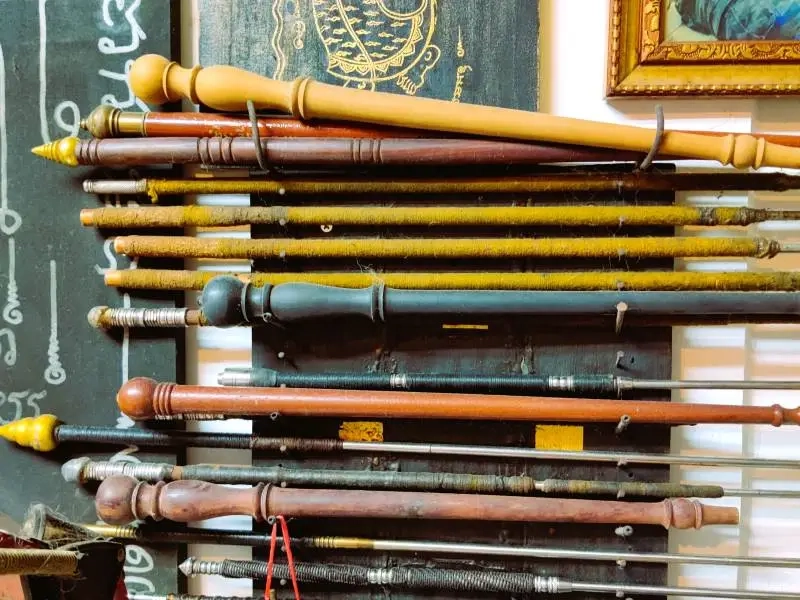
Watching the ritual unfold quickly dispels any expectation of a modern tattoo appointment. There are no framed flash sheets covering the walls, no buzzing electric machines, and no discussions about artistic style. The room moves to an older rhythm. Long steel rods, known as khem, rest beside split bamboo tools polished smooth by years of use. Bowls of black ink, prepared from consecrated charcoal, botanical extracts, sacred oils, and closely guarded family formulas, sit before images of the Buddha surrounded by incense, flowers, candles, and offerings. Before the first line is placed, prayers are recited. The Ajarn blesses the instruments, invokes his teachers, and chants ancient kata believed to awaken the spiritual intention of the yantra. Every movement feels deliberate. Every pause carries purpose. The tattoo begins only when the ritual is ready.
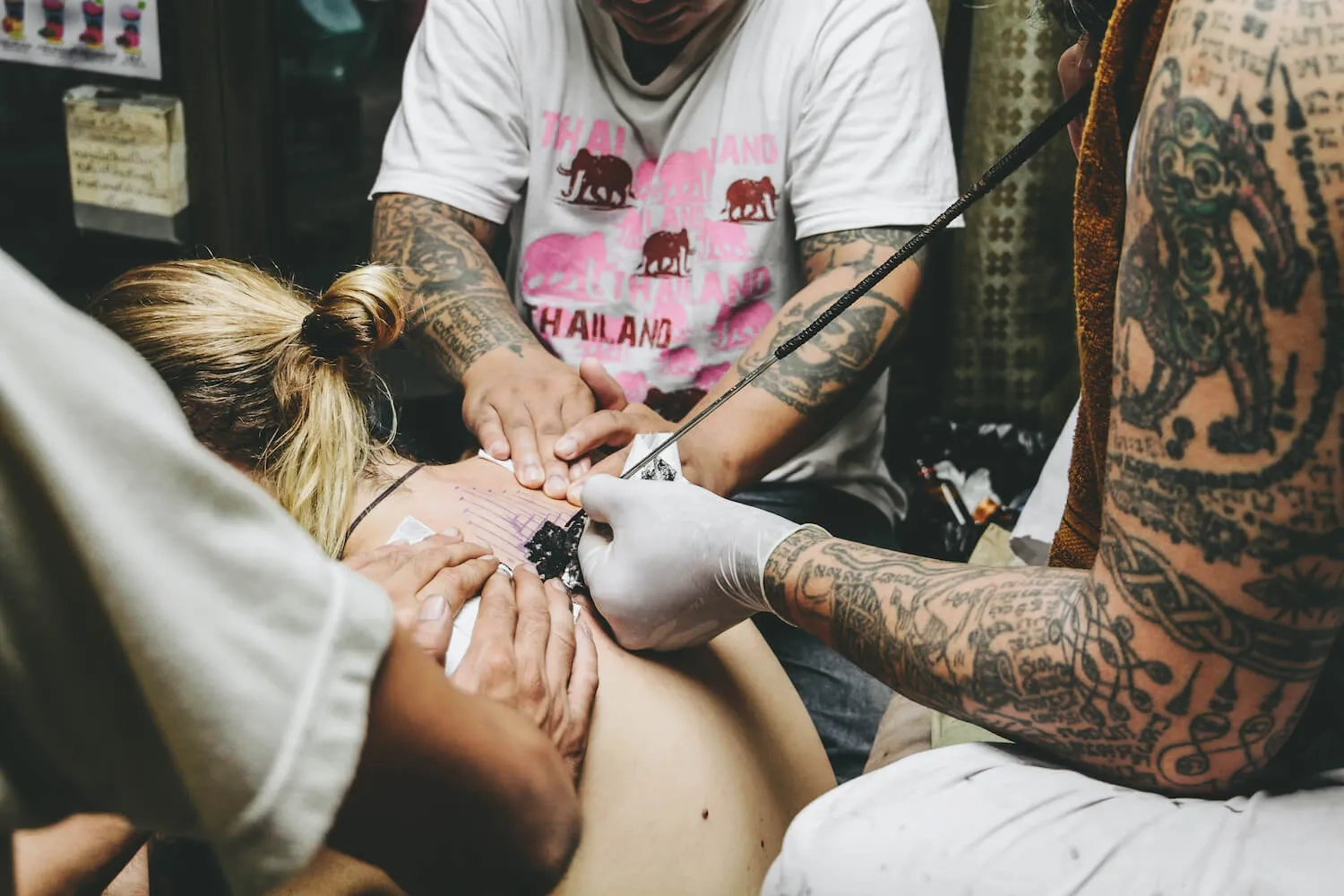
The traditional technique has remained remarkably unchanged despite the growth of Thailand's commercial tattoo industry. There is no mechanical hum, only the measured tap of steel or bamboo entering the skin one point at a time. The rhythm is hypnotic, almost musical, each strike following the last with unwavering precision until straight lines, sacred geometry, and columns of Khom script slowly emerge from hundreds of tiny punctures. There is no colour, no shading, and no decorative flourish. Every line exists because it serves a ritual function. Outside the Samnak, contemporary tattoo studios have adapted Sak Yant for a different audience. Electric machines produce cleaner, more consistent lines, while artists reinterpret traditional tigers, nagas, Hanuman, and guardian deities into elaborate sleeves and full-back compositions filled with colour and dramatic shading. Yet within the Samnak, little has changed. The hand-tapped rhythm remains inseparable from the ceremony itself. For the Ajarn and his devotees, the sacred power does not reside solely in the finished image. It lives in the blessing, the cadence of the iron rod, the spoken mantra carried on the master's breath, and the unbroken lineage that transforms ink from decoration into devotion.
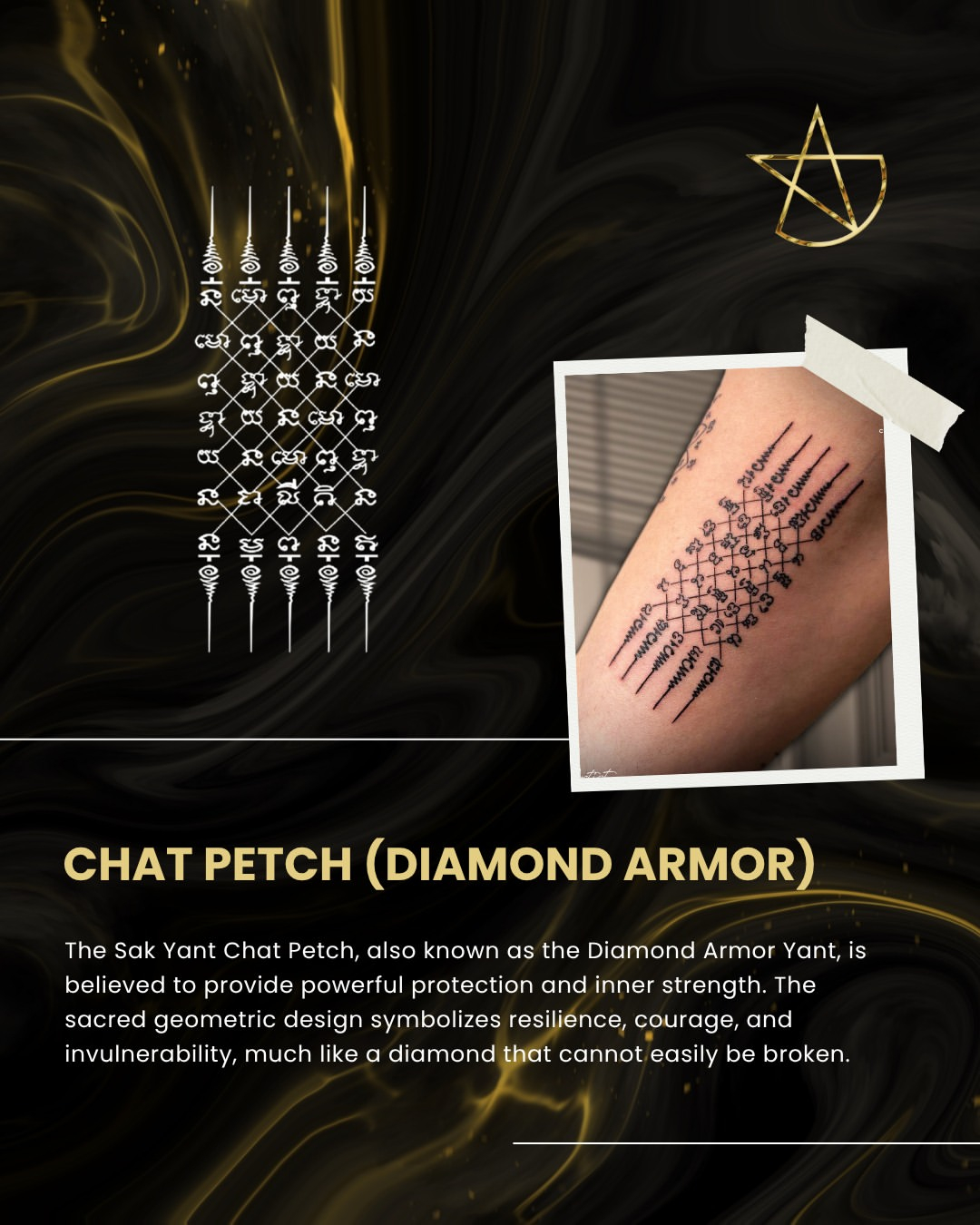
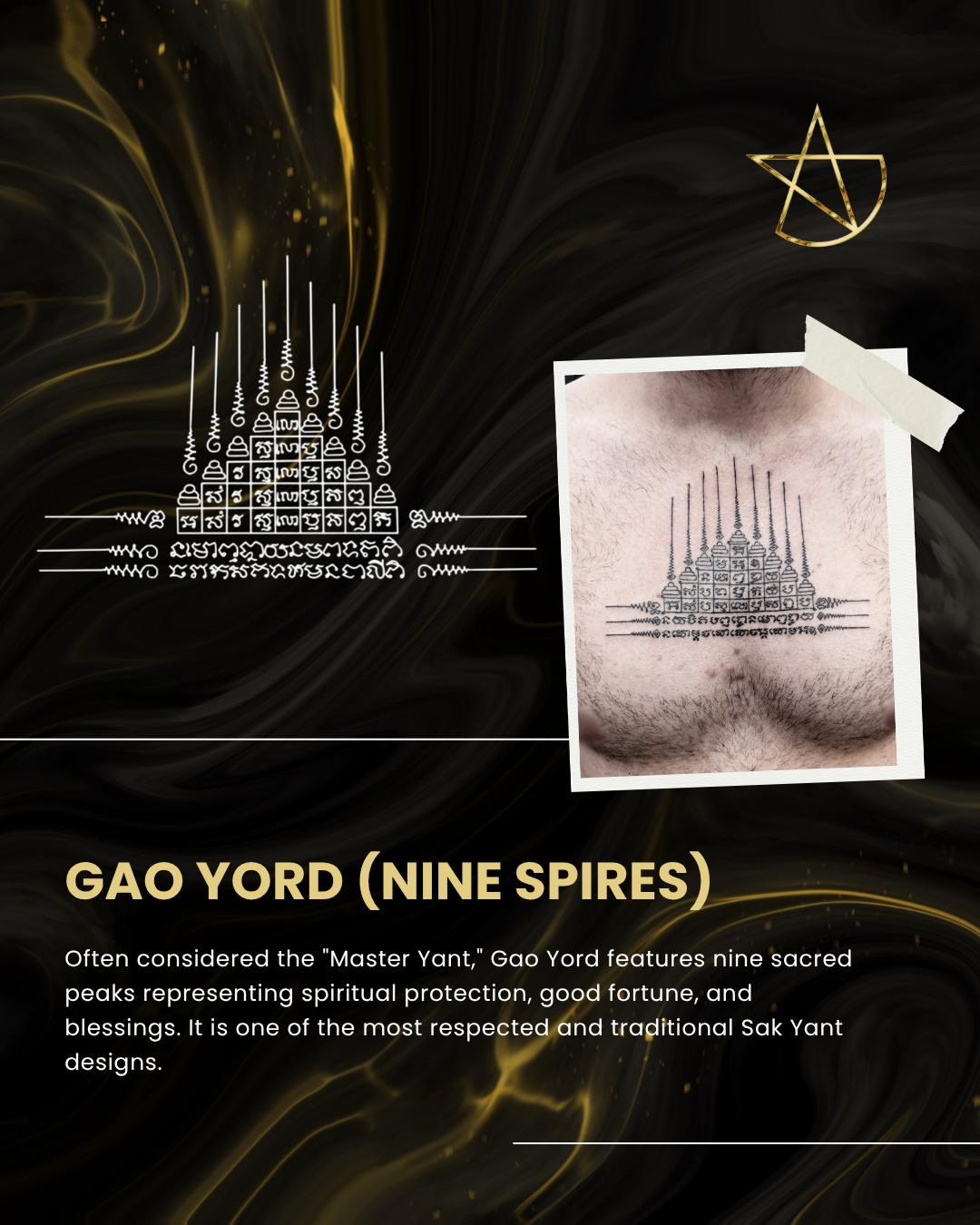
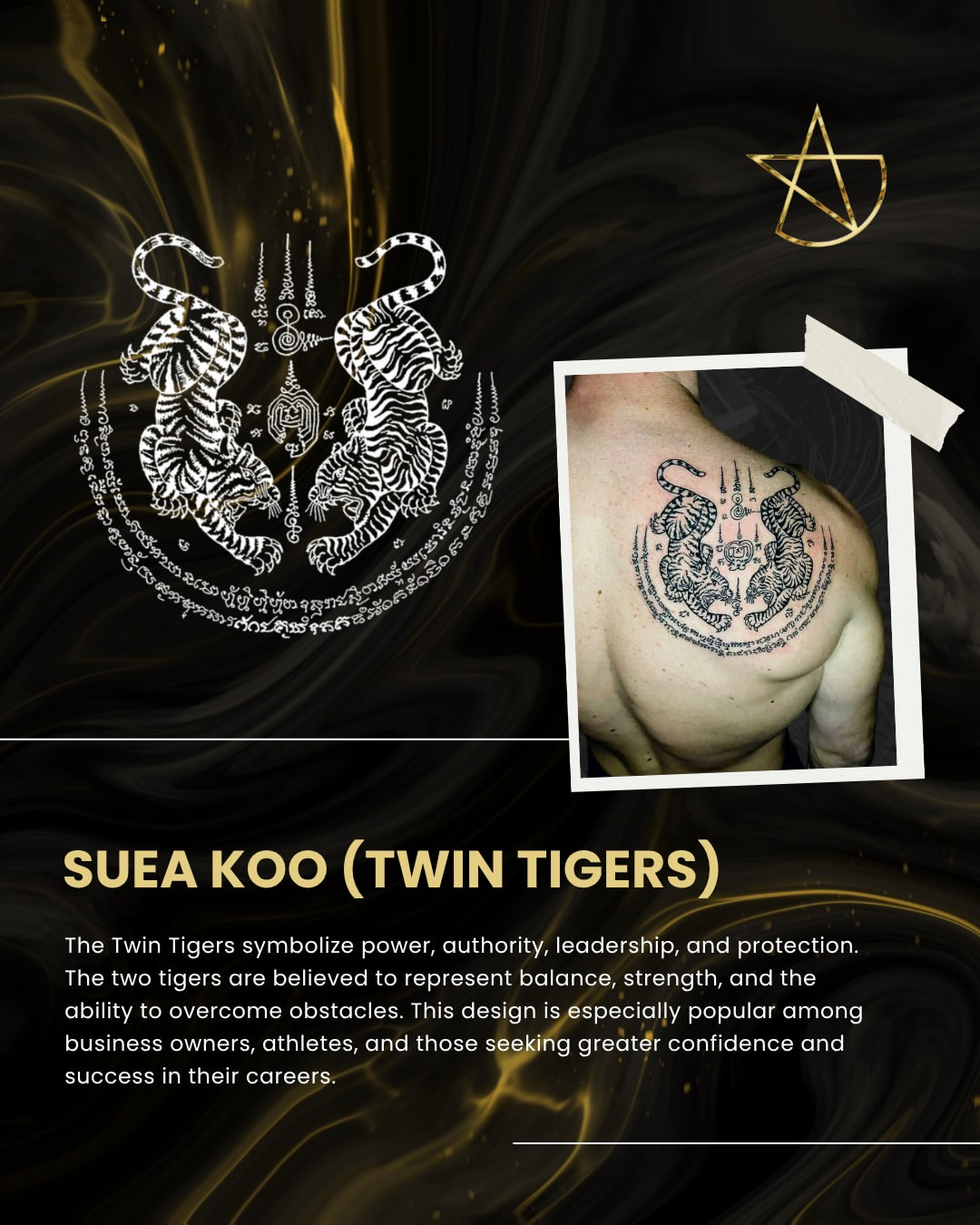
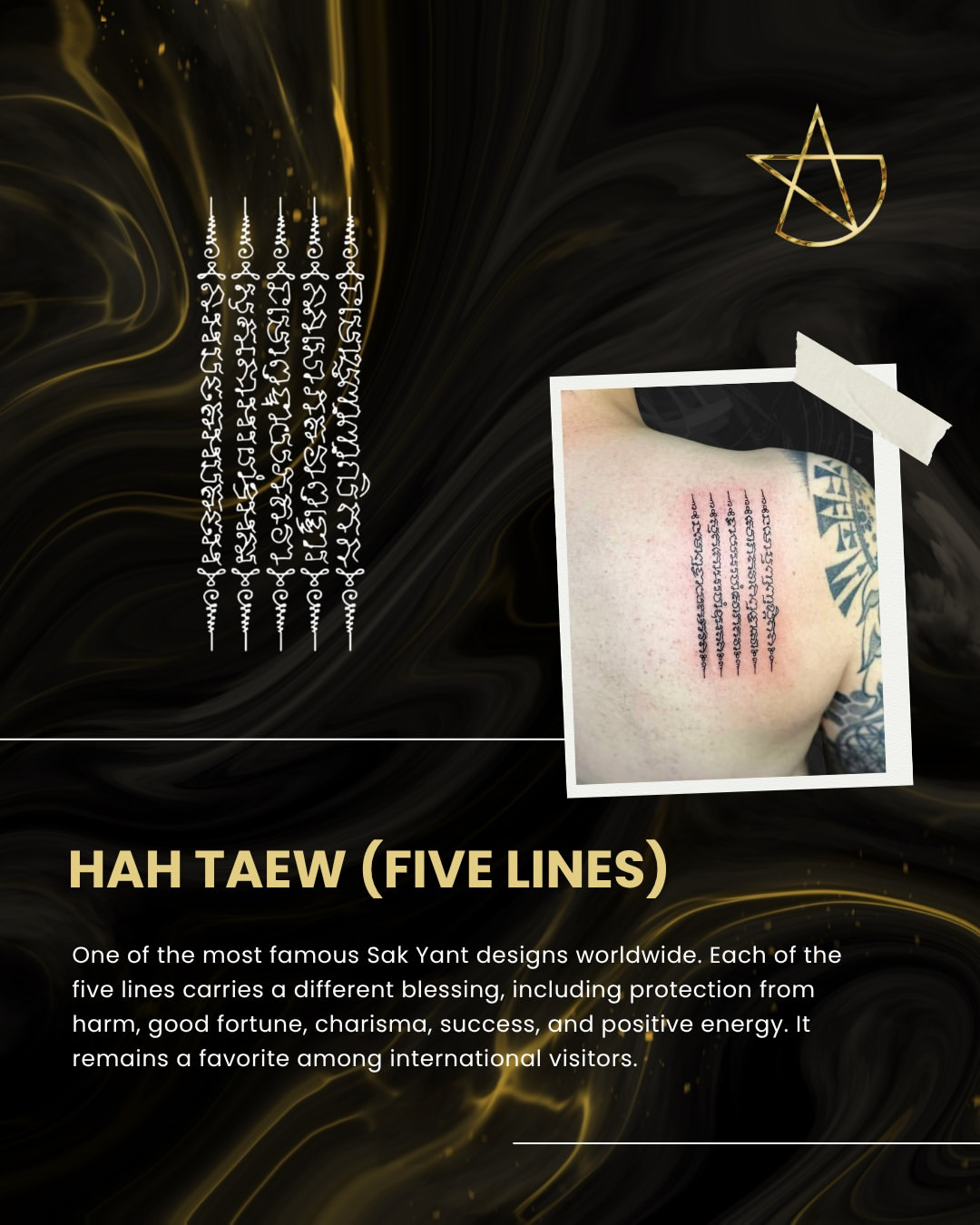
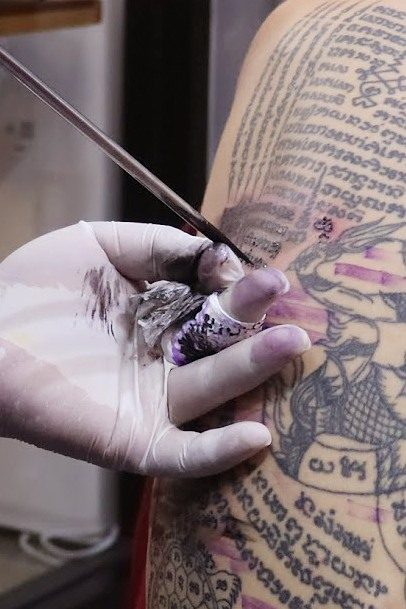
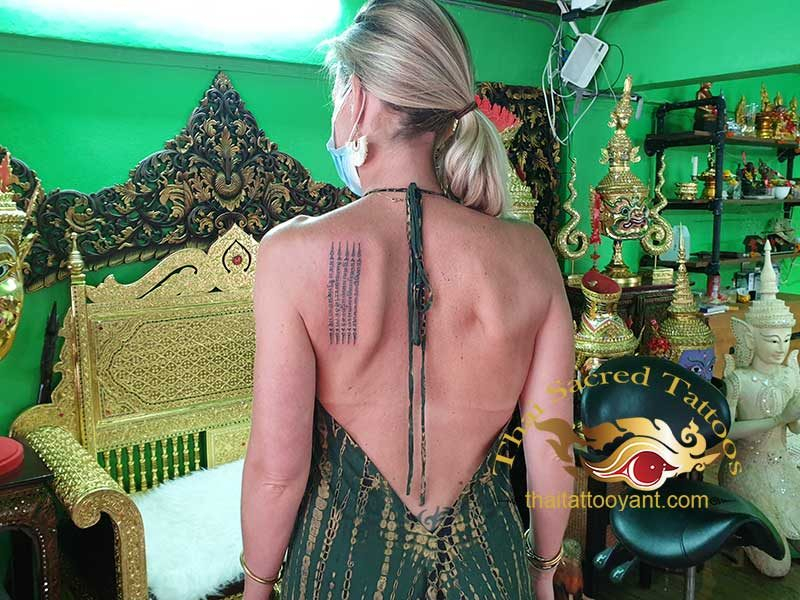
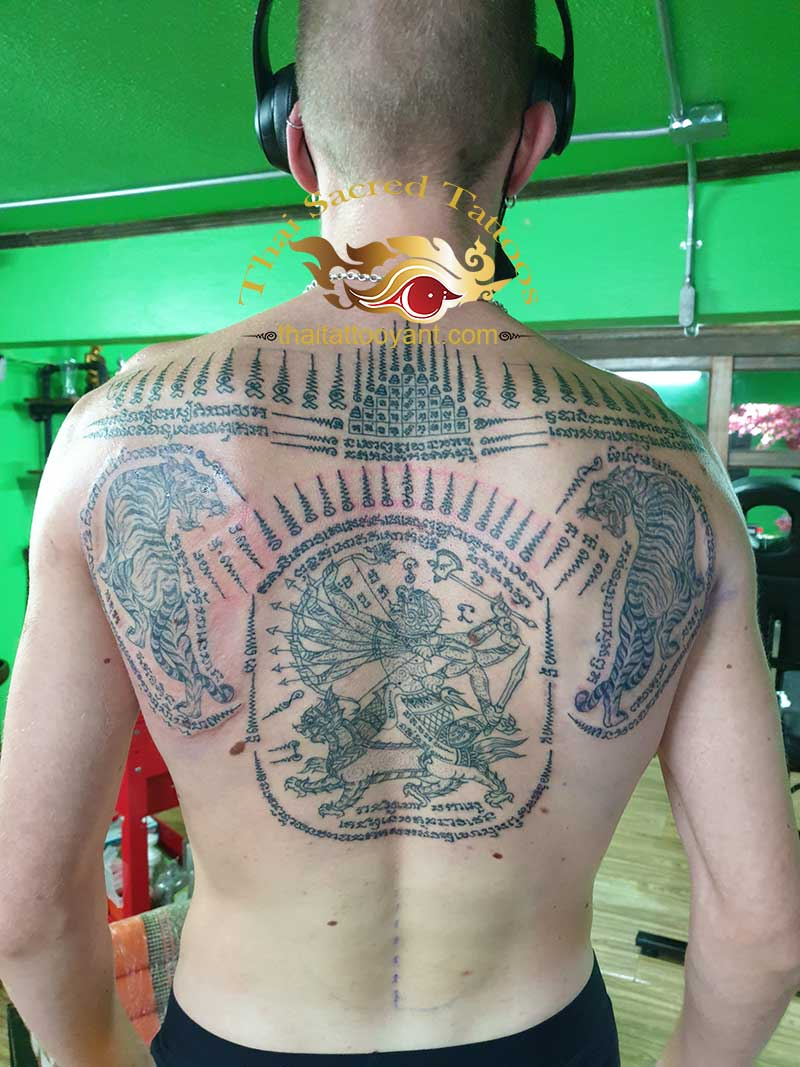
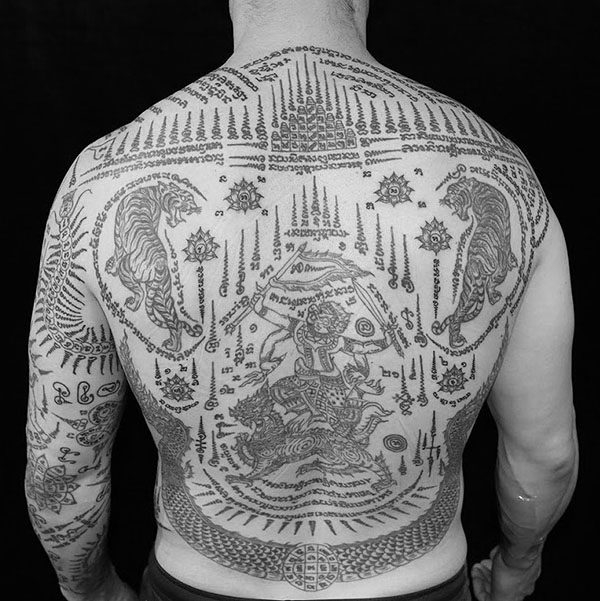
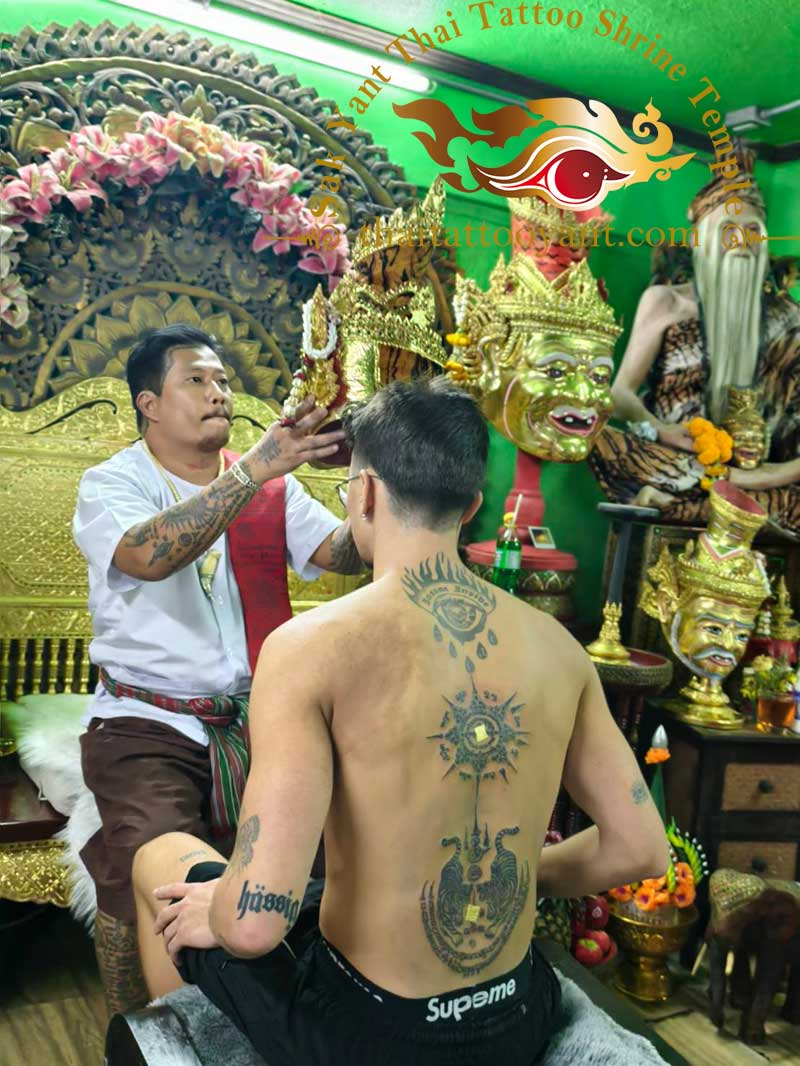
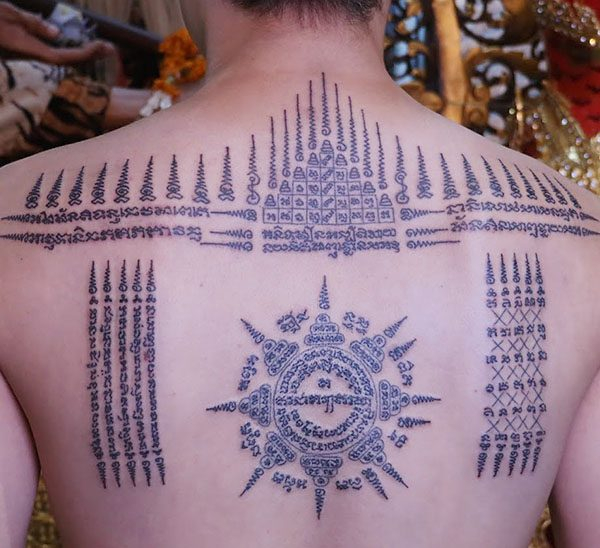
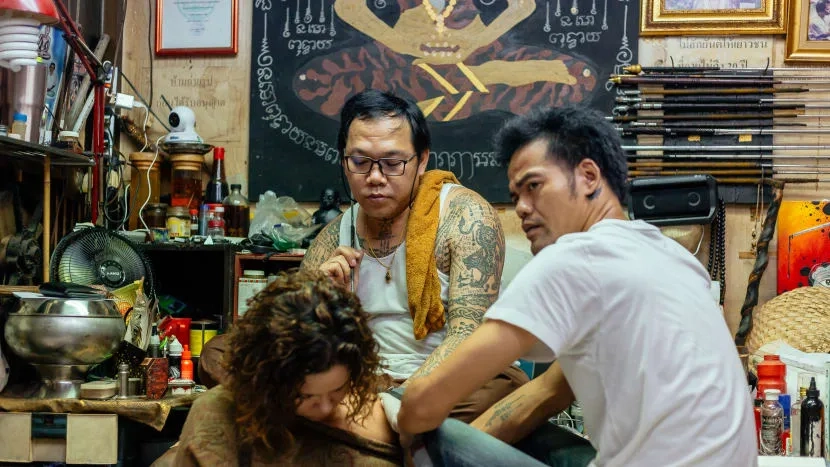
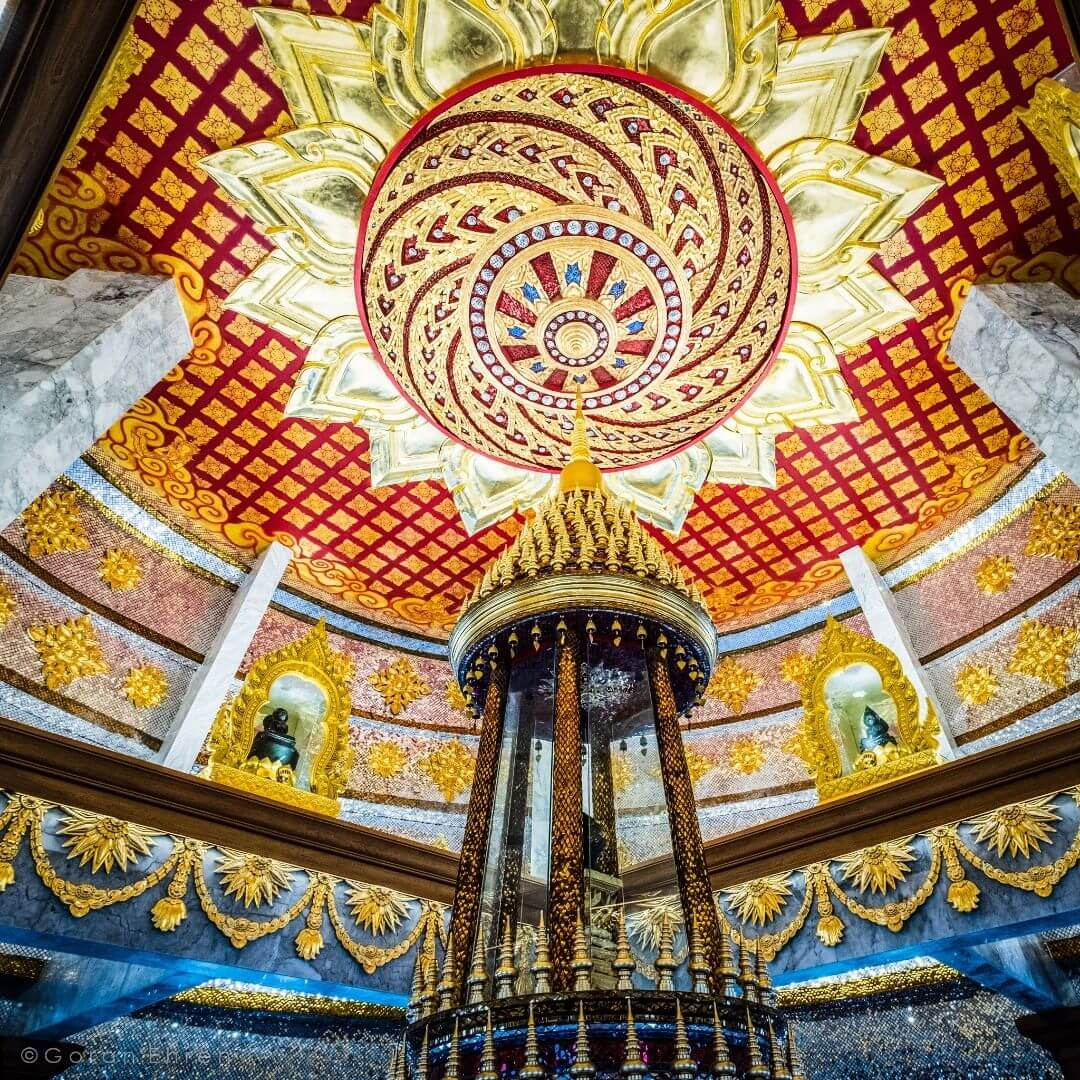
Sak Yant photography above isn't mine — sourced with thanks from:
instagram.com/p/DZg3hP7Aepp · waywardwayfarer.com/sak-yant-tattoo-thailand · forevervacation.com/bangkok-the-sacred-sak-yant-tattoo-tour · bangkok-ink.com/thai-tattoo-meanings-and-sak-yant-designs-part-1 · thaitattooyant.com/history-of-thailand-sak-yant-thai-tattoos
Where the ritual begins.
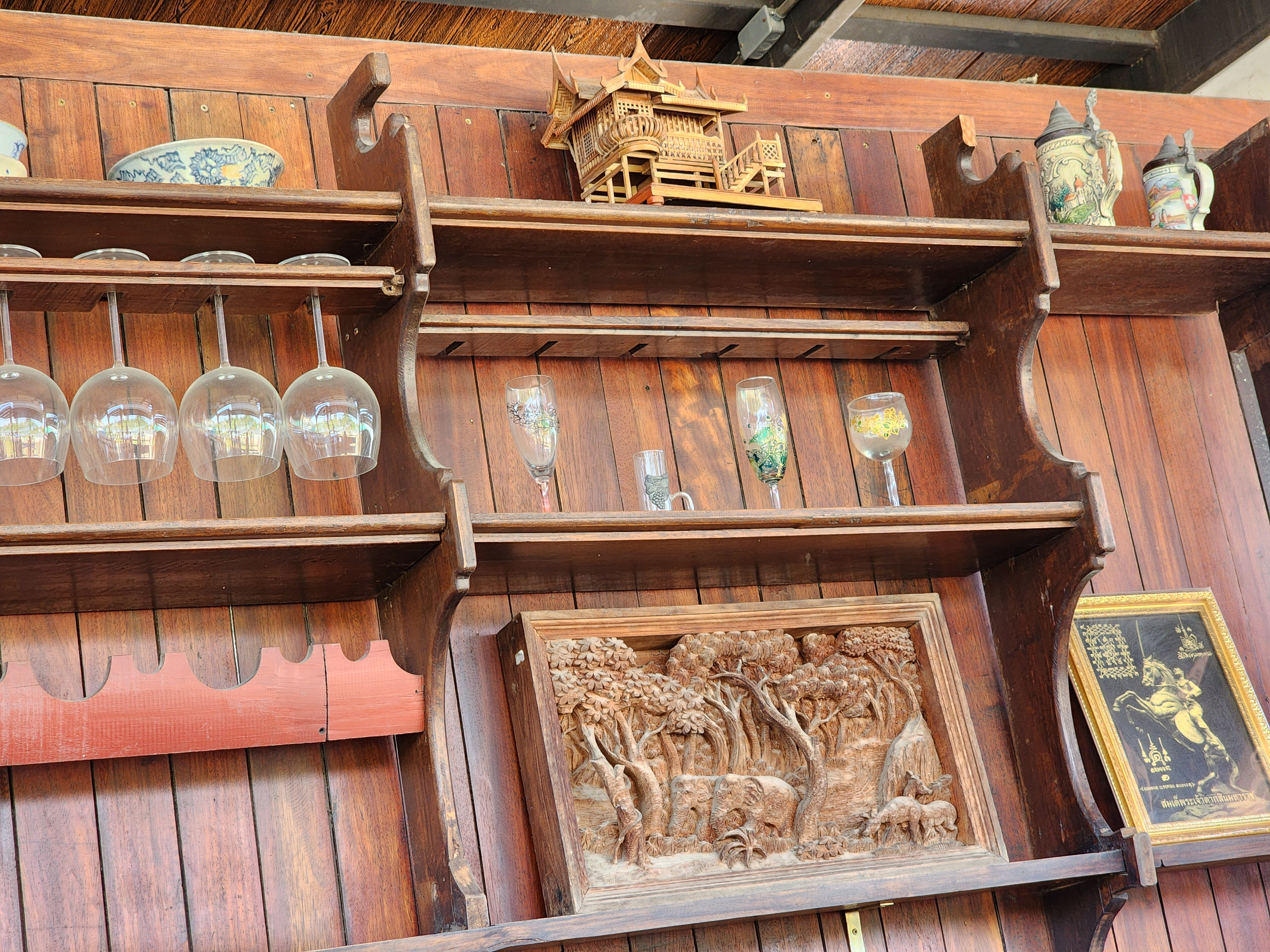
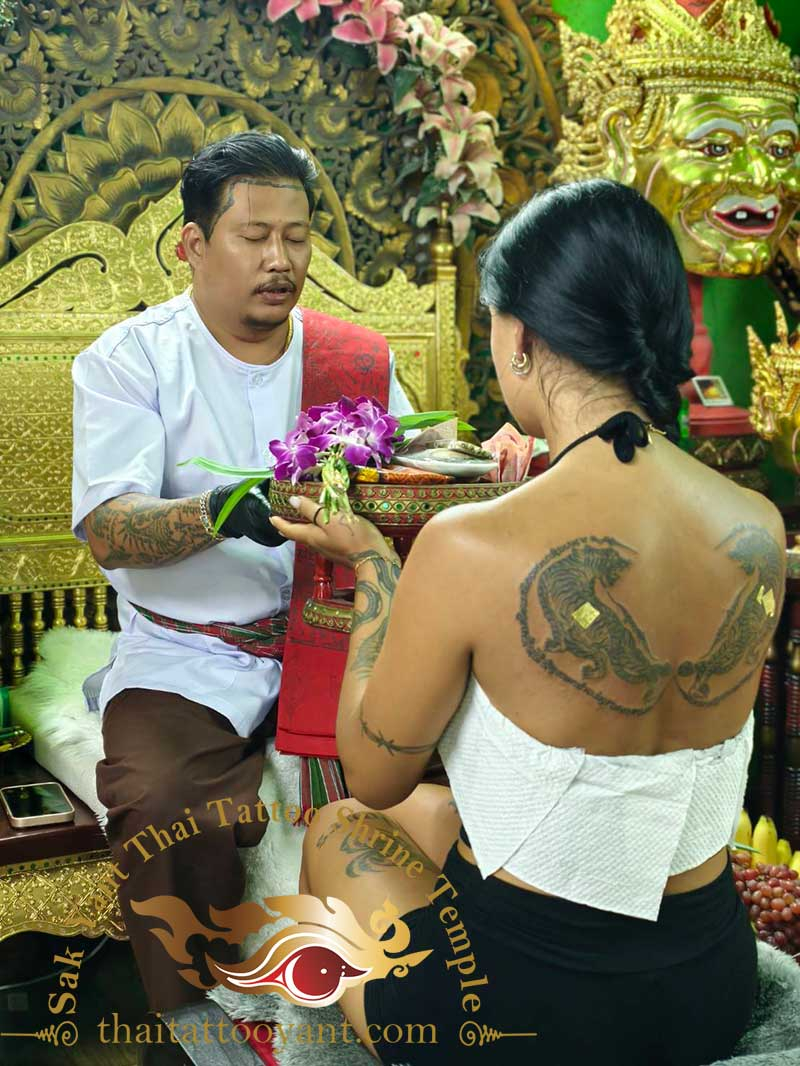
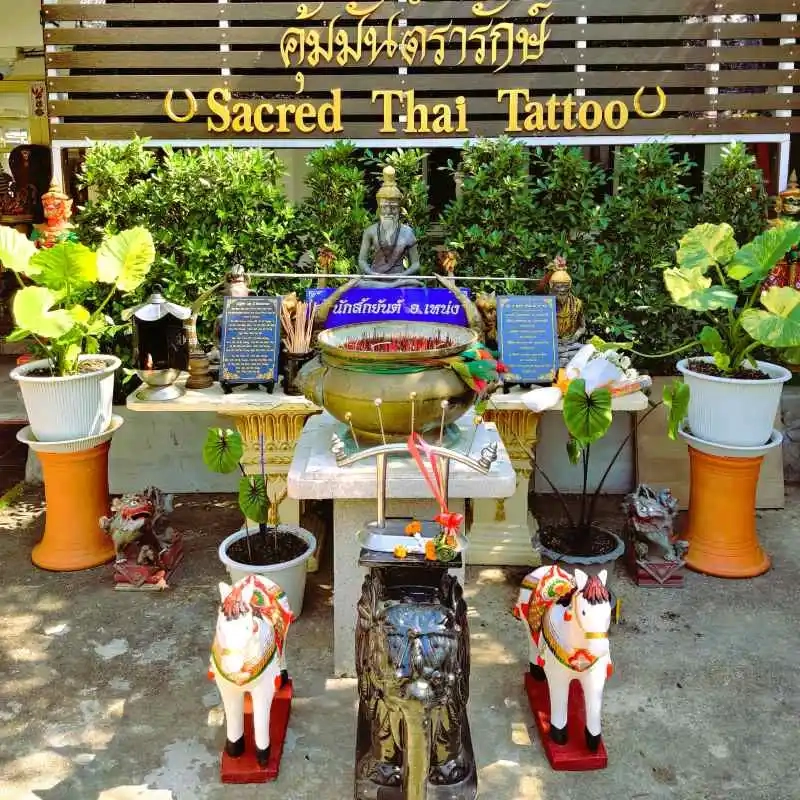
Long before the first drop of ink touches skin, the ritual has already begun. Shoes are left outside the threshold. Voices fall to whispers. Inside the samnak, time moves differently. The scent of burning incense hangs beneath old teak beams darkened by decades of candle smoke. Gilded Buddha images watch over the room from crowded altars surrounded by marigold garlands, jasmine, bowls of fruit, bottles of whisky, cigarettes, and folded banknotes left by grateful devotees. There is no reception desk, no appointment screen, and no catalogue of designs to browse. Instead, every visitor kneels before the shrine with offerings, known as khan kru, presented first to the Buddha and then to the Ajarn. Flowers symbolize respect, incense carries prayers, candles represent wisdom, and the offering itself acknowledges that the knowledge about to be received belongs to a lineage far older than either master or disciple. Before a single word is exchanged, humility has already become part of the ceremony.
The Ajarn rarely begins by asking what tattoo you want. Instead, he studies you. Sometimes he asks about your occupation, your family, your health, or the burdens you carry. Some masters consult astrological charts, birth days, or numerological calculations. Others sit quietly, observing without speaking, allowing years of intuition and ritual practice to guide the decision. The yantra is not selected because it looks beautiful. It is chosen because it is believed to answer a particular need. A Muay Thai fighter preparing for competition may receive a Hanuman or Gao Yord for courage and authority. A police officer might be given a protective tiger. A business owner seeking prosperity could receive a yantra associated with influence and good fortune. The tattoo becomes a conversation between master and disciple, shaped by circumstance rather than personal preference. In this tradition, the bearer does not choose the blessing. The blessing chooses the bearer.
Only then does the room grow completely still. The Ajarn prepares the ink with deliberate care before lifting the khem, the long steel rod that has marked generations of devotees before you. He bows toward the altar, touches the instrument to his forehead, and begins reciting kata, sacred incantations spoken in ancient Pali and Khom. The words rise softly, almost beneath hearing, blending with the crackle of incense and the distant sounds of life beyond the walls. Then comes the first strike. Cold steel meets living skin with surprising precision. Tap. Tap. Tap. The rhythm settles into something almost hypnotic, steady enough to resemble the ticking of an old metronome. Every puncture carries another breath, another whispered mantra, another line of sacred geometry emerging from hundreds of deliberate movements. The pain arrives immediately, sharp and unmistakable, but it slowly loses its dominance. Your attention shifts away from discomfort toward the cadence of the ritual itself. The room feels suspended between the physical and the spiritual, where every strike of the rod is answered by another prayer carried on the master's breath.
When the final line is complete, the ceremony does not end. The Ajarn wipes away the blood and ink before placing his palm firmly over the fresh yantra. His eyes close as the chanting begins again, quieter than before. Leaning forward, he blows directly onto the tattoo, sealing the blessing into the open skin. For devotees, this breath is not symbolic. It is believed to awaken the yantra, transferring the spiritual force carried through the master's lineage into the newly completed inscription. The disciple then receives the khatha, prayers and moral precepts that must be observed to preserve the tattoo's efficacy. Many are instructed to avoid certain actions, cultivate specific virtues, or return periodically for renewed blessings. Only then is the ritual complete. As you rise from the polished wooden floor, your skin bears fresh ink, but something less visible has changed. You leave carrying more than a tattoo. You leave bound to a teacher, a lineage, and a relationship that, according to those who keep the tradition alive, endures long after the wound has healed.
Walking away with more than ink, reflections and takeaways.
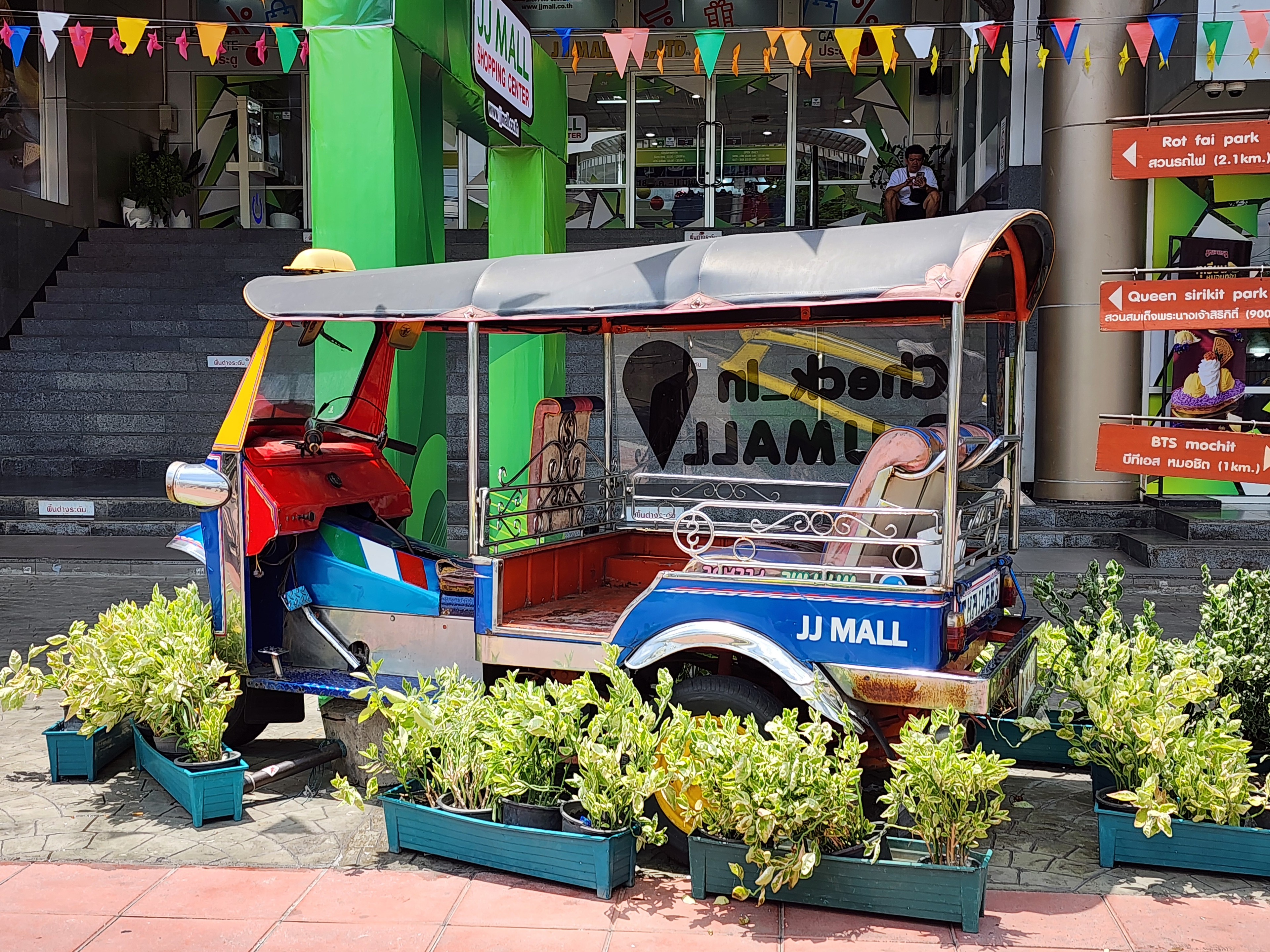
When I first arrived in Bangkok, I noticed the tattoos before I noticed the people. They seemed to be everywhere, curling over shoulders, disappearing beneath shirt collars, wrapping around forearms, climbing down spines, and emerging from beneath the shorts of Muay Thai fighters and motorcycle taxi riders. To me, they were simply another striking part of Thailand's visual identity, no different from golden temple roofs, tuk-tuks weaving through traffic, or the aroma of charcoal rising from roadside grills. Like many visitors, I assumed they were expressions of style, souvenirs etched into skin, or perhaps symbols of a fading tradition kept alive for tourists. I looked at them, but I did not understand them.
That understanding only began to change when I stepped inside a Samnak. What first appeared to be a tattoo studio revealed itself as something entirely different, a place where history, spirituality, discipline, and community converge. Over the course of this journey, I came to realize that Sak Yant is not simply an art form preserved from the past. It is a living institution that continues to shape the lives of ordinary people across Thailand. Every ritual, every blessing, every line of Khom script, and every strike of the khem exists within an unbroken lineage carried from teacher to disciple across centuries. The tattoo itself is only the visible outcome of a much deeper relationship built on faith, responsibility, and trust.
Perhaps the greatest transformation occurred after I left the shrine. Walking once again through Bangkok's crowded streets, nothing around me had changed, yet everything looked different. The elderly woman carrying vegetables through the morning market, the office worker waiting for the BTS, the butcher sharpening his knife before opening his stall, the monk sweeping temple grounds, the Muay Thai fighter adjusting his hand wraps, and the motorcycle rider idling beneath the station all carried stories written beneath their skin. Those markings no longer looked mysterious or decorative. They had become symbols of protection, devotion, resilience, memory, and identity. The city I thought I understood had been quietly speaking another language all along. I simply lacked the knowledge to read it.
The greatest takeaway from this journey is not that Sak Yant possesses supernatural power, nor that every story surrounding it should be accepted without question. Rather, it demonstrates how deeply culture, belief, and identity become woven into everyday life when a tradition is allowed to evolve without losing its roots. In an age of digital technology, artificial intelligence, luxury shopping malls, and soaring skylines, the measured rhythm of a hand-tapped steel rod continues to echo inside modest shrines hidden behind ordinary streets. That quiet persistence offers its own lesson. Some traditions endure not because they resist change, but because they continue to provide meaning where modern life often cannot. I arrived in Bangkok as a tourist who saw remarkable tattoos. I left with an appreciation for a living heritage carried not in museums or history books, but by the people who walk Thailand's streets every single day.
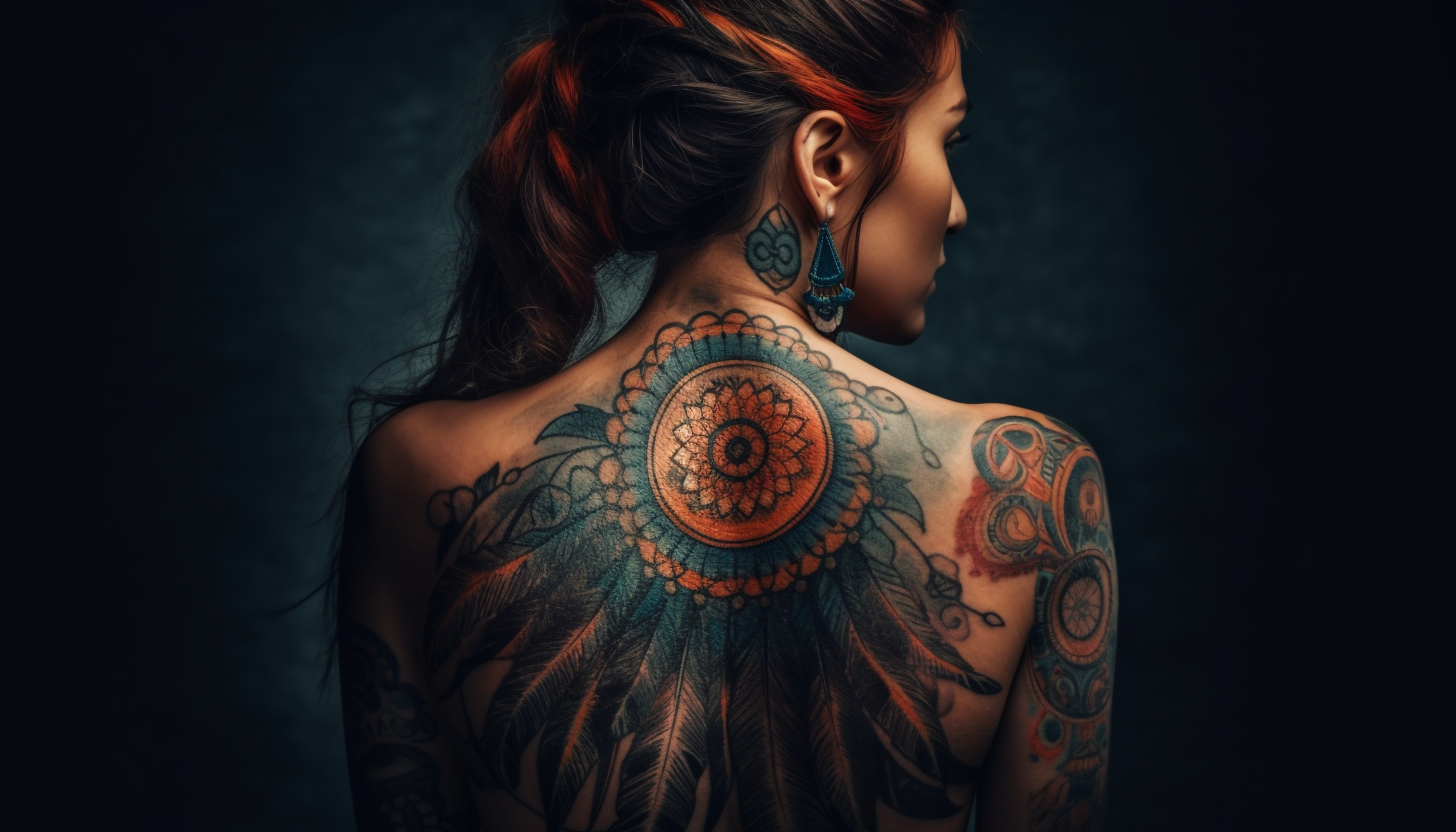
Where the needle meets the spirit, tracing Thailand's sacred tattoo masters, hidden Samnaks, and the living bloodlines of Sak Yant.
Sacred Ink exists because that hidden world doesn't hand out access easily, I wrote more about what it actually took to earn a seat on the floor of a samnak, on and off the clock. The full story is on The Human Interface.
Read Thought Piece