Fonts & Feelings
·
Blog Post
·
2024
I Interviewed 100 Strangers Before I Opened Figma
On research, backpackers, bad ideas, and what it actually means to design for someone.
Mwangi Oscar Kamau · UX Research & Design · Bangkok, Thailand

The Glass and the Ghost
There is a distinct lie we tell ourselves the moment we open a blank canvas in Figma. It’s the illusion of control. We draw a perfect rectangle, round the corners by exactly eight pixels, drop a clean, neutral typeface inside it, and call it a button. On the screen, it is pristine. It exists in an academic vacuum of pure logic, untouched by the messiness of the thermodynamic universe.
But the moment that button leaves your laptop and enters the wild, it meets the ghost in the machine: the user’s reality.
When a person stares at that glowing piece of glass, they aren't looking at your design system. They are looking through the lens of whatever kind of day they are having. Maybe their hands are shaking because they’re rushing to catch a late-night bus in a city where they don’t speak the language. Maybe their screen is cracked, or the midday Bangkok sun is washing out your meticulously chosen hex codes. More importantly, they bring their history.
We talk about "user friction" as if it’s a technical glitch, a drop-down menu that takes too many clicks or a form that lacks auto-fill. But the most profound friction is emotional. It is the anxiety of inputting a credit card number when you aren't sure if you have enough to cover rent next Tuesday. It is the subtle sting of pride when an app forces you to explicitly signal to your friends that you cannot afford the upscale restaurant they just pinned on the map.
A wireframe can map a click event, but it cannot map human dignity. When we ignore the invisible baggage our users carry, we aren’t designing solutions; we are just building beautiful digital walls for people to run into.
And yet, when a corporate giant drops a pristine, abstract directive onto your desk, the temptation to stay safe inside that digital illusion is almost overwhelming.
The Sentence That Sent Us Outside
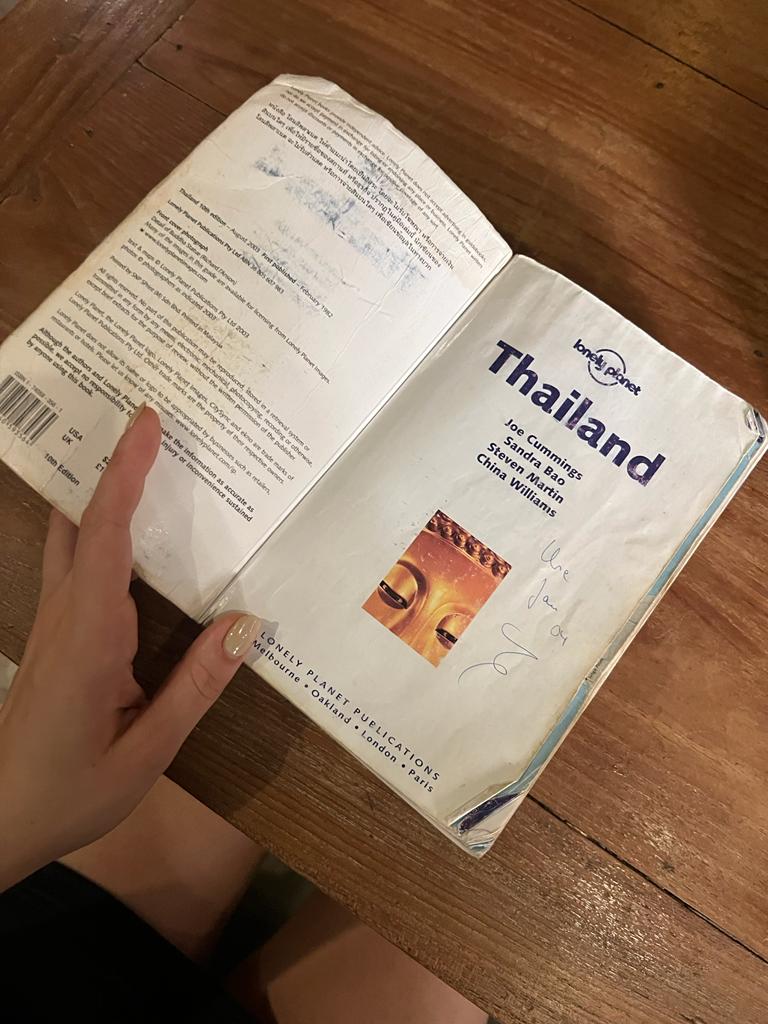
That temptation arrived for us in a single, clinical sentence from Lonely Planet: Design a native travel companion app for Gen Z backpackers.
It was a classic corporate monolith of a brief. It came with a massive, cold checklist of ecosystem expectations: pre-trip planning, in-journey activities, and post-travel sharing. It demanded features for accommodation tracking, restaurant recommendations, and localized community social networking. On paper, it looked like a solvable mathematical equation.
Inside the quiet safety of the university corridor, our first instinct, the comfortable, muscle-memorized reflex of four UX students was to succumb to that exact illusion of control. Open Figma immediately. Start creating components. Pick a trending color palette. Move gray rectangles across a white grid.
It is a deeply intoxicating process because it makes you feel incredibly productive. You’re generating assets, closing tabs, and structuring data. But it’s a trap. If you don't break out of that echo chamber, you end up designing a mirror for yourself a beautiful, sterile interface built for an idealized user who thinks exactly like a designer sitting in an
air-conditioned room. You remain completely blind to the ghost in the machine.
We realized that if we stayed at our desks, we’d build something logically flawless and utterly useless. If we were going to design for the fluid, unpredictable chaos on the other side of the glass, we had to leave the whiteboard behind. We had to go where the rules of normal society drop away, where budgets are thin, and where community is built on the fly out of sheer survival.
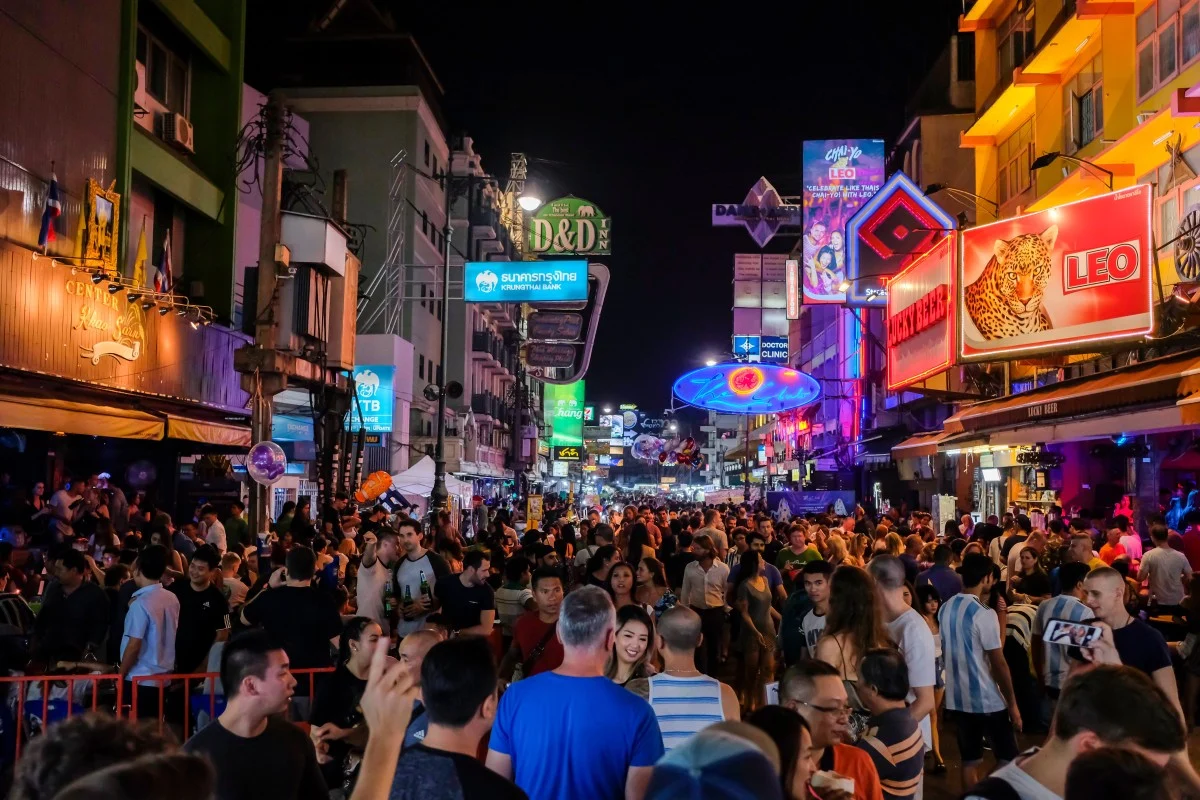
We shut our laptops, walked past the university gates, and headed straight into the neon-lit belly of Khaosan Road.
The 100-Stranger Crucible
Khaosan Road at 5:00 PM is a sensory overload of humidity, cheap laundry detergent, and the clinking of Chang beer bottles. We split up, tasked with interviewing 25 travelers each, 100 conversations in total.
We timed it deliberately for the golden hour: that fleeting window after they’ve recovered from an overnight bus but before they’re three buckets deep into the night. We sat at sticky laminated tables in hostel restaurants under ceiling fans spinning for dear life, trying to look like we were casually texting when we were actually typing furious research notes on our phones.
We went looking for the technical answers: How do they split costs? How do they navigate a new city? How do they handle safety with people they met 48 hours ago?
What we found was a beautiful, contradictory mess that no design textbook prepares you for. We watched a real-life version of what we’d call "Penny Jenny a traveler quietly running out of money, and an entire group executing a silent, protective social contract to split bills unevenly without ever mentioning it out loud, just to save her dignity. We met a solo traveler tracking expenses across eight countries in a chaotic mental spreadsheet, desperately looking for validation that his broken system was fine.
They didn’t need a faster calculator. They needed a way to navigate the fragile social stakes of being vulnerable with strangers.




The Study Room Detectives
We returned from the field with a mountain of qualitative chaos. To make sense of it, we turned a study room floor into an active crime scene, spreading out hundreds of sorted index cards to map out user behavior.
From that floor, four distinct archetypes emerged: Sorority Stella (travels in groups, values camaraderie and safety above all), Khaosan Kevin (the tourist-spot loyalist), Penny Jenny (stretching every last baht without showing it), and Worry Wong (socially and physically overextended, quietly looking for an exit ramp).
We chose Stella as our north star. Not because she was the only real type, but because her friction points group coordination, cost-splitting, spontaneous safety contained the hardest design problems. If we could solve for Stella, the ripple effect would solve for the rest.
The deep revelation from our competitor analysis was the negative space. Existing activity apps didn't do expense management. Existing cost splitting apps assumed you were roommates or lifelong friends, not people who met in a bar two nights ago. That empty space between transient social interaction and financial coordination became our product: TripSplit.
The Truce of the Wireframe
Once the strategy was clear, we had to translate human intuition back into structural logic, but this time, the ghost was in the room with us. This is where the 11:00 PM arguments happened. When you have four distinct brains collaborating, the whiteboard becomes a battleground.
We built a comprehensive sitemap to structure the vast Lonely Planet ecosystem requirements, but the real war was waged in the user flows.
We traced every single path a traveler could take, forcing ourselves to answer: At this exact micro-second, what does the user know, what do they fear, and what happens if the local Wi-Fi drops dead?
We drafted lo-fi wireframes to test the pure logic of the navigation before letting ourselves fall in love with any aesthetics. We designed an offline mode as a core infrastructure requirement, acknowledging that a travel app is useless if it requires a perfect 5G connection in a remote valley.
From those wireframes, we moved to high-fidelity screens, turning abstract theories into concrete, high-contrast components that developers could actually build and users could realistically react to. The sitemaps and wireframes weren't just handoff documentation; they were a hard-won truce, a physical manifestation of four designers arguing over how to protect a stranger's peace of mind on a screen.
The Final Interface
The final MVP of TripSplit became an interconnected platform where travelers could seamlessly register, discover recommended accommodations, build itineraries, and manage shared budgets without requiring every person in the group to have the same bank or currency.
But looking at the final, polished prototype, I realized the product isn't actually about the ledger or the recommendations. The money was just the symptom. The real problem we designed for was belonging.
TripSplit became an architecture built to lower the social stakes of showing up and joining in. It was shaped entirely by the real people we sat across from in those Bangkok hostels—real humans trying to figure out how to explore the world together without leaving anyone behind.
Moving pixels is the easy part. Building something that honors the invisible, chaotic dignity of the person holding the glass? That is the only design brief that ever really matters.
The Closed Loop
We did not win every late-night argument in that room, nor did we build a perfect product. There is no such thing. But what we found on the sticky floor of that hotel room and the neon-streaked asphalt of Khaosan Road was something that never could have manifested inside the clean margins of an artboard.
We found the purpose of looking.
When you sit back and look at the final screens of TripSplit, it is easy to let your eyes rest on the surface to see the clean typography, the seamless currency conversion, the intuitive invite flows. But if you have been paying attention, you realize that the interface is not the triumph. The triumph is the lowering of the social friction that happens before the phone is ever pulled out of a pocket.
This brings us back to the lie of the blank canvas. We return to that eight-pixel rounded rectangle we call a button, sitting pristine in its digital vacuum.
The entire exercise of designing whether it is an expansive ecosystem for Lonely Planet or a simple ledger tool is not about mastering the tool. It is about understanding that the button does not exist to be clicked; it exists to bridge an emotional gap. It is a portal through which a human being, with all their financial anxieties, social pride, exhaustion, and desire for connection, attempts to navigate their world.
If we treat design merely as a sequence of flows and grids, we are treating our users as data packets to be processed. We leave them stranded outside our flawless architectures, running headfirst into beautiful digital walls.
The pieces gathered in this space live in that exact friction. They are a reminder that the real design work happens when you look away from the whiteboard and look at the person standing in the room. They are the realization that a wireframe can map a click event, but it cannot map human dignity and that our only real job as designers is to keep stretching the glass until it is soft enough to hold us all.
©2023 designsbykamau